About All Tours Safari ToursFrom JohannesburgPark & Sun City ToursPrivate Tours Directions Hours & Fees Guides
Find Tours 
Pilanesberg National Park is a 55,000-hectare malaria-free Big Five reserve set inside the eroded crater of a 1.3-billion-year-old volcano, 60 km north of Rustenburg in South Africa's North West Province. Geologists rank its ring complex as the most perfect example on Earth, and lion, rhino and elephant roam the crater floor just two and a half hours from Johannesburg.
You can watch lion, elephant and rhino from your own car, two and a half hours' drive from Johannesburg, inside the eroded crater of a volcano that erupted 1,300 million years ago. Pilanesberg National Park covers 55,000 hectares of South Africa's North West Province, about 60 km north of Rustenburg, and it's one of the few malaria-free Big Five reserves in the country. Sun City, the country's best-known resort, sits just outside the fence.
Geology sets it apart. Three concentric ridges of hills ring the crater floor — the surviving skeleton of the Pilanesberg Alkaline Ring Complex, rated among the world's outstanding geological phenomena and the most perfect example of its kind anywhere; only two rough equivalents exist, in Russia and Greenland, and neither is as clearly defined. Nearly 200 km of roads thread between the ridges, past syenite koppies, forested ravines, rolling grassland and the big central lake, Mankwe Dam.
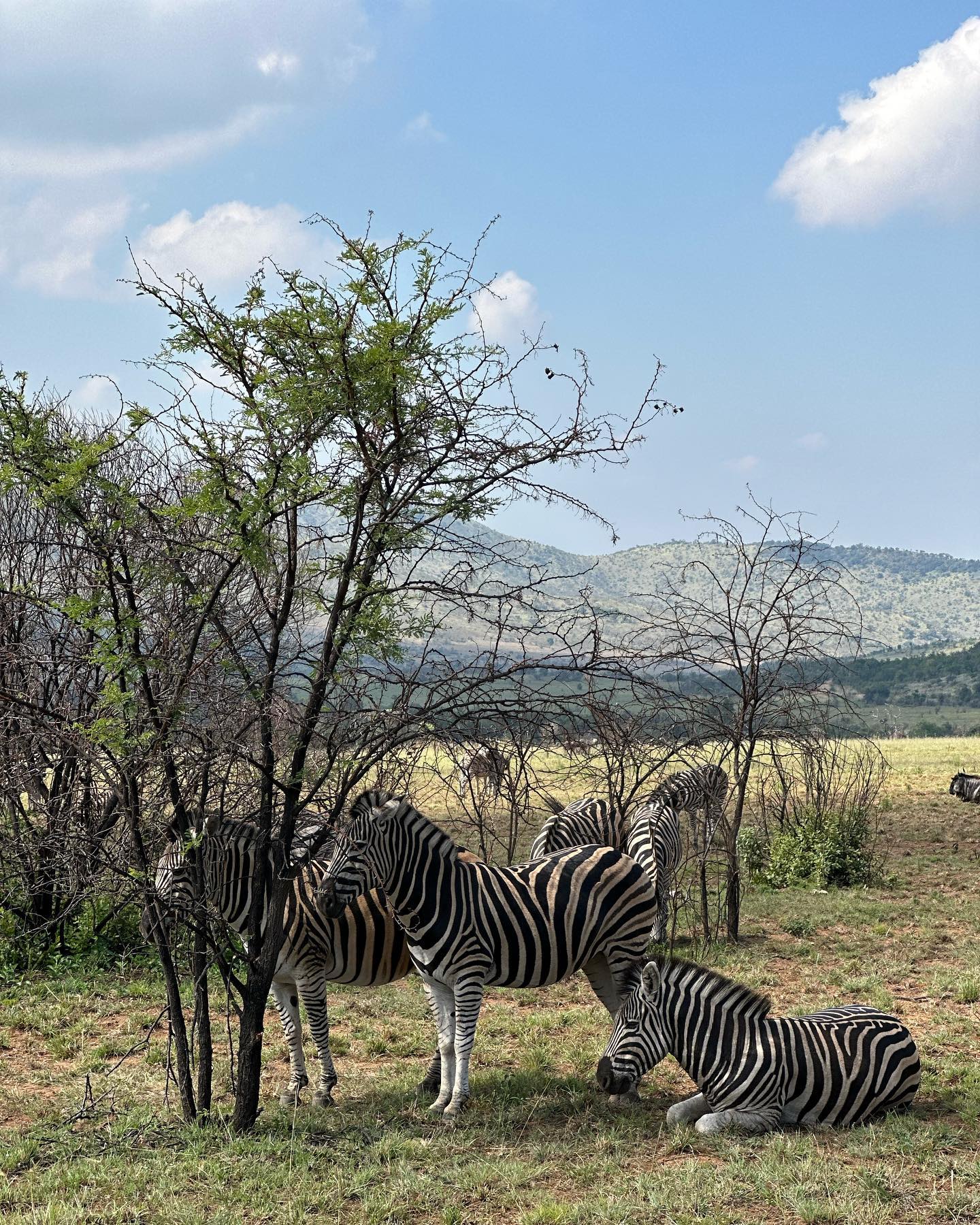
Because the park sits in the transition zone between the dry Kalahari and the wetter Lowveld, species that rarely share a range live side by side here — over 7,000 animals across 24 larger mammal species, plus more than 360 recorded birds. Most visitors self-drive the loops and wait at waterhole hides where hippo, buffalo and elephant come down to drink. Guided open-vehicle drives start at R900 per adult and sunrise balloon flights at R7,025, and a day trip from Johannesburg is entirely doable. Give it a full day at minimum.
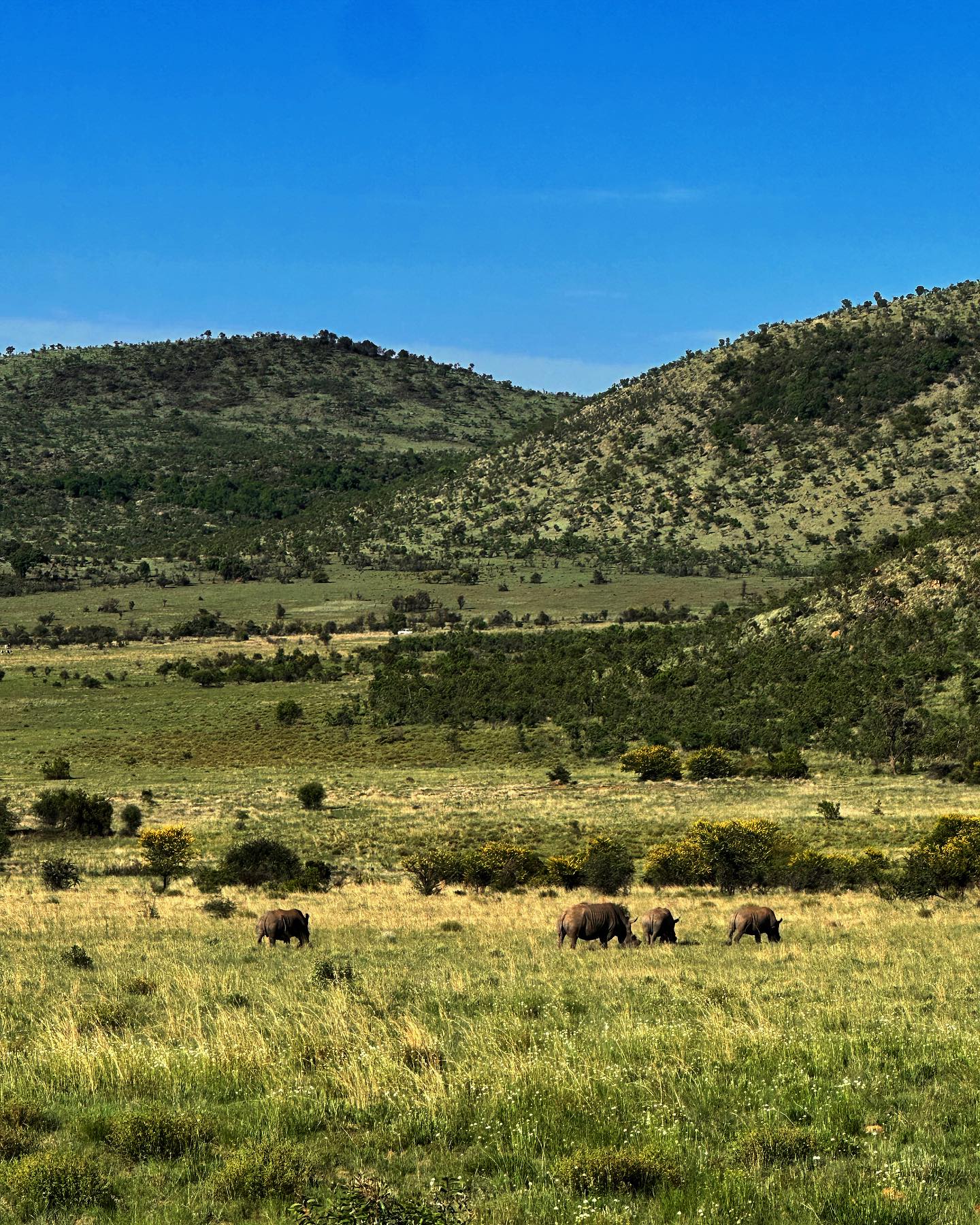
Roughly 1,300 million years ago, a series of volcanic eruptions built the Pilanesberg Alkaline Ring Complex. Erosion has been carving it down ever since. What survived is a crater floor and three concentric ridges of hills, still standing clear of the bushveld plains around them.
People came early. Stone and Iron Age sites scattered through the park record thousands of years of habitation, drawn by the crater's springs, sheltered ravines and game. The Bakgatla, a Tswana people, later held the land, and the mountains still carry the name of Kgosi Pilane, a 19th-century Bakgatla chief.
By the mid-20th century the land was worn out. Decades of commercial farming had degraded the area and the wildlife had all but disappeared. In 1969 the government of Bophuthatswana — one of the apartheid state's nominally independent homelands — decided to create a national park here, negotiating with the Bakgatla tribe, whose communities were relocated east of the new reserve. Formal proclamation came in 1976 or 1977 (sources differ), and the gates opened to the public in 1979.
Then came the big move. Operation Genesis fenced the reserve with 110 km of perimeter cable strung over rugged terrain, laid 188 km of visitor roads and reintroduced more than 6,000 animals from species that had vanished locally — at the time, the largest and most expensive game-stocking and land-rehabilitation project ever undertaken in an African reserve. Work continued through 1993 as lodges, campsites and the Manyane and Bakgatla resorts followed the roads. One date quirk worth knowing: Wikipedia's infobox lists 1 April 1984 as the establishment date, while the park itself dates its public opening to 1979.
Since 1994, the reserve has been run by the North West Parks and Tourism Board in the post-apartheid North West Province. It now holds the Big Five plus cheetah, wild dog, brown hyaena and sable, and its boundary touches Sun City. Entrance fees rose sharply on 1 December 2025 — international adults now pay R748 per person per day — a jump that drew public backlash from tour operators. Confirm current tariffs before you travel.
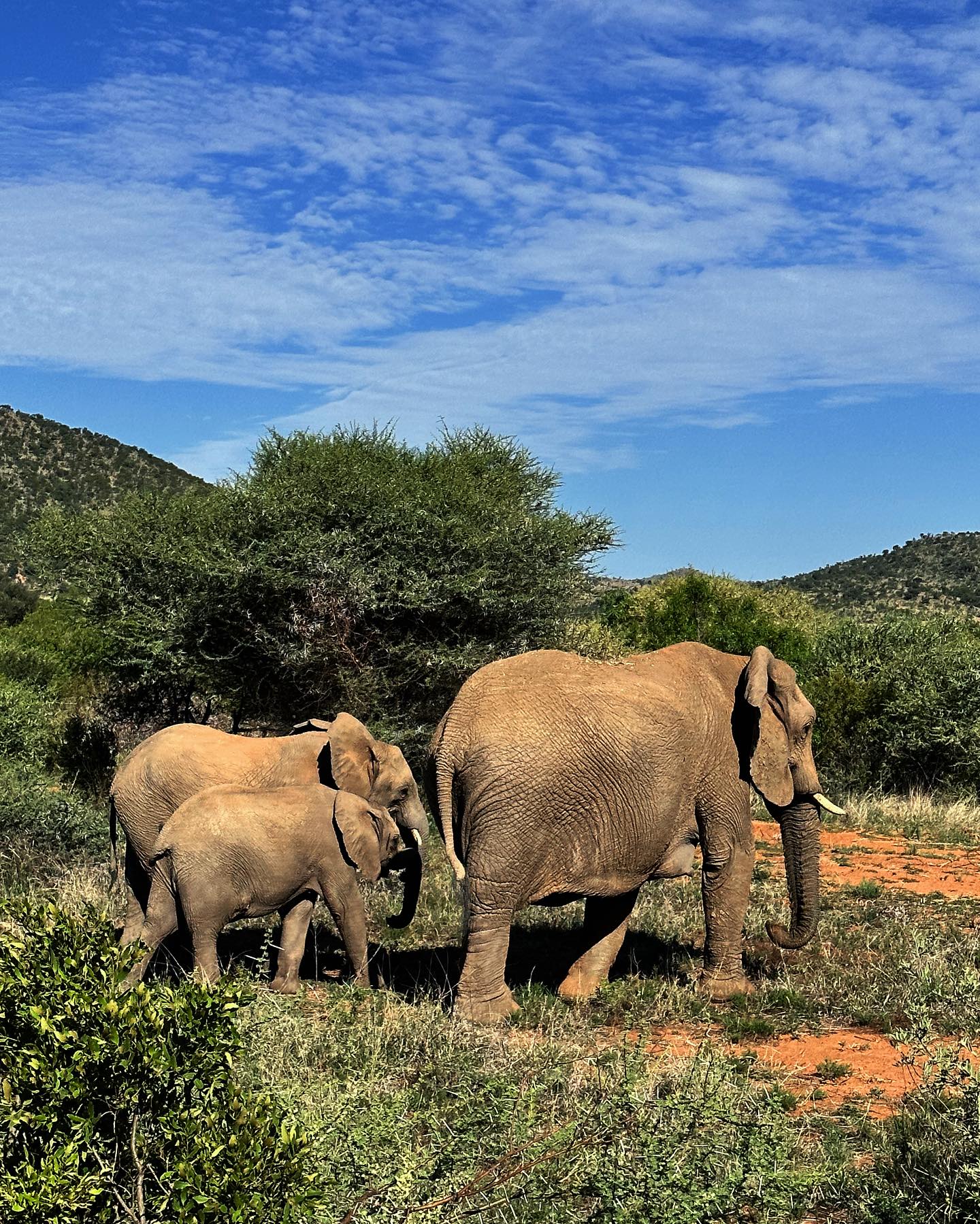
Everything in the park follows the volcano's rings. Three concentric ridges of hills frame the crater, and the nearly 200 km of roads run between them — syenite koppies, thickly forested ravines, rolling grassland and lightly wooded bushveld, all inside one boundary. Mankwe Dam sits near the centre as the park's largest lake, and Thabayadiotso, 'the Proud Mountain', rises just off it. From the ridgelines the whole ring structure is visible at once, sharpest in the low light of the dry season.
Water dictates where the animals are. In the dry winter months of May to September, vegetation thins and game concentrates around Mankwe, Malatse Dam and the smaller permanent waterholes — which is why that window is the best time to visit (the park's own guide narrows the prime stretch to mid-July through mid-October). The hide at Mankwe Dam puts you at water level with the engine off; white rhino and elephant are among the most frequently reported sightings on the southern loops. Summer flips the equation: thick vegetation hides animals and they disperse, though you gain newborn antelope and the full spread of the park's 360-plus bird species.
Size works in your favour. At 55,000 hectares, Pilanesberg is compact enough that sightings come quickly but large enough that a full day of driving barely covers the main circuits. A 2WD sedan handles most roads; some gravel sections are rough, so high clearance is recommended. And because the reserve sits in the transition zone between the dry Kalahari and the wetter Lowveld, you can see species here whose normal ranges exclude each other almost anywhere else in South Africa.
Two out-of-car options break up the driving. The walk-in aviary at Manyane holds more than 80 indigenous bird species, and a self-guided environmental-education trail runs through the Manyane walking area — rare privileges in a park with free-roaming lion.
The park's name runs through Bakgatla history. The mountains were named for Kgosi Pilane, a 19th-century chief of the Bakgatla, and the tribe's connection to the land continued right up to the park's creation: in the 1970s, Bakgatla communities were relocated east of the boundary to make way for the reserve. The Bakgatla resort at the park's boundary carries the name, as do communities in the district today.
There are older layers too. Stone and Iron Age sites scattered through the reserve show habitation stretching back thousands of years — the crater's springs, rock shelters and game drew people long before any fence went up. Setswana names survive across the landscape: Thabayadiotso, 'the Proud Mountain', still labels the park's most distinctive peak on every map.
Today Pilanesberg is a working part of the regional economy. It anchors a tourism corridor with Sun City next door, employs rangers and lodge staff from surrounding towns, and serves as a first safari for thousands of South African families — malaria-free, drivable in a sedan, close enough to Johannesburg for a long weekend. The Manyane environmental-education trail brings school groups in, and the photographic hides draw wildlife photographers who know the dry-season light at Mankwe Dam. For plenty of visitors, this crater is where a lion at a waterhole first stops being a documentary and becomes something they saw themselves.
The Pilanesberg Alkaline Ring Complex is the most perfect surviving example of its kind on Earth. Only two comparable complexes exist — in Russia and Greenland — and neither is as clearly defined.
Operation Genesis (1979) reintroduced more than 6,000 animals after a 110 km fence was erected — at the time the largest and most expensive game-stocking project ever undertaken in an African reserve.
The park lies in a low-risk malaria area and is marketed as malaria-free, so no prophylaxis is needed. The park's own FAQ still advises basic precautions like repellent.
No type of Wild Card is accepted at Pilanesberg, unlike most major South African parks. Every visitor pays the standard gate tariffs, per person and per vehicle.
Motorcycles cannot enter the park itself, though riders can reach the Manyane and Bakgatla camping sites on the periphery.
Hot air balloon safaris lift off before dawn and drift over the crater as herds move below, ending with sparkling wine and breakfast. Flights start at about R7,025 per person.
The park sits in the transition zone between the dry Kalahari and the wetter Lowveld, so species that rarely share a range anywhere else in South Africa live side by side here.
Yes. The park lies in a low-risk malaria area and is widely marketed as malaria-free, making it one of South Africa's best no-prophylaxis safari choices. The park's own FAQ still advises precautionary measures such as mosquito repellent and nets.
As of 1 December 2025, foreign-national adults and children pay R748 per person per day, plus R168 per sedan or SUV. South African citizens pay R168 (R84 for children aged 5–12 and pensioners) with an ID document, and SADC adults pay R385. Rates are subject to change, so confirm before you travel.
The gates are open 365 days a year: 05:30–19:00 from November to February, 06:00–18:30 in March, April, September and October, and 06:30–18:00 from May to September. Closing times are strictly enforced, and latecomers risk being locked in among dangerous game.
Yes. It's about 217 km via the N4 and R556, roughly 2.5 hours each way. Daily shuttles run from around R1,500, and full-day guided tours start at about R1,800 per person including the park levy.
Your odds are good. The park holds healthy populations of lion, leopard, elephant, black and white rhino and buffalo, plus cheetah, wild dog and brown hyaena, among more than 7,000 animals in a compact 55,000 hectares. Leopard is never guaranteed anywhere, but the density here works in your favour.
No. Most roads are fine in a normal 2WD sedan. Some gravel roads are in poor condition, so a high-clearance vehicle is recommended if you want to cover everything.
Formal proclamation came in 1976 or 1977 (sources differ), and the park opened to the public in 1979 with Operation Genesis, which reintroduced over 6,000 animals. Development continued through 1993, and Wikipedia's infobox lists 1 April 1984 as the establishment date.
The mountains take their name from Kgosi Pilane, a 19th-century chief of the Bakgatla people who long inhabited the area. Bakgatla communities were relocated east of the boundary when the park was created in the 1970s, and a resort at the park's edge still carries the name.
The Pilanesberg Alkaline Ring Complex formed roughly 1,300 million years ago from repeated volcanic eruptions. Erosion has stripped it down to three concentric ridges of hills, and geologists consider it the world's most perfect surviving example of an alkaline ring complex.
Yes. It's malaria-free, and children are allowed on some guided drives at the ranger's discretion under guardian supervision. Kids also get the walk-in aviary with 80-plus indigenous bird species at Manyane, a self-guided walking trail, and a day-visitor picnic area with a pool.
Browse verified tours with free cancellation and instant confirmation.
Find Tours