About All Tours Safari ToursFrom JohannesburgPark & Sun City ToursPrivate Tours Directions Hours & Fees Guides
Find Tours 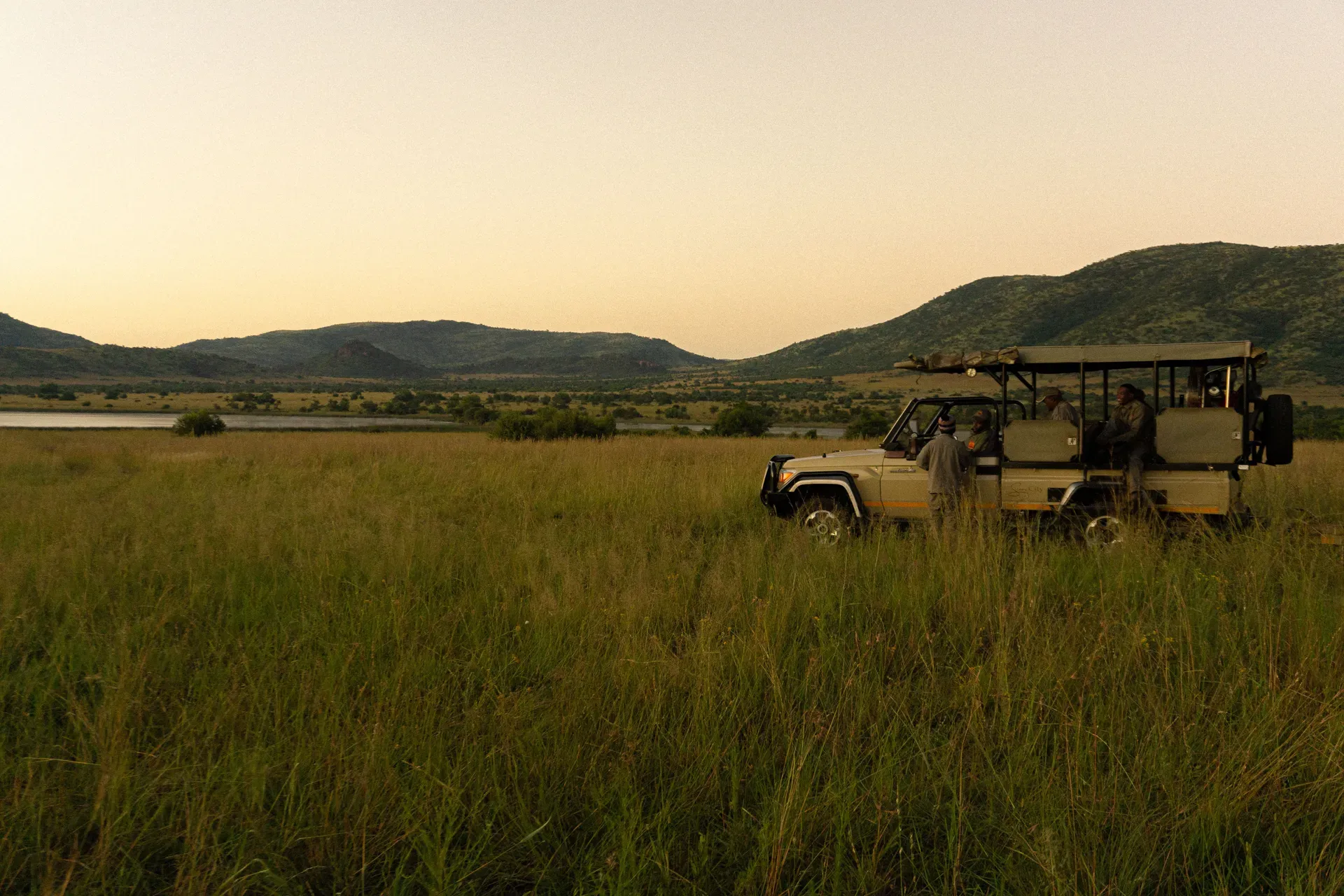
You drive yourself along nearly 200 km of roads inside the crater of a 1,300-million-year-old volcano, past lion, leopard, elephant and both rhino species — and a 2WD sedan handles most of it. Malaria-free, 217 km from Johannesburg, with over 7,000 animals packed into 55,000 hectares, so sightings come fast.
Find Guided ToursBig Five game drives inside the crater of a 1.3-billion-year-old volcano, two and a half hours from Johannesburg — that's Pilanesberg. The park covers 55,000 hectares in South Africa's North West Province, 60 km north of Rustenburg, and it's malaria-free, which makes it one of the country's most practical safari choices for families and first-timers. Lion, leopard, elephant, black and white rhino and buffalo share the reserve with cheetah, wild dog, sable and hippo — more than 7,000 animals across 24 larger mammal species, plus over 360 recorded birds.
Vulcanic eruptions roughly 1,300 million years ago formed the Pilanesberg Alkaline Ring Complex, and geologists rate it the world's most perfect surviving example. Only two comparable complexes exist, in Russia and Greenland, and neither is as clearly defined. Three concentric ridges of hills ring the crater, with the peak Thabayadiotso — "the Proud Mountain" — rising off-centre and the Mankwe Dam at its heart. The park also sits in a transition zone between the dry Kalahari and the wetter Lowveld, so species that rarely share a landscape coexist here.
By the late 1960s the land was exhausted by commercial farming. The Bophuthatswana government decided in 1969 to create a national park, negotiating with the Bakgatla tribe, whose communities were relocated east of the boundary. Then came Operation Genesis in 1979: workers erected a 110 km perimeter fence over rugged terrain, built 188 km of visitor roads and reintroduced more than 6,000 animals — at the time the largest and most expensive game-stocking and land-rehabilitation project ever attempted in an African reserve. Development ran through 1993; since 1994 the North West Parks and Tourism Board has run the park.
Stone and Iron Age sites scattered through the reserve record thousands of years of human habitation before any of it. Today nearly 200 km of roads thread the crater, and Sun City sits right next door.
Discover the full history and cultural significance on our About page.
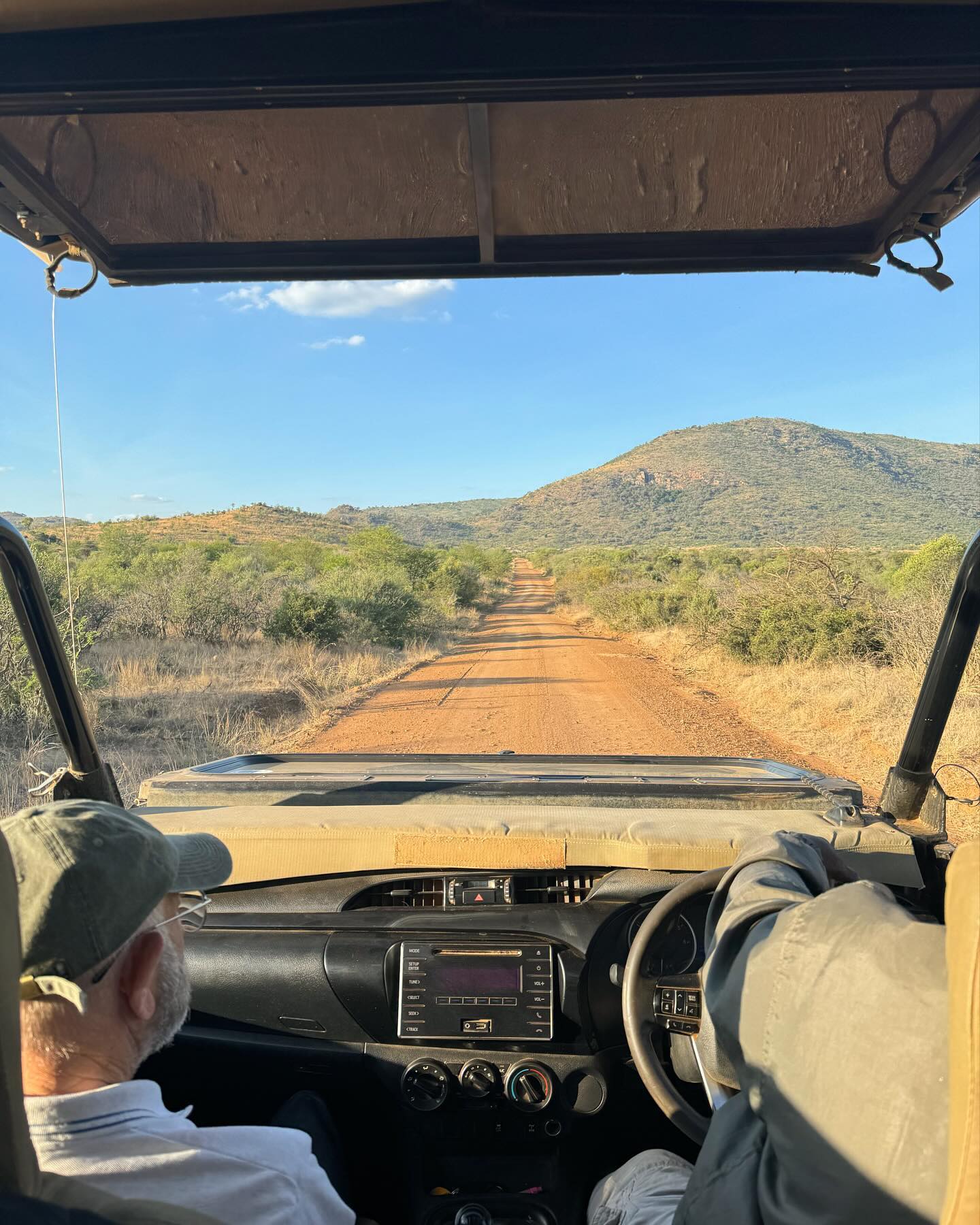
Nearly 200 km of roads wind through a 1,300-million-year-old extinct volcano, past syenite koppies, forested ravines and rolling grassland inside three concentric hill rings. Only two comparable alkaline ring complexes exist on Earth, in Russia and Greenland, and neither is as clearly defined. A 2WD sedan handles most loops.
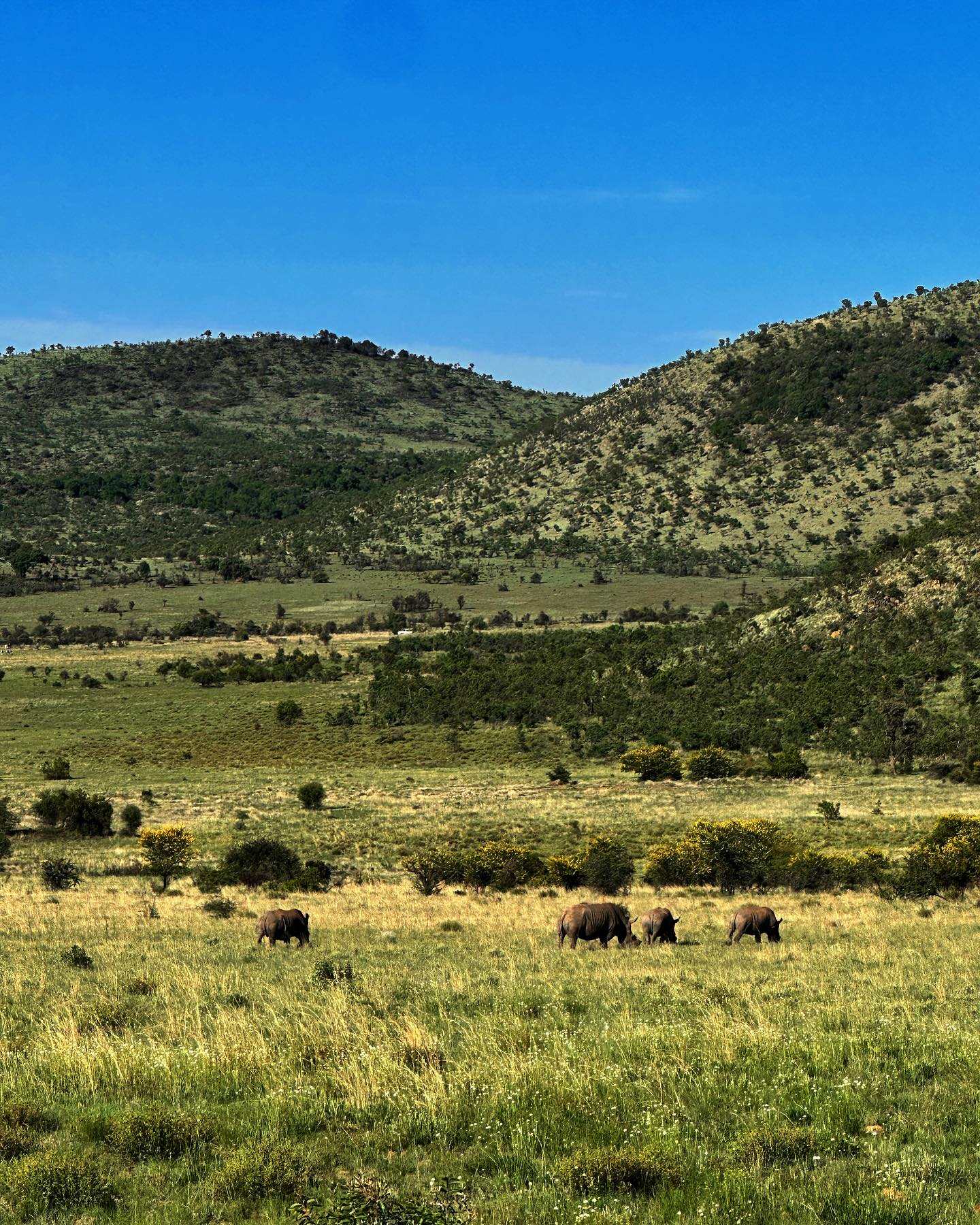
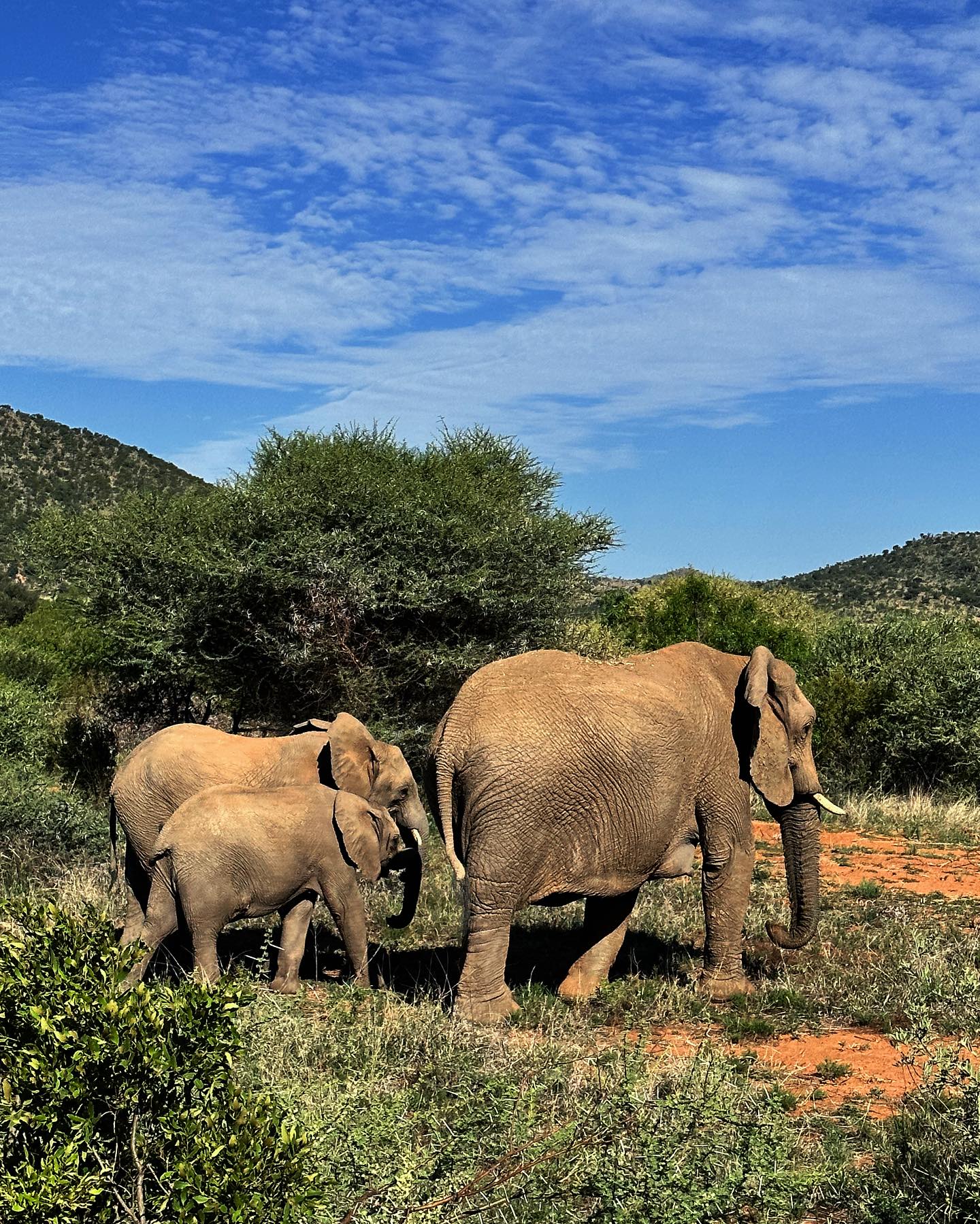
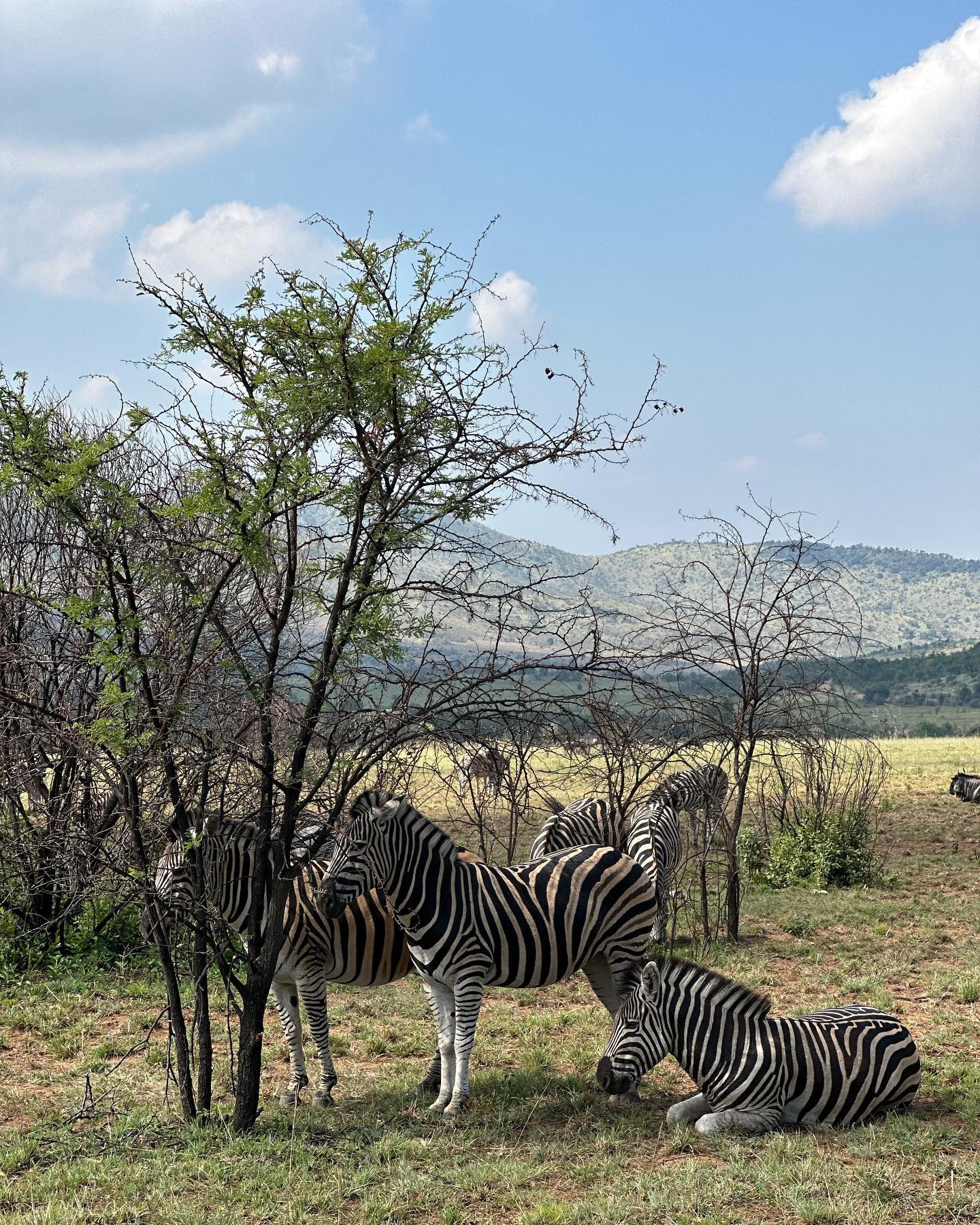
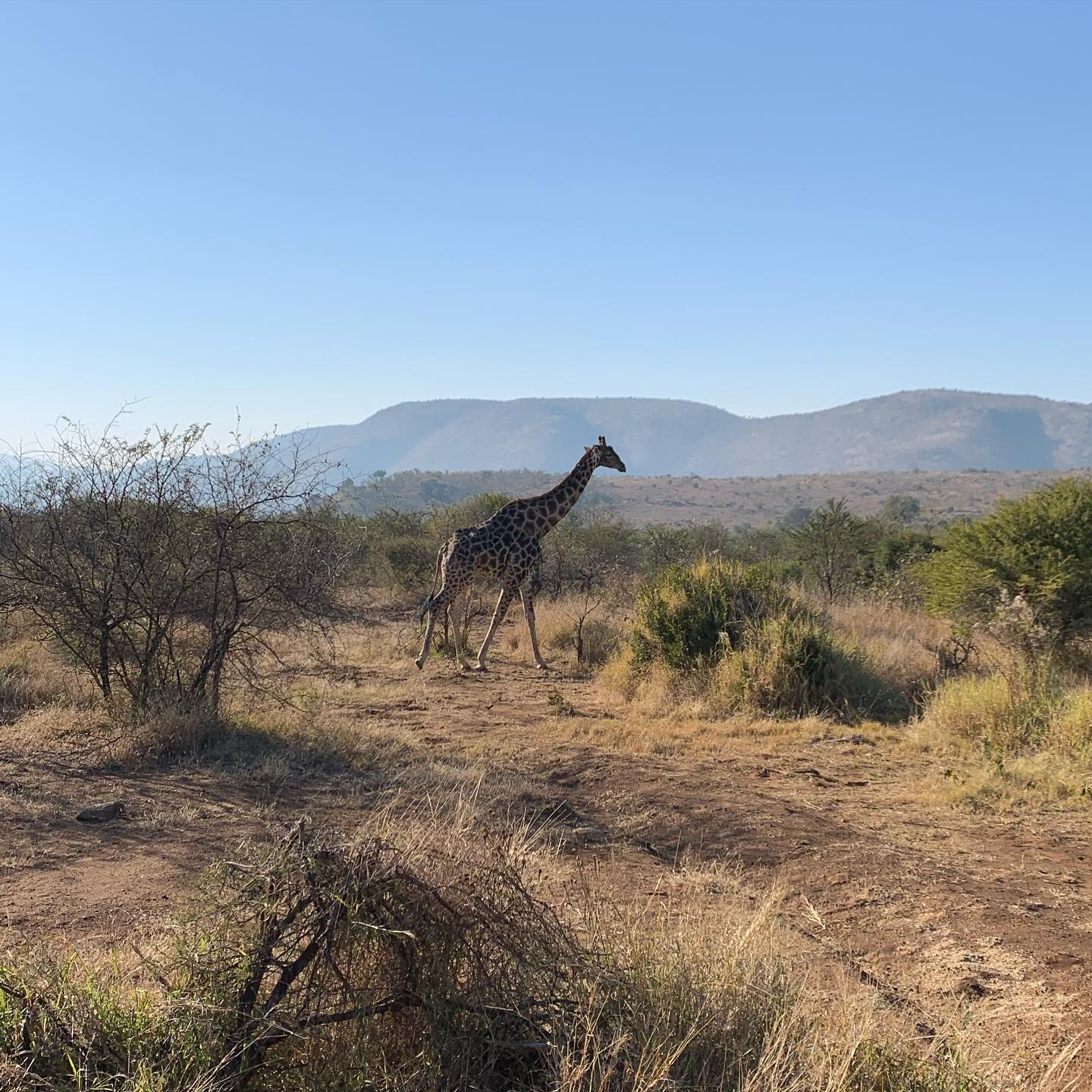
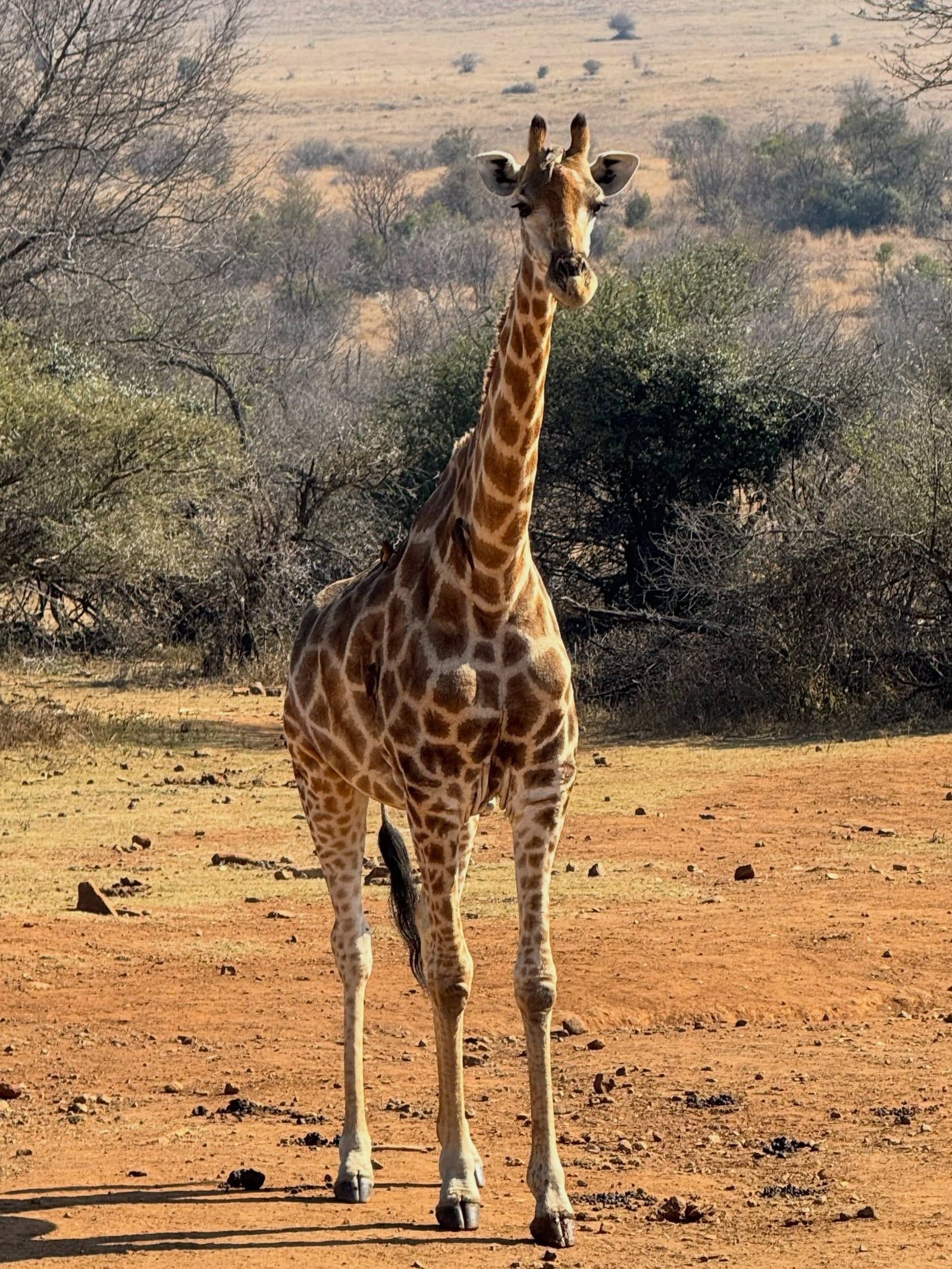
Lion, leopard, elephant, both rhino species and buffalo share 55,000 malaria-free hectares with cheetah, wild dog and brown hyaena — over 7,000 animals in a compact park, so sightings come fast. It's 217 km from Johannesburg, roughly a 2.5-hour drive, making this South Africa's easiest no-prophylaxis Big Five trip.
Sit water-level at the park's central lake and wait: hippos surface, waterbirds work the shallows, and with patience elephant and buffalo come down to drink. Thirty to forty-five minutes with the engine off often pays off. Hides are among the few places you may legally leave your vehicle.
Lift off before dawn and drift above the crater as herds move across the plains below, then touch down to sparkling wine and a full breakfast included in the fare. Flights start at about R7,025 per person. Book well ahead — the May to September dry season fills up first.
Book a Big Five game drive with hotel pickup from Johannesburg or Pretoria — every tour includes free cancellation up to 24 hours before departure.
Swipe to see more
 Free Cancellation 10h
 Free Cancellation 11h
 Free Cancellation 6h
 Free Cancellation Free Cancellation 10h Free Cancellation 6h Free Cancellation
 Free Cancellation 3h Free Cancellation 10h
 Free Cancellation 12h 30min
 Free Cancellation 9h
 Free Cancellation
Visit between May and September, when dry weather thins the vegetation, animals gather at permanent water, and skies stay mild and clear. The park's own guide calls mid-July to mid-October the prime window.
September stays dry with gates opening 06:00, and mid-July to mid-October is the park's stated prime window. Rains arrive from late October into November, thickening cover.
Hottest, wettest stretch — January and February bring short but heavy afternoon showers. Thick bush hides game and animals disperse from water. Birdwatching and newborn animals are the payoffs.
March and April are still wet, with thick vegetation making sightings harder. May brings the dry season's start: thinner bush, animals returning to waterholes, mild clear days.
Peak game viewing. Sparse vegetation, wildlife crowded around permanent water, and mild, clear weather. Gates open 06:30; pack warm layers — early mornings on open vehicles are cold.
Pilanesberg National Park is open 365 days a year, with gate times shifting seasonally. November through February, gates open 05:30 and close 19:00. March, April, September and October run 06:00 to 18:30. May to September, it's 06:30 to 18:00. September appears in both the 06:00 and 06:30 brackets on different official pages, so confirm locally before an early start. Closing times are strictly enforced — latecomers risk being locked inside the reserve after dark among dangerous game, so time your last loop to reach your exit gate before sunset.
| Category | Price |
|---|---|
| SA Citizen Adult (ID required) | R168 per person per day |
| SA Citizen Child (5–12 years) | R84 per person per day |
| SA Pensioner (ID required) | R84 per person per day |
| SADC Adult | R385 per person per day |
| SADC Child | R275 per person per day |
| Foreign National Adult | R748 per person per day |
| Foreign National Child | R748 per person per day |
| Vehicle: sedan/LDV/SUV | R168 per vehicle per day |
| Vehicle: Combi (1–16 seats) | R252 per vehicle per day |
| Vehicle: Minibus (17–25 seats) | R315 per vehicle per day |
| Vehicle: Large Minibus (26–50 seats) | R462 per vehicle per day |
| Vehicle: Bus | R578 per vehicle per day |
| Vehicle: Caravan/Motorhome | R315 per vehicle per day |
Tariffs took effect on 1 December 2025 and rose sharply — the international adult fee is now R748 per day plus R168 per vehicle — so confirm current rates before your trip. South African citizens must show an ID document at the gate to get resident rates. No Wild Card of any type is accepted; everyone pays the standard tariffs. Fees are charged per person and per vehicle, per day, payable at any of the five public gates (plus the private Black Rhino gate). Day visits need no special permit, but pre-book guided drives, hot air balloon flights and accommodation — campsites at Manyane and Bakgatla go through Golden Leopard Resorts on +27 14 555 1000. Park enquiries: +27 14 555 1600. Motorbikes cannot enter the park itself, though they may reach the Manyane and Bakgatla camping sites.
For complete schedules and ticket prices, visit our Hours & Fees page.
Pilanesberg sits about 217 km from Johannesburg via the N4 west, turning onto the R556 north towards Sun City, with the R510 leading to the eastern gates — a drive of roughly 2.5 to 3 hours. Lanseria International Airport is the closest commercial airport at 149–168 km, and daily shuttles and guided tours run from Johannesburg and Pretoria.
📍 Pilanesberg National Park, Bojanala region, North West Province, South Africa — roughly 60 km north of Rustenburg, reached via the R556 and R565 near Sun City (the research provides no exact street address)
Take the N4 west out of Johannesburg, then turn onto the R556 north towards Sun City. The R510 brings you to the park's eastern gates; continuing on the R556/R565 reaches the western gates. Roads are tarred and well signposted, and most internal roads suit a 2WD sedan, though high clearance helps on rough gravel sections. Rustenburg, 60 km south, is the last practical stop for fuel and supplies.
Lanseria (HLA) is the nearest commercial airport, 149–168 km from the park, and it sits closer to the N4 west than OR Tambo — so you skip most Johannesburg highway traffic. The route runs roughly two to two and a half hours via the N4 and R556. If you're flying in and renting a car, this is the airport to choose. OR Tambo is the farther option at about 220 km.
MoAfrika Tours runs daily Pilanesberg shuttles and transfers with a fleet of sedans, SUVs and minibuses seating up to 25, collecting from your Johannesburg hotel or the airport. Departures leave early in the morning to maximise your time inside the park during gate hours. Private operators quote two to two and a half hours from Johannesburg hotels, or 1.5–2 hours from Pretoria.
Operators listed on pilanesberg.org sell full-day tours pairing round-trip transport from Johannesburg or Pretoria with a 3-hour game drive inside the park. Expect ten to twelve hours door to door, covering about 220 km each way. A combined Sun City + Pilanesberg option adds an afternoon at the resort after the morning safari. Note that international visitors pay higher park levies on these tours.
For detailed transport options and routes, visit our Directions page.
Gates open 05:30 in summer and 06:30 in winter, and the first two hours deliver most predator sightings before midday quiet sets in. Plan a second loop in the last hour before closing, which falls between 18:00 and 19:00 depending on season. Latecomers get locked in after dark among dangerous game, so time your exit gate carefully.
SA citizens pay R168 per adult instead of the foreign-national rate of R748, but only with a South African ID shown at the gate. No Wild Card of any type is accepted, so don't count on one. Add R168 per sedan per day, and confirm current rates before your trip since tariffs jumped sharply on 1 December 2025.
The hide at Mankwe Dam is one of the few places you can legally leave your car, and it pays off. Sit for 30–45 minutes with the engine off and you'll often get elephant, buffalo, hippo and waterbirds at eye level. It's also the easiest way to stretch your legs without breaking park rules.
Open-vehicle game drives from May to September start bitterly cold before the sun clears the crater ridges, so bring warm layers even though daytime is mild. The upside: thin vegetation and animals concentrated at permanent water make winter the best viewing season. Since Pilanesberg is malaria-free, you can skip prophylaxis entirely.
Children are allowed on some guided drives at the ranger's discretion, with a guardian, and must stay inside the vehicle with limbs in. Between drives, the Manyane picnic area has a pool, plus a walk-in aviary holding over 80 indigenous bird species and a self-guided walking trail — rare out-of-car options in a Big Five park.
Drive on the left at 40 km/h maximum, and treat a cluster of stationary vehicles as a sighting worth stopping for — park so traffic can pass. If an elephant approaches, reverse away calmly and never block its path, especially with calves around. Fines and ejection are real consequences for rule-breakers.
South Africa's famous casino-resort sits right beside the park, with the opulent Palace of the Lost City, the Bridge of Time, the Sky Train and the Valley of Waves water park. Do a morning Big Five drive, then spend the afternoon here.
A private Big Five reserve joined to Pilanesberg's western boundary, with its own entrance gate and upmarket lodges such as Buffalo Thorn, Morokolo, Nkala and Shepherd's Tree. You get lodge-based quiet plus direct access to Pilanesberg's game routes.
A provincial reserve on the slopes above Rustenburg, offering mountain scenery, hiking and smaller game in a malaria-free setting. It's the parks board's closest reserve to Pilanesberg, and a convenient add-on when arriving via Rustenburg.
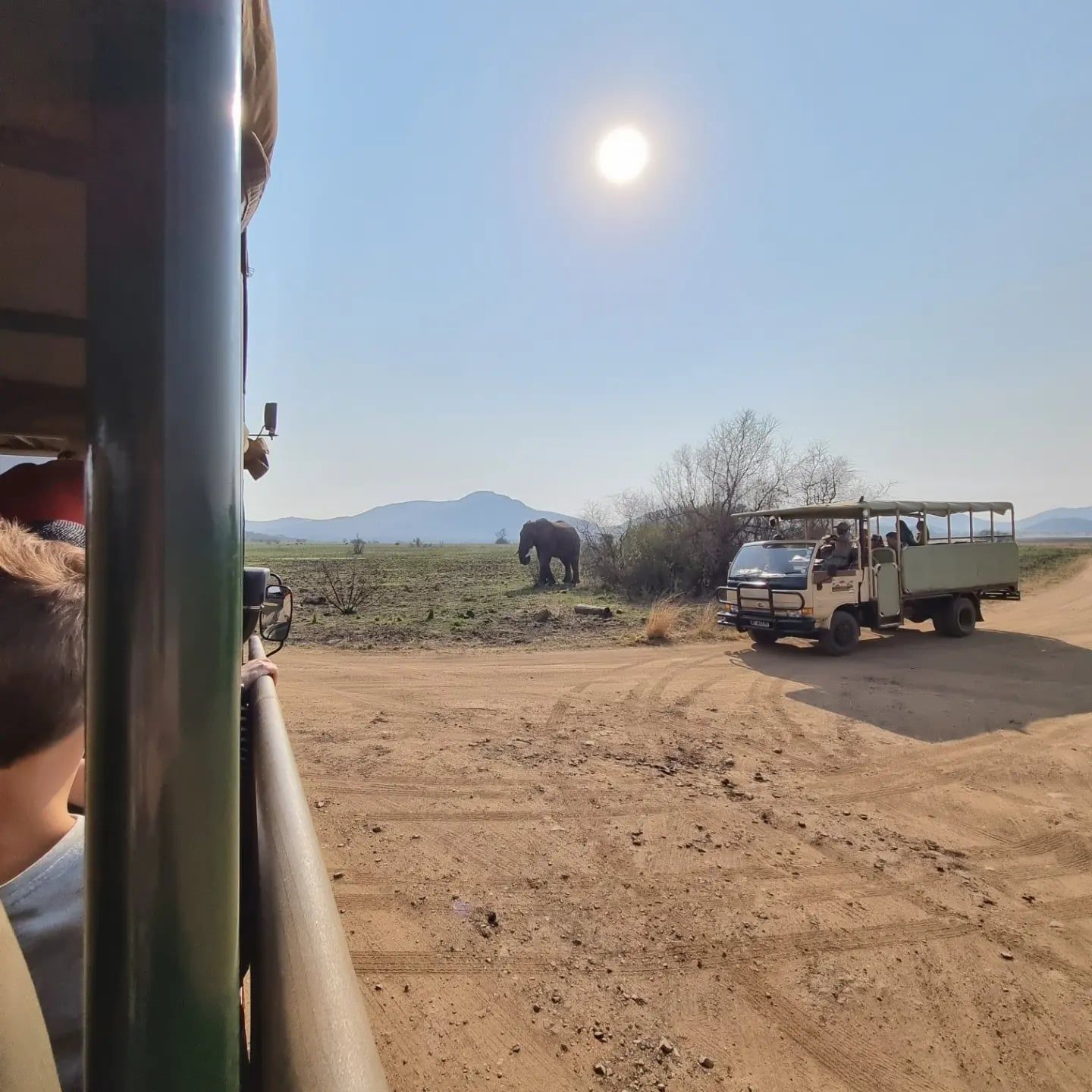
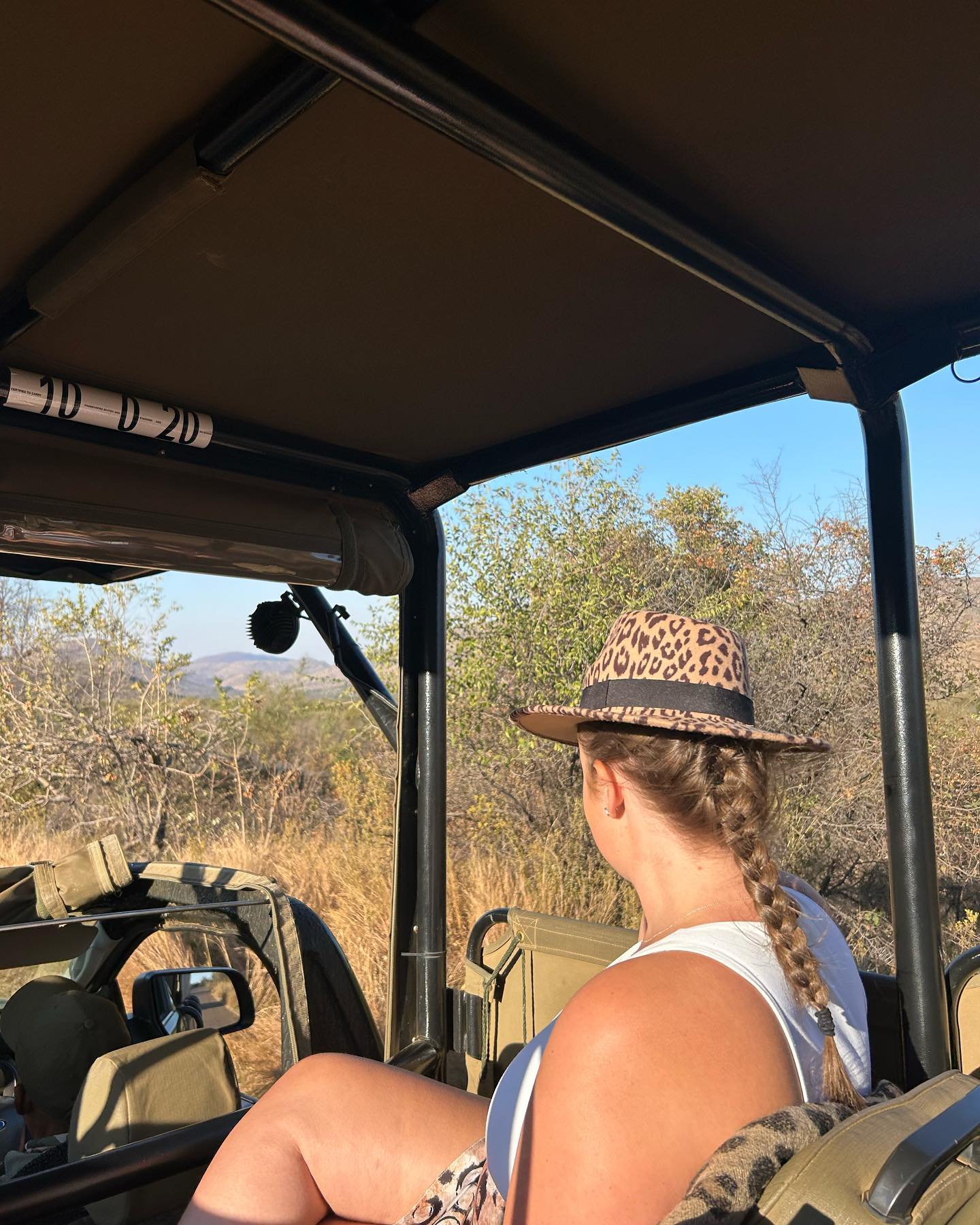
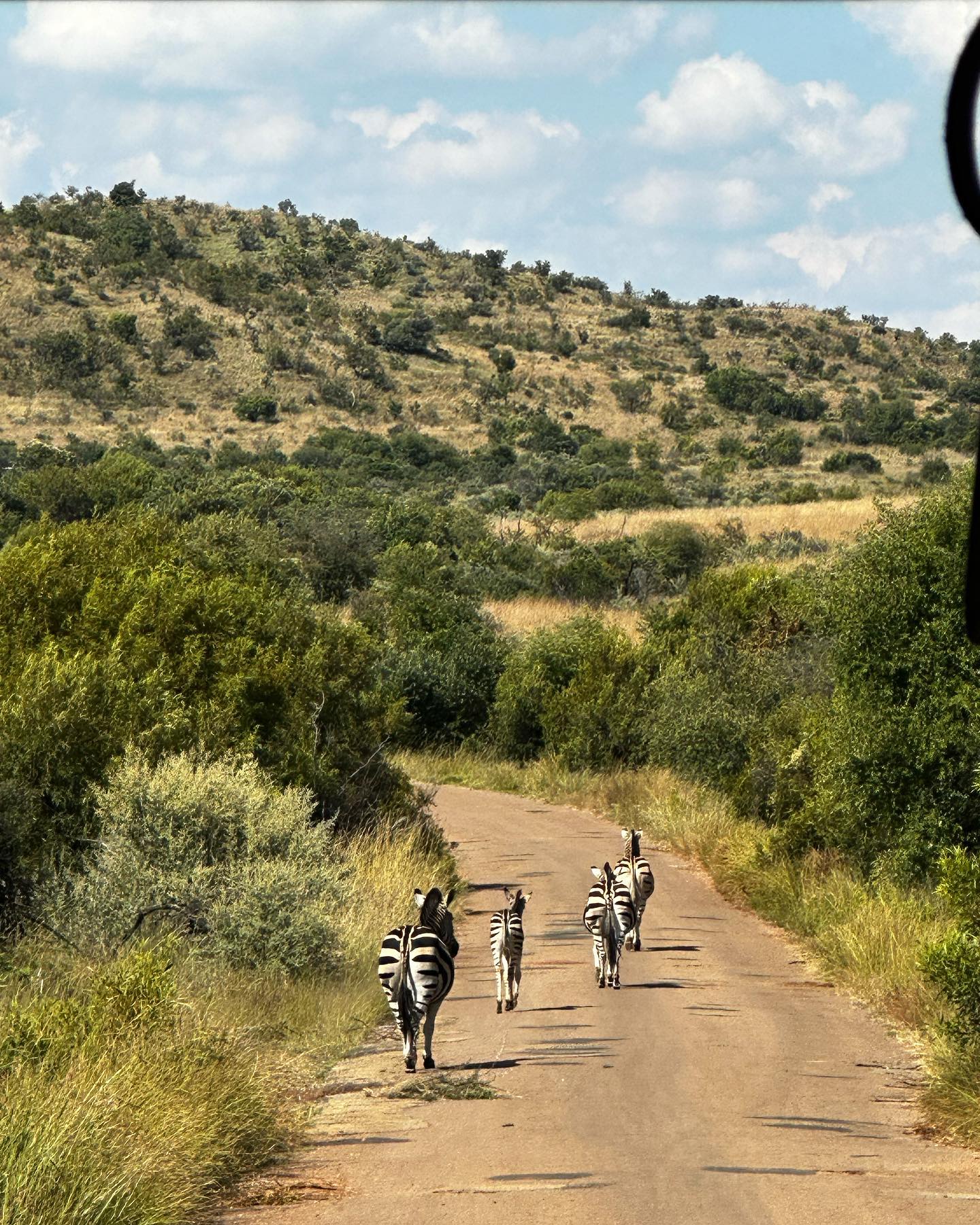
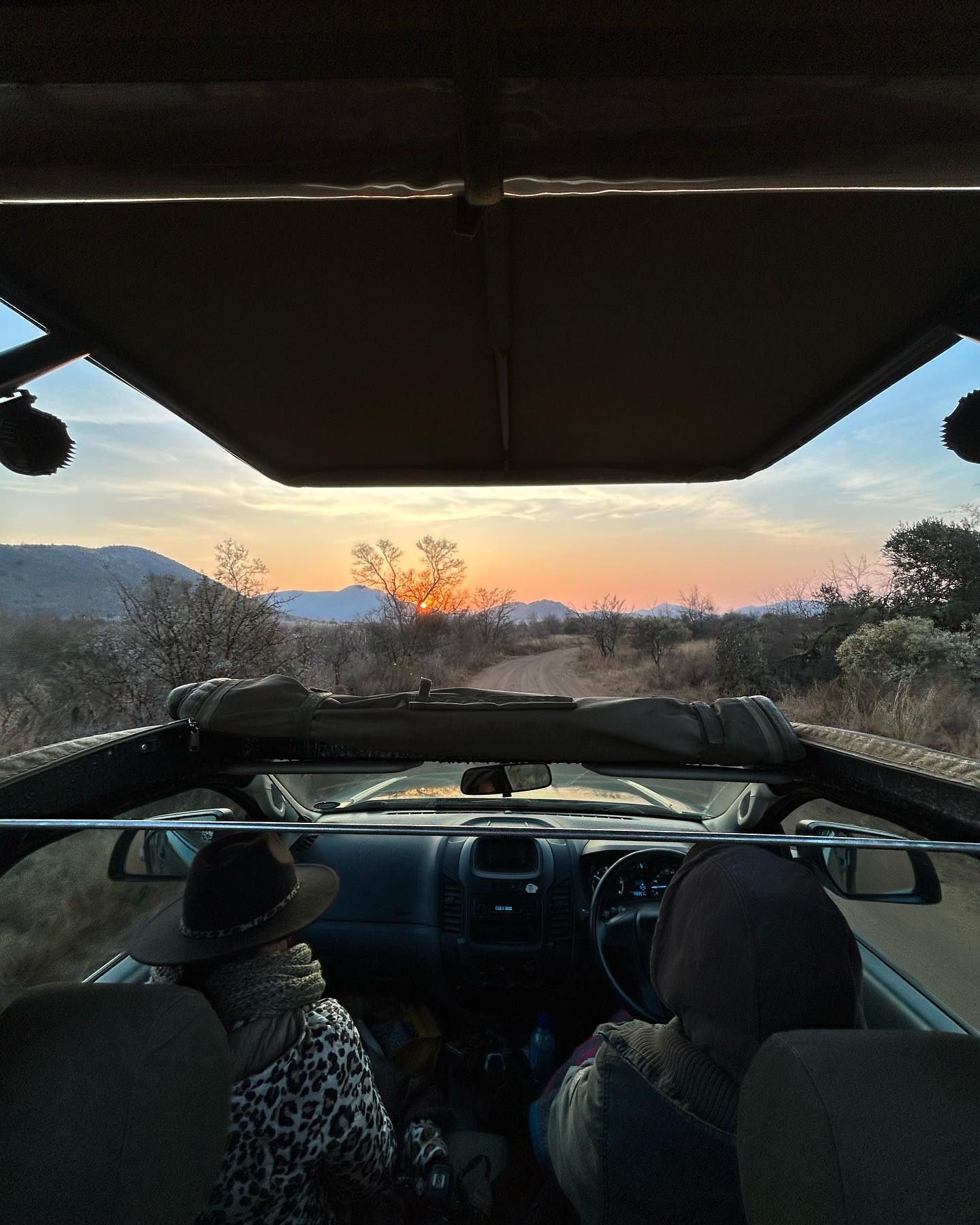
Read what travelers share about their experience visiting Pilanesberg National Park — from practical tips to personal highlights.
Planning advice, comparisons, and practical tips.
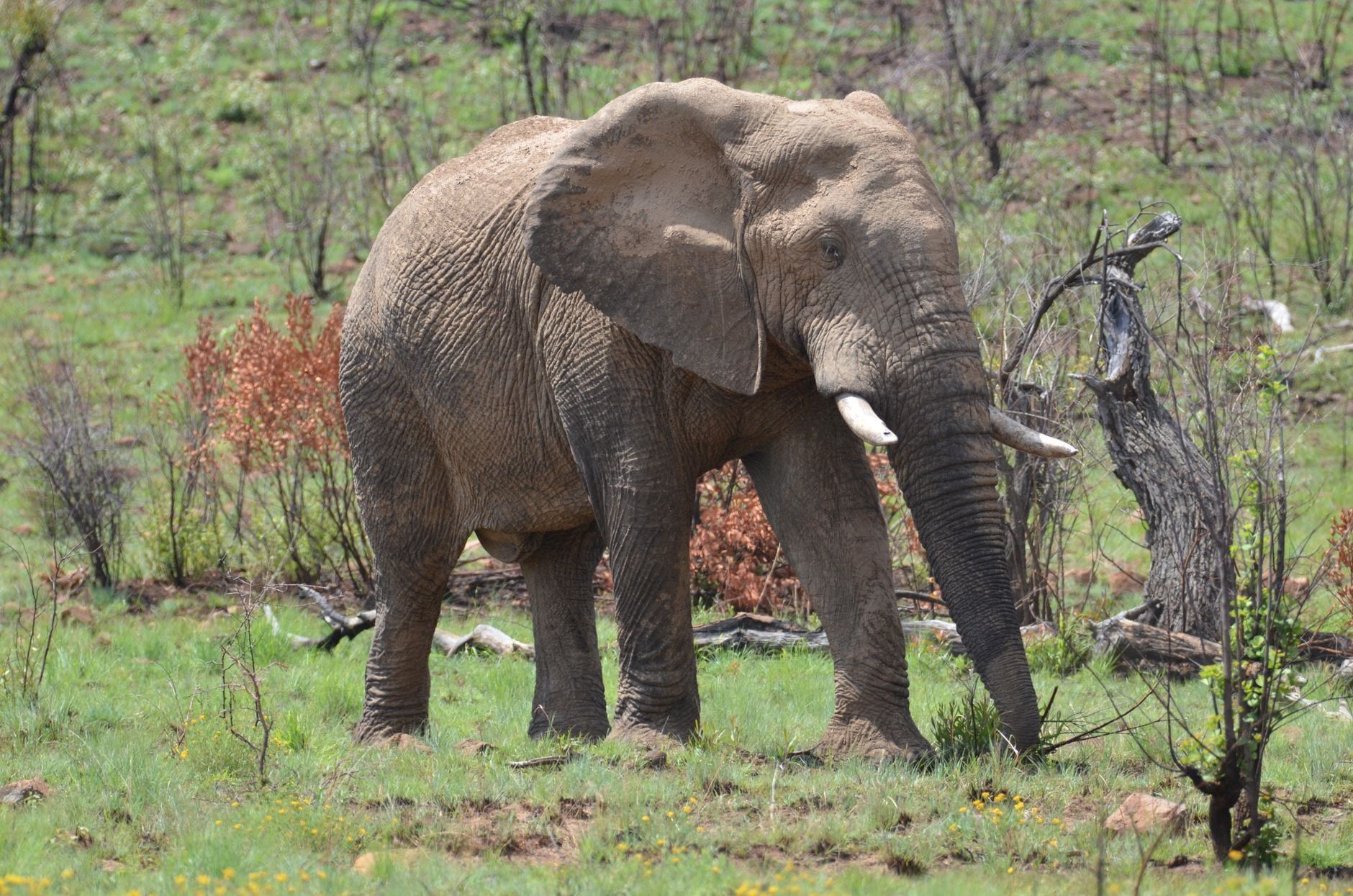
A Big 5 safari and back in Johannesburg by dinner: that's a Pilanesberg day trip, and it works far better than it sounds. The park sits 217 km from…
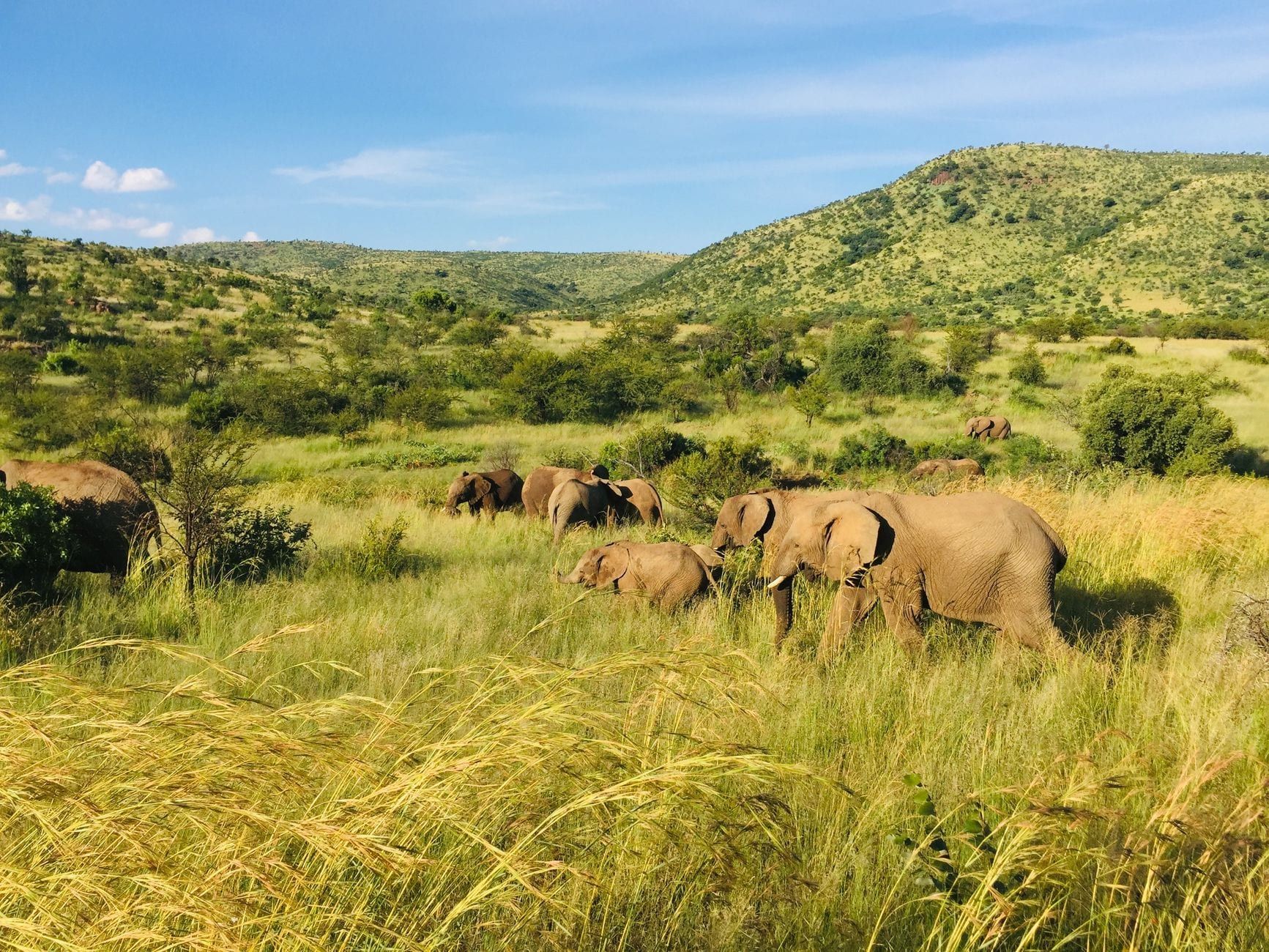
Pilanesberg packs the Big 5 into a 550 km² park that sits inside the collapsed cone of a 1.3-billion-year-old volcano, about 2.5 hours' drive from…
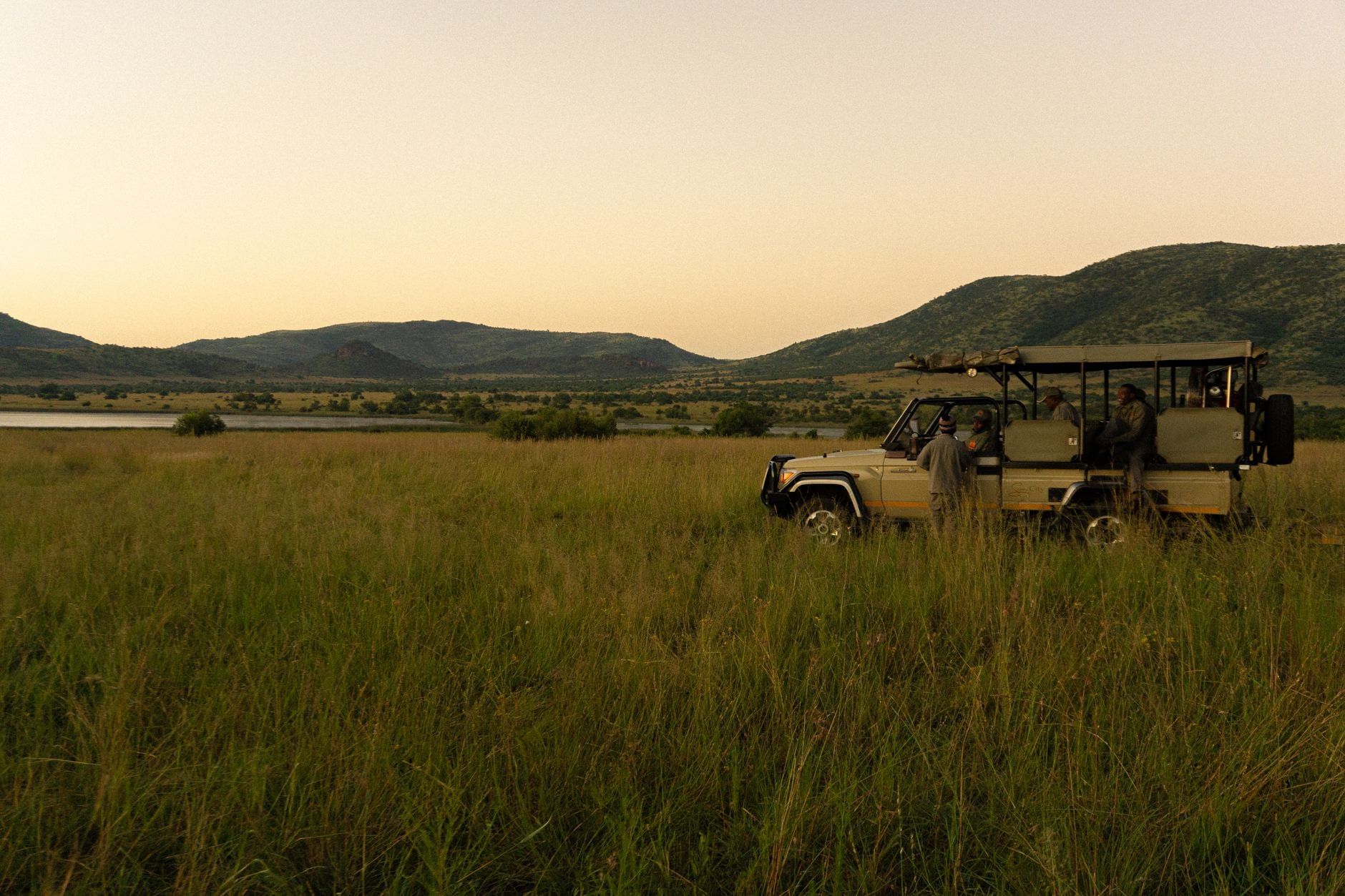
A Pilanesberg safari can cost R336 or more than R44,000 per person, and almost all of that spread comes down to three choices: drive yourself or ride…
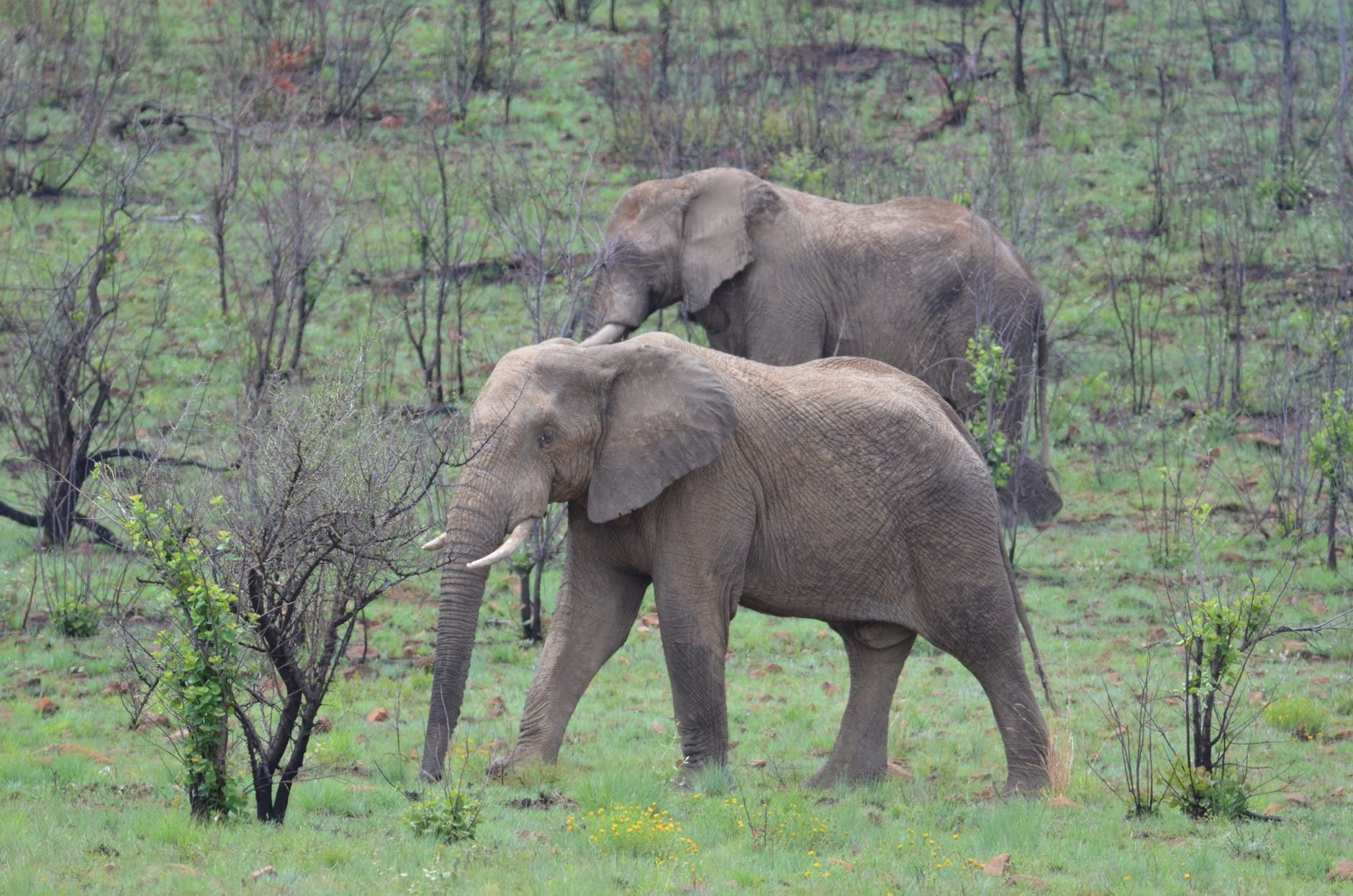
Pilanesberg National Park holds all of Africa's Big 5 — lion, leopard, elephant, both rhino species and buffalo — inside the eroded crater of a…
Foreign visitors pay R748 per person per day plus R168 per sedan, SUV or LDV, as of 1 December 2025. South African adults pay R168 (R84 for children 5–12 and pensioners, with ID), SADC adults R385, and larger vehicles pay more — a minibus of 17–25 seats is R315. No Wild Card of any type is accepted.
Gates run 05:30–19:00 from November to February, 06:00–18:30 in March, April, September and October, and 06:30–18:00 from May to August. Closing times are strictly enforced — latecomers risk being locked in the reserve after dark among dangerous game. September appears in both brackets on different official pages, so confirm locally.
Yes — it's 217 km via the N4 west and the R556 towards Sun City, roughly 2.5–3 hours each way. Daily shuttles from Johannesburg cost R1,500, and full-day guided tours with a 3-hour game drive start at R1,800 per person including the park levy.
The dry winter months of May to September, with the park's own guide naming mid-July to mid-October as the prime window — vegetation thins and animals gather at permanent water. October to April is the toughest stretch because thick bush hides the game. Either way, aim for the first and last hours of the day.
No — most internal roads are fine in a 2WD sedan, and the drive from Johannesburg is on tarred, well-signposted roads. Some gravel roads inside are rough, though, so a high-clearance vehicle is recommended. Stick to the 40 km/h limit; animals cross constantly at dawn and dusk.
Yes, it lies in a low-risk malaria area and is widely marketed as malaria-free, making it one of South Africa's best no-prophylaxis safari choices. The park's own FAQ still advises basic precautions like mosquito repellent and nets, particularly in the wet summer months of October to April.
Because game viewing happens from your own vehicle, the park is inherently accessible. Ivory Tree Game Lodge is explicitly wheelchair-friendly, with accessible accommodation and game drives, and Shepherd's Tree Game Lodge is also noted as accessible. Contact the park office on +27 14 555 1600 ahead of your visit to arrange assistance at hides and picnic sites.
Book ahead through the park or its operators: a 3-hour open-vehicle drive costs from R900 per adult and R450 per child, and sunrise balloon safaris start at R7,025 per person including sparkling wine and breakfast on landing. Campsites at Manyane and Bakgatla are reserved through Golden Leopard Resorts on +27 14 555 1000. Reserve well ahead for weekends and the December holidays.
Browse verified tours with free cancellation and instant confirmation.
Find Tours


