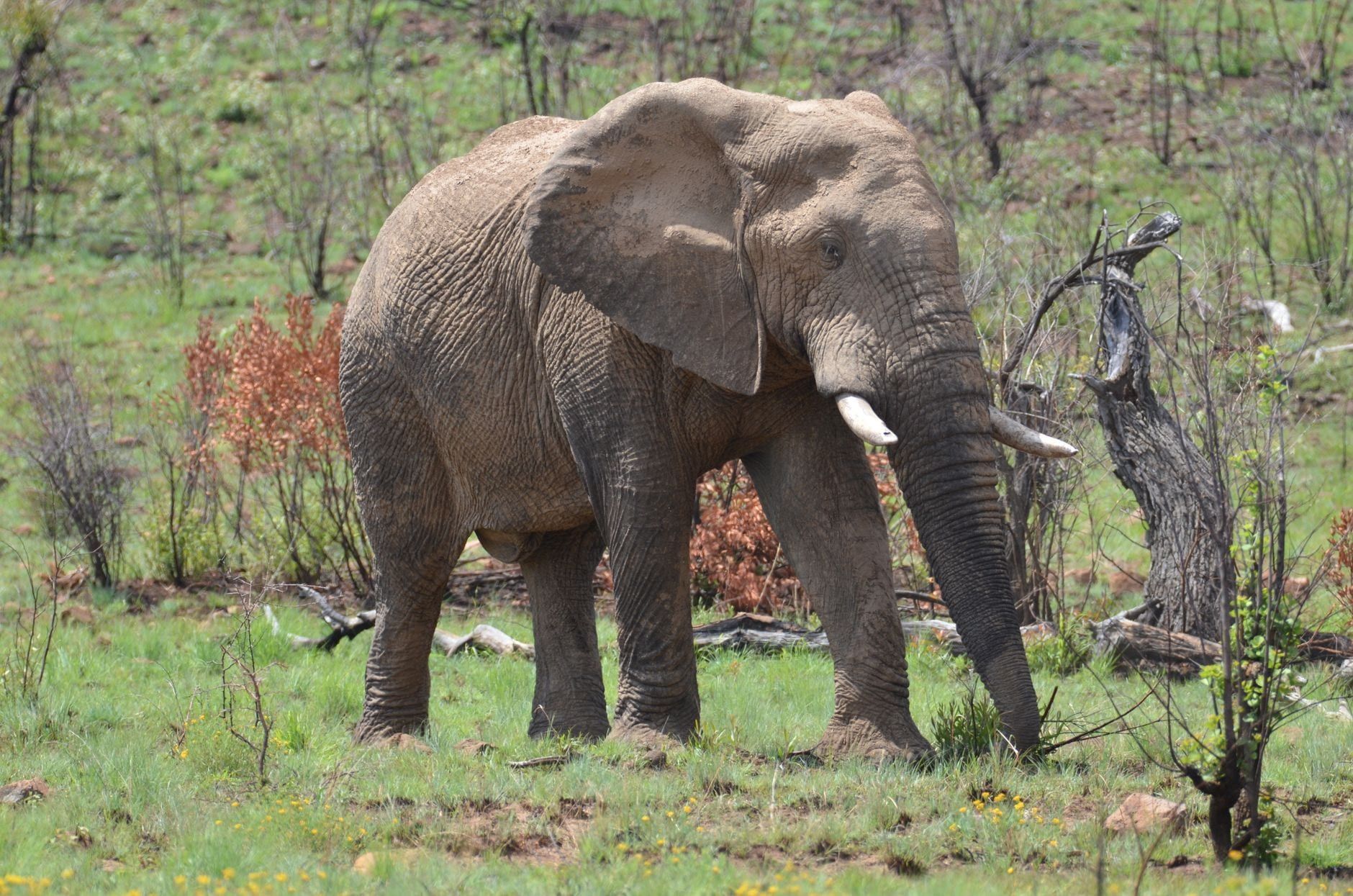
A Big 5 safari and back in Johannesburg by dinner: that's a Pilanesberg day trip, and it works far better than it sounds. The park sits 217 km from the city, about two and a half hours each way on fast, tarred roads, and it's the closest place to Joburg where lion, leopard, elephant, rhino and buffalo all roam free. It's also malaria-free, so there's no prophylaxis to plan around and no reason to hesitate on a layover.
This guide covers the route, current fees (they jumped sharply in December 2025), the tour-versus-self-drive maths, an hour-by-hour plan, honest odds on what you'll see, and the Pilanesberg tour options worth booking.
Pilanesberg at a Glance: Why It Works as a Day Trip
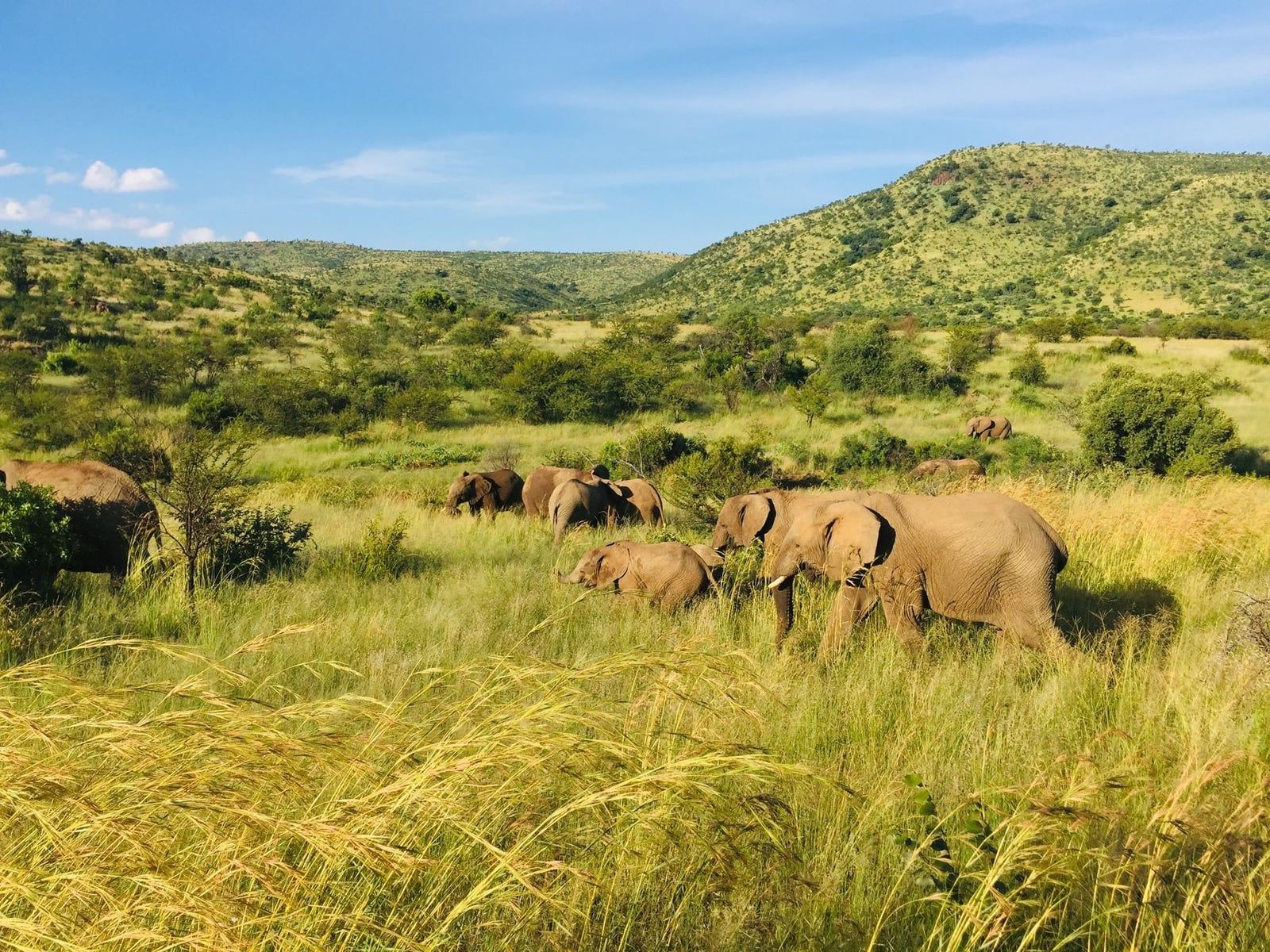
Pilanesberg is South Africa's fourth-largest park, 572 square kilometres of bushveld inside the crater of a volcano that last erupted roughly 1,300 million years ago. Three concentric rings of hills frame every view. Because the crater sits where dry Kalahari and wetter Lowveld vegetation overlap, species that rarely share a landscape live side by side here — more than 7,000 animals and 360-plus bird species across 55,000 hectares.
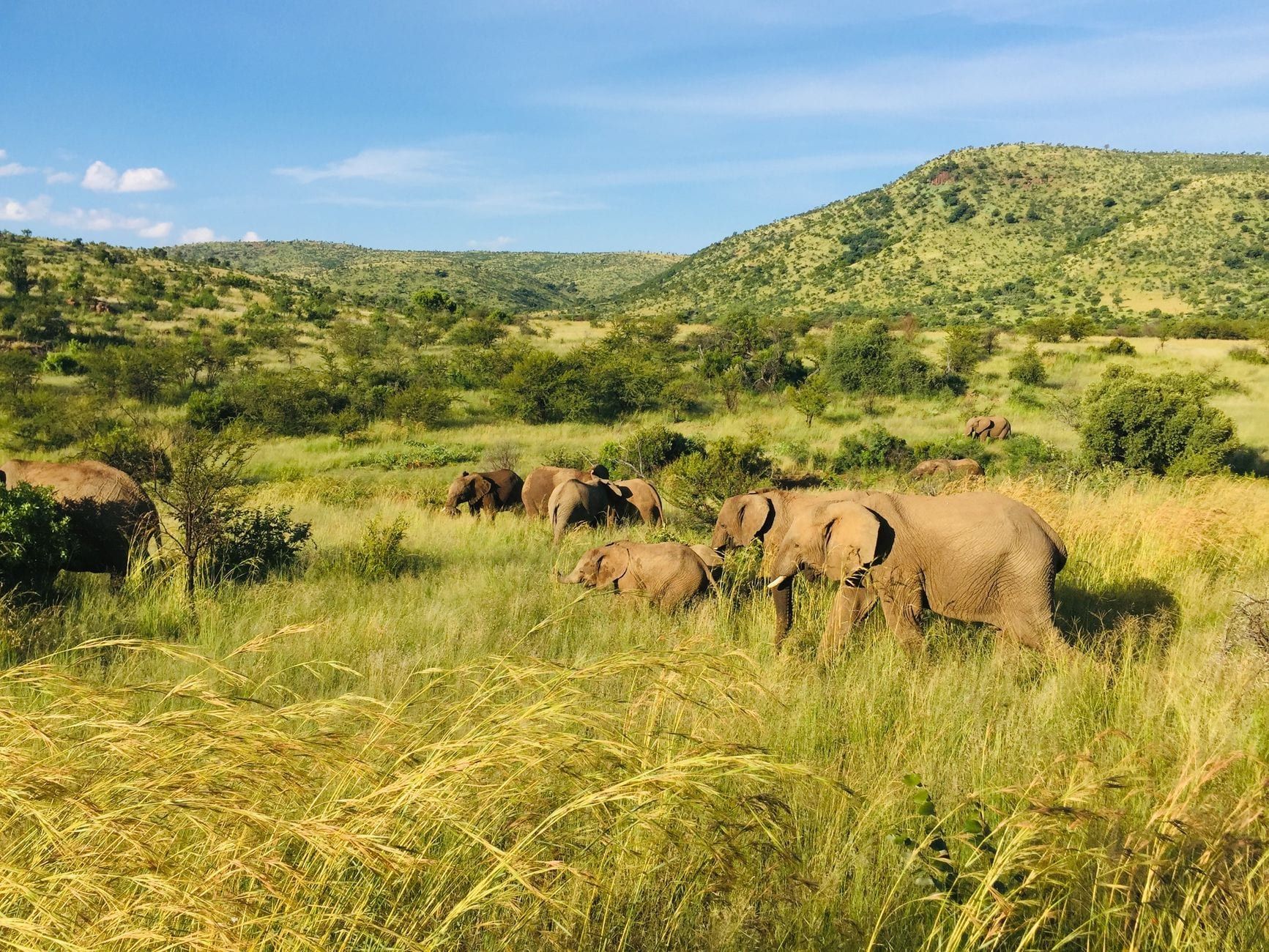
The wildlife roll call is the draw. Lion, leopard, elephant, both rhino species and buffalo, plus cheetah and African wild dog: the Big 5 and then some, marketed locally as the Super Seven. Around 60 to 70 lions hold territories centred on Mankwe Dam, the park's large central lake. None of it is ancient, either. Operation Genesis in 1979 reintroduced more than 6,000 animals to what had been degraded farmland, then the largest game-stocking project any African reserve had attempted.
Why here rather than Kruger? Scale. Kruger is vastly larger, so its animals are spread across distances a day visitor simply can't cover, and it's a much longer drive from Joburg. Pilanesberg's density and proximity give you genuine Big 5 odds in ten hours inside the park. Our comparison of Pilanesberg and Kruger goes deeper, but for a layover, a short stay, or a first safari the verdict is simple: Pilanesberg, day trip, done.
Getting There: Route, Driving Time and Car Hire
Take the N4 west from Johannesburg toward Rustenburg, then turn onto the R556 north toward Sun City. The R556 and R565 continue past Sun City to the western gates, while the R510 serves the eastern ones. The whole run is 217 km — two hours forty at legal speeds, closer to three with traffic. Day visitors use four of the five public gates: Bakubung (west, the main gate), Manyane (east, off the R510), Bakgatla (northeast) and Kwa Maritane (southeast).
Leave between 05:00 and 05:30 to arrive shortly after gate opening, and aim to be at the gate about 30 minutes early — the fee-payment queue builds fast in peak season. The final stretch demands patience: the R556 is a speed-camera hotspot, and cattle and donkeys stand in the road with total confidence. Budget slow kilometres at the end rather than a fine.
A hired 2WD sedan handles the drive and the park's tarred main roads without complaint. Some gravel loops are rough, and higher clearance buys better sightlines over the roadside grass; a 4x4 only earns its keep after heavy rain. One rental trick: pick up at Lanseria rather than OR Tambo. Lanseria sits closer to the N4 and trims the drive to about two hours. There's also a niche fly-in option — scheduled flights between OR Tambo and Pilanesberg International Airport, inside the park, run Mondays, Wednesdays and Fridays. Full transport detail is in our guide to getting to Pilanesberg.
Guided Day Tour vs Self-Drive: Costs and Trade-Offs
Three practical ways to run the day, priced from the park's current rate sheet.
Shared tour with hotel pickup
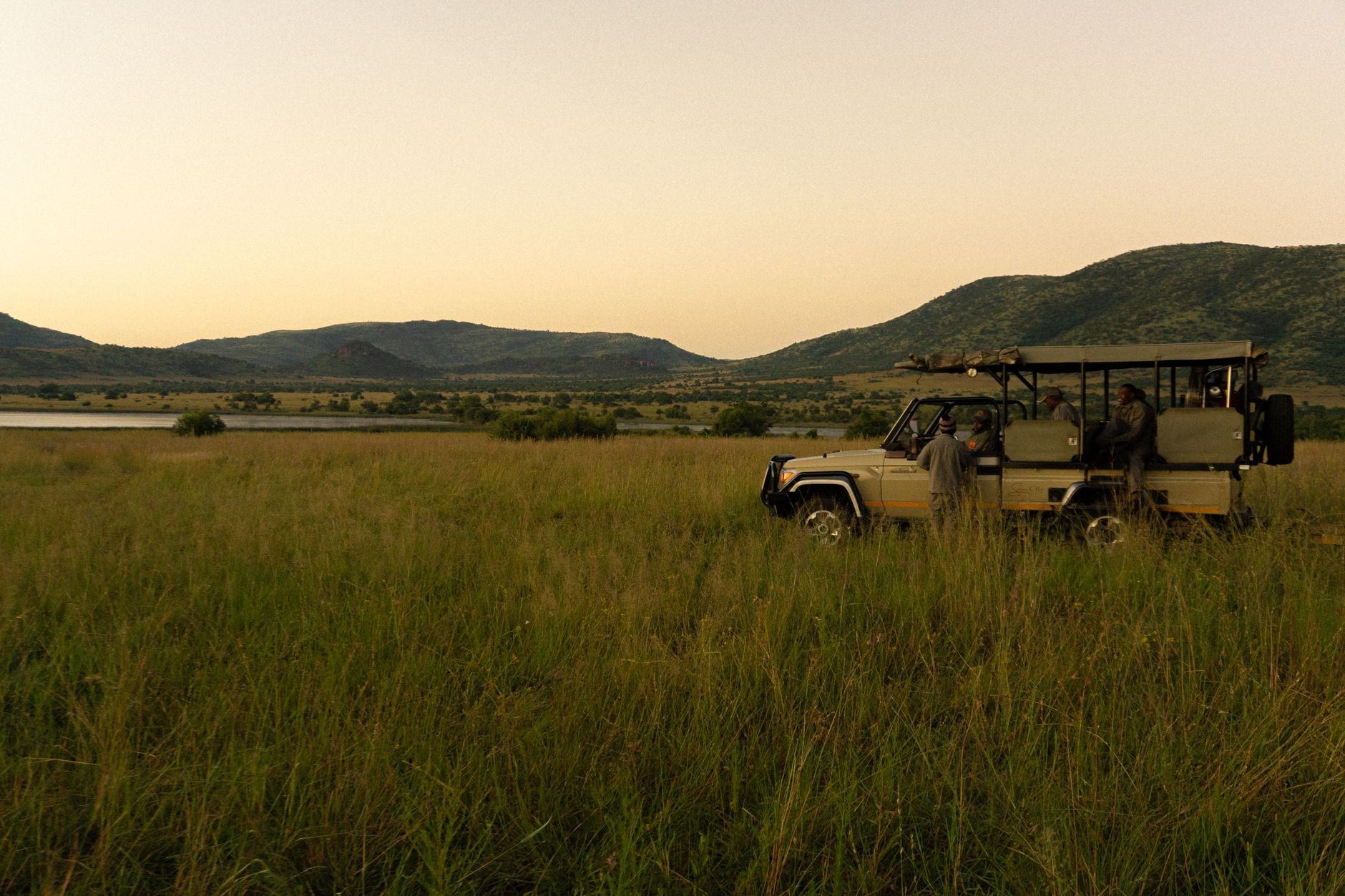
The park's own full-day tour collects in Sandton at 06:00 and returns around 18:30, with a morning drive (09:00–12:00), lunch, and an afternoon drive. It costs R2,900 per person for South Africans and R3,400 for international visitors, park levy included. Commercial operators price similarly — MoAfrika's Ultimate day tour, with return transfers, two open-vehicle drives and lunch, is R2,995 sharing or R3,250 single. The guides earn it: they work a radio network of sightings and know tracks you'd never find.
The Bakubung Gate money-saver
Few visitors know this one. The same 6-hour tour costs R1,800 (SA) or R2,050 (international) if you drive yourself to Bakubung Gate and join there, levy included. A 3-hour gate drive runs R1,050/R1,550. Self-drivers can also bolt on the park's scheduled open-vehicle drives at about R900 per adult and R450 per child for three hours — a ranger for the hours that matter, your own car for the rest.
Full self-drive
A solo international visitor pays R748 entry plus R168 for the vehicle: R916 before a single rand of fuel or rental. South Africans pay R168 plus R168, which is why self-driving is the local default. You trade the guides' radio network for total schedule freedom, and you stop when a lilac-breasted roller poses. For current pricing on every option, see our pages on day tours from Johannesburg.
| Style | Cost | Best for | The catch |
|---|---|---|---|
| Self-drive | R916 entry (foreign solo) + fuel + rental | SA residents, schedule freedom | No radio network; you find your own sightings |
| Shared tour, hotel pickup | R2,900–R3,400 pp | First-timers without a car | Fixed schedule, group pace |
| Meet the tour at Bakubung Gate | R1,800–R2,050 pp | Drivers who want a ranger's hours | You still drive 2.5 h each way |
| Park drive bolt-on (3 h open vehicle) | R900 adult / R450 child | Self-drivers wanting guided hours | Fixed early or late departure times |
| Pilanesberg + Sun City combo | Priced per operator | Families wanting variety | Meaningfully less game-viewing time |
Your Pilanesberg Day Trip, Hour by Hour
Here's a day that works, built on the official tour schedule and anchored to seasonal gate times. Copy it.
- 05:30 — leave Johannesburg; 08:00 at the gate, 30 minutes before opening
- 08:30–12:00 — morning drive in the cool, active hours
- 12:00–13:00 — lunch at the Pilanesberg Centre, mid-park
- 13:00–15:00 — second loop on different roads; Mankwe Dam hide
- 15:45 — exit well before gate closing
- 18:00–18:30 — back in Johannesburg
Gate opening moves with the seasons — 05:30 in summer (November–February), 06:30 in winter (May–September), 06:00 in the shoulder months — so shift the whole schedule to match. Door to door, expect 14 to 16 hours. It's a long day; go to bed early the night before.
First visit? Start on the tarred Kubu/Kgabo Drive, which crosses the park between Bakubung and Bakgatla gates, then branch onto gravel loops once you have your bearings. The Pilanesberg Centre — restaurant, toilets, curio shops — sits right on that road, and Mankwe Dam is minutes away. That's your lunch stop and your best hour of wildlife-watching in one place.
With children or older travellers, swap marathon driving for hide time. The whole park is car-based, so nobody has to walk far to see game, and seniors manage it comfortably. Kids' rules are strict: limbs inside the vehicle, always. Break the day with the Mankwe hide and the Manyane aviary rather than pushing through the midday lull when animals are shaded and still anyway.
Entrance Fees, Gate Times and Park Rules
The number that trips people up: entrance fees rose steeply on 1 December 2025, and most articles online still quote the old R110–R140. The gate will not honour those figures. Pay the rates below, per person and per vehicle, per day.
| Category | Rate per day |
|---|---|
| SA citizen adult (ID required) | R168 |
| SA child 5–12 / SA pensioner | R84 |
| SADC adult | R385 |
| SADC child | R275 |
| Foreign national, adult or child | R748 |
| Vehicle (sedan/LDV/SUV) | R168 |
South Africans must show ID for resident rates. No Wild Card of any type is accepted, and motorcycles can't enter the park itself. Current times and tariffs are always on our Pilanesberg hours and fees page.
Gate times run 05:30–19:00 from November to February, 06:00–18:30 in March, April, September and October, and 06:30–18:00 from May to August. September straddles the brackets on different official pages, so confirm locally that month. Closing is enforced without exceptions, and being locked in a reserve with free-roaming lion is as grim as it sounds.
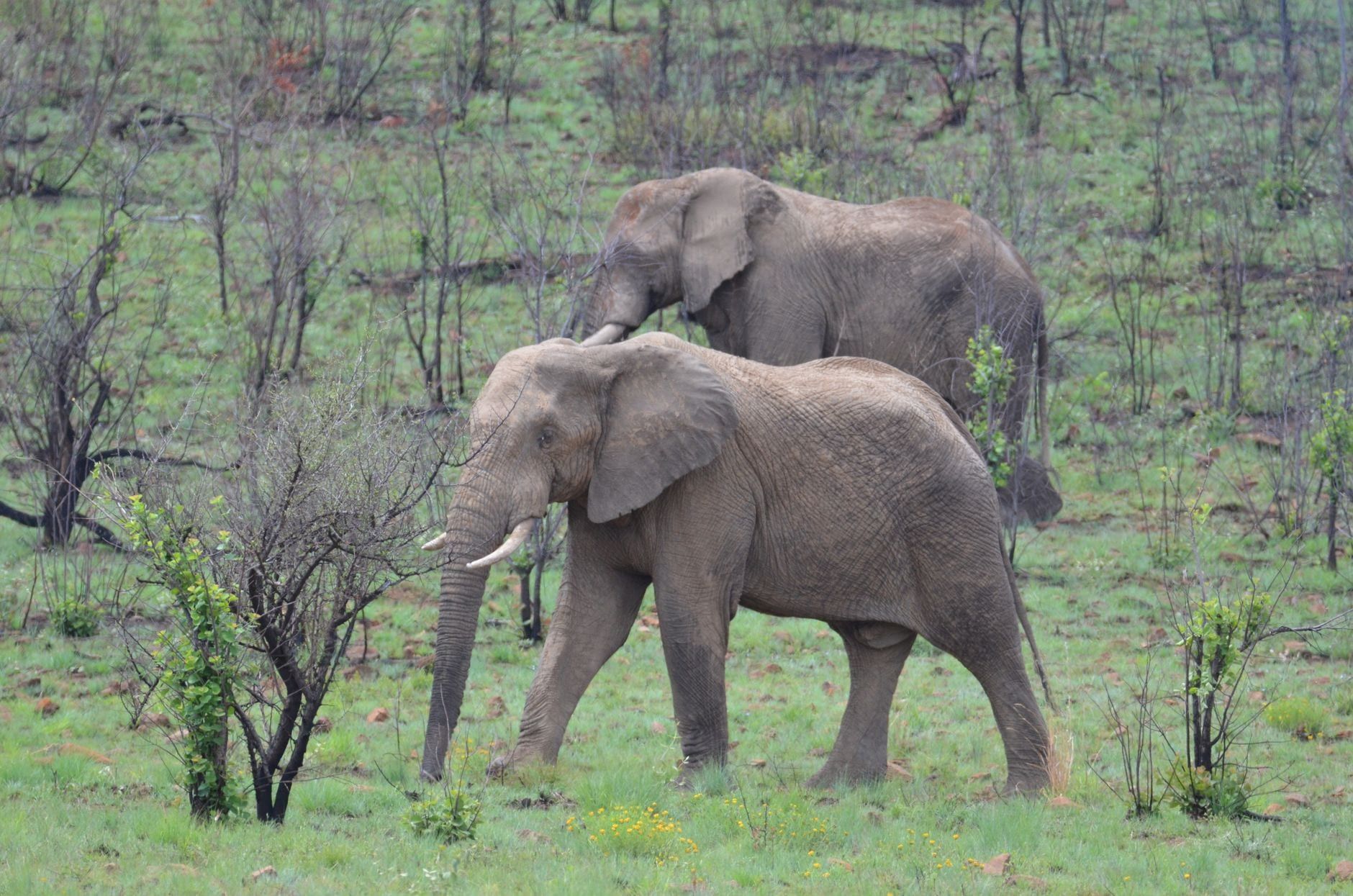
The rules are short and non-negotiable. Stay in your vehicle except at hides and designated picnic sites. Maximum 40 km/h. No feeding or touching animals, no litter, no removing plants, and never drive through dung — the dung beetles are working. On elephants: give right of way, watch for musth signs (fluid streaming from the temporal glands, a high-headed swagger), and reverse slowly away if one approaches. Never pull over to let an elephant pass your vehicle.
What You Can Realistically See in One Day
Honest framing first: a day trip is a sampling exercise, not a checklist sweep. Big 5 sightings happen daily and several ticks in one day are common, but nothing is guaranteed — leopard especially plays hard to get.
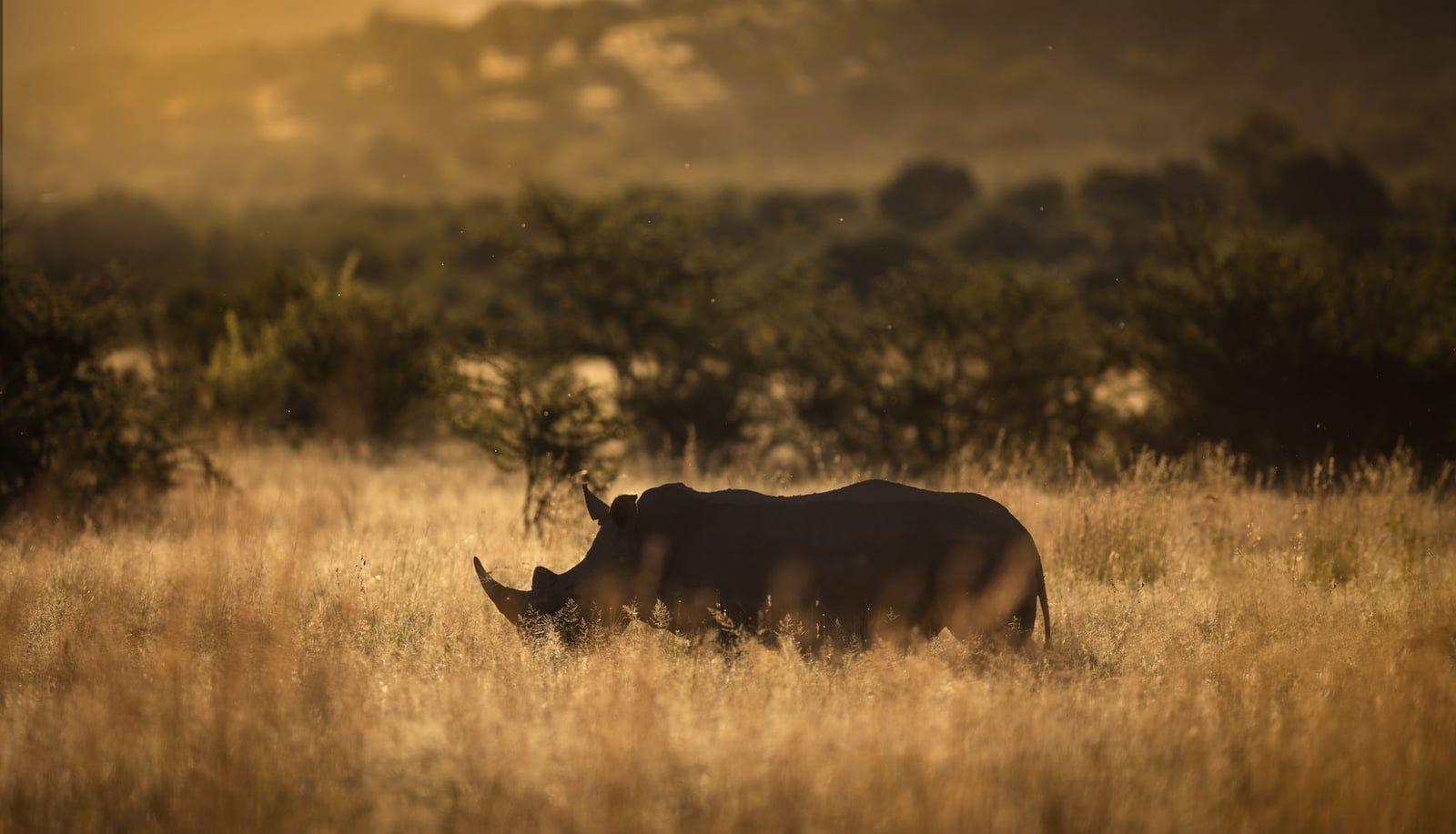
Play the odds by location. Lion territories centre on Mankwe Dam, so the roads around the lake deserve your morning. White rhino graze the grasslands near the Bakubung entrance, while the shyer black rhino keeps to the acacia thickets along Tiou Drive. Elephants, zebra, giraffe, blue wildebeest and impala will find you without effort. Baboons will also find you — mainly at picnic spots and through open car windows, so keep both shut.
The hides are the park's quiet advantage. Rathlogo, Mankwe, Ruighoek and Malatse sit at waterholes; park at one, switch off the engine, and wait. Thirty still minutes regularly beats an hour of road-cruising, and it's where the bird list builds — 360-plus species, from malachite kingfishers to the rollers that pose on every second dead branch. The full cast is in our guide to Pilanesberg's animals.
Sighting etiquette is simple. A cluster of stationary vehicles means something good; follow it and park so traffic can pass. Windows partly up at predators, engine off, and let the animals decide how long the visit lasts.
Best Time of Year (and Day) for Game Viewing
May to September is the prime window. Vegetation thins, animals concentrate at permanent water, and the park's own guidance narrows the sweet spot to mid-July through mid-October. Winter mornings start near 6°C and afternoons reach about 23°C, so pack layers — that open vehicle at 06:30 in July is genuinely cold.
Summer, from November to February, trades visibility for green scenery, newborn animals, and short violent afternoon storms that can close gravel loops. Birdwatching is at its best then. Either season, the animals bookend the day: active at dawn and dusk, shaded and still at midday. That's exactly why the timeline above puts drives early and late with a lunch-and-hide gap between.
The day-of-week angle matters more than people expect. Joburg is two hours away and locals pour in on weekends year-round. Midweek is markedly quieter, and with fewer vehicles at a sighting, your half hour with a leopard is actually your half hour.
What to Pack and Wear for a Day in the Bush
Fourteen hours out, a swing from 6°C to 23°C in winter, and dust on any open vehicle — pack for all three. Layers topped with something windproof, neutral colours so you blend into the vehicle, and comfortable closed shoes. Skip the camouflage; in much of Africa it reads badly, and it doesn't help anyway.
Camera strategy beats camera budget: keep bodies and phones zipped in a bag between sightings, or dust wins by lunchtime. Binoculars matter more than a long lens for actual watching. Add a hat, sunglasses, sunscreen, a refillable water bottle, a small daypack, and a card or cash for the gate and the Pilanesberg Centre. No safari costume required — you'll see local guides in fleeces and trainers.
Combining Your Day Trip with Sun City
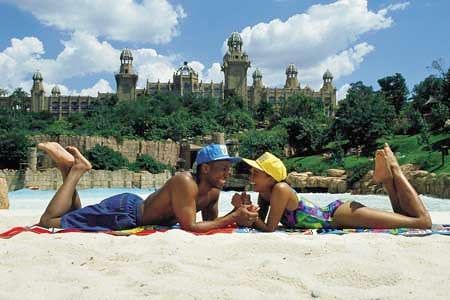
Sun City sits on the park's doorstep — a 23-minute shuttle from the gates — and splitting a day between the two is a well-worn formula. The workable version: a shorter morning game drive, then the resort's pools, the Valley of Waves water park and its restaurants through the hot midday hours, and back in Johannesburg by early evening. Several operators sell exactly this itinerary.
The trade-off is real: every hour at Sun City is an hour without animals. It's the right call for families who want variety in a long day, or in the hot months when midday game-viewing is weak anyway. If the safari is your priority, skip the combo — or stay overnight and do both properly. The combinations are listed on our Pilanesberg and Sun City tours page.
Day Trip or Overnight? Extending Your Safari
One day gets you a genuine, satisfying first safari. What it can't get you is the first hour after sunrise, when predators are often still hunting, and the last light before dark — a commuter's schedule puts you on the N4 during both. Night drives, evening drives and the sounds of the bush after gate closing belong to overnighters.
The price anchors are gentler than you might expect. Standard rooms at Bakubung Bush Lodge or Kwa Maritane Bush Lodge run roughly R2,526–R3,162 per person, low to high season, with half board and one or two daily game drives included. The budget route is a double safari tent at Manyane Resort for around R1,600, with park chalets and campsites also inside the reserve.
The verdict framework: OR Tambo layover or a short Joburg stay, take the day trip without hesitation. If the safari is the whole point of your trip, add a night. You'll spend less time on the N4 and more time where the lions are.
Frequently Asked Questions
The questions day-trip planners actually ask, answered with the current numbers.
Frequently asked questions
How long does a Pilanesberg day trip from Johannesburg take?
About 217 km and 2.5 hours each way in light traffic. Official tours collect at 06:00 and return by roughly 18:30; self-drivers going gate to gate independently should budget 14–16 hours door to door.
Do I need a 4x4 to visit Pilanesberg?
No. The park has nearly 200 km of roads including tarred main routes, and a sedan copes with all but the roughest gravel loops after rain. Higher clearance adds comfort and better sightlines, not access.
How much does a Pilanesberg day trip cost?
Full-day guided tours from Joburg run about R2,900–R3,400 per person including levies (current official rates); meeting the tour at Bakubung Gate starts at R1,800. Self-driving, a foreign adult pays R748 entry plus R168 for the vehicle, per day, before fuel and rental.
Can you see the Big 5 in one day at Pilanesberg?
Possible, never guaranteed. It's a Super Seven park — Big 5 plus cheetah and wild dog — with more than 7,000 animals on 55,000 hectares and 60–70 lions. Most day visitors tick several of the Big 5, and guided open-vehicle drives improve the odds through radio-reported sightings.
Is Pilanesberg malaria-free?
Yes. The park lies in a malaria-free part of North West Province, which is a big reason it's chosen over Kruger for short visits and family trips. No prophylaxis needed.
Can I combine Pilanesberg with Sun City in one day?
Yes: a shorter morning game drive, then Sun City's pools and restaurants through the hot midday hours, back in Joburg by early evening. Some tours sell exactly this — you're trading game time for resort time.
Is a day trip enough, or should I stay overnight?
A day trip is enough for a first safari and fits a short Joburg stay. Overnighting unlocks dawn and dusk drives without five hours of commuting; lodges such as Bakubung and Kwa Maritane run roughly R2,526–R3,162 per person with half board and drives, and glamping tents at Manyane cost about R1,600.
What time do the Pilanesberg gates open and close?
Seasonal: November–February 05:30–19:00; March, April, September and October 06:00–18:30; May–August 06:30–18:00. Arrive about 30 minutes before opening to beat the fee-payment queue.