Pilanesberg National Park holds all of Africa's Big 5 — lion, leopard, elephant, both rhino species and buffalo — inside the eroded crater of a volcano that last erupted roughly 1.3 billion years ago. Add cheetah, African wild dog and brown hyena to that list and you have what local operators market as the "Super 7," alongside giraffe, zebra, hippo, crocodile, more than 7,000 individual animals and 360-plus bird species. All of it packed into 55,000 hectares of malaria-free bushveld about two and a half hours' drive from Johannesburg.
That compactness is the point. Where the Kruger demands days of driving to cover its distances, Pilanesberg's nearly 200 km of roads loop through one crater, so a single morning can reasonably produce elephant, white rhino, giraffe and — with luck — a lion pride. This guide covers which animals live here, your honest odds of seeing each one, and the tactics that raise them.
Pilanesberg Wildlife at a Glance
The park's animal wealth comes down to two accidents of geography. First, the Pilanesberg Alkaline Ring Complex — the eroded remains of a volcano that erupted about 1,300 million years ago — is the most perfect surviving example of its kind; only two comparable ring complexes exist worldwide, in Russia and Greenland, and neither is as clearly defined. Three concentric ridges of hills enclose a bowl of grassland, wooded ravines and syenite koppies, which creates an unusual range of habitats in a small area.
Second, the crater sits in a transition zone between the dry Kalahari and the wetter Lowveld. Species that normally never meet live side by side here: roan, sable and tsessebe — dry-country antelope — share the reserve with Lowveld species like waterbuck. That overlap, plus the birds drawn to both biomes, is why Pilanesberg records more than 360 bird species in a park you can cross in an hour.
None of this game was here 50 years ago. Decades of commercial farming had stripped the area, until Operation Genesis began in 1979 — then the largest and most expensive game-stocking and land-rehabilitation project ever undertaken in an African reserve. Workers erected 110 km of perimeter fence, built 188 km of visitor roads, and reintroduced more than 6,000 animals of species that had long vanished. Today the park holds 24 larger mammal species, run by the North West Parks and Tourism Board since 1994.
Practically, the park lies about 60 km north of Rustenburg, roughly 217 km and 2 hours 45 minutes from Johannesburg by road, and is malaria-free — the main reason it works for families and short trips. It is smaller and denser than the Kruger; if you're weighing the two, our Pilanesberg vs Kruger comparison breaks down the trade-offs. For the animals themselves, read on.
The Big 5 in Pilanesberg
All five classic species occur here, but they are not equally easy to find. SafariBookings' sighting ratings put elephant and white rhino as Common, with lion, leopard and buffalo as Occasional — meaning you'll likely need more than one drive to land them. Here is each species, its realistic odds, and where it tends to show up.
Lion
Roughly 60 to 70 lions live in the park, organised into resident prides that rangers track daily. The rating is still Occasional — you'll see lions on many drives but not all of them, and the park's no-off-road rule means you can't follow a pride into thick bush. Pilanesberg lions live unusually long: the average age is about 12 years, and Ketimetsi, a famous Kwa Maritane male, reached 17. Ask your guide who's who — the rangers know individual cats by name.
Leopard
Leopards are present in healthy numbers and seen least of the Big 5. They hold to dense thickets and the rocky koppies, and since vehicles must stay on the roads, most encounters happen when a leopard crosses open ground at dawn or dusk. Patient hours at waterholes in the late afternoon are your best play. A leopard resting on a rock outcrop above the road is the sighting that makes a Pilanesberg trip.
Elephant
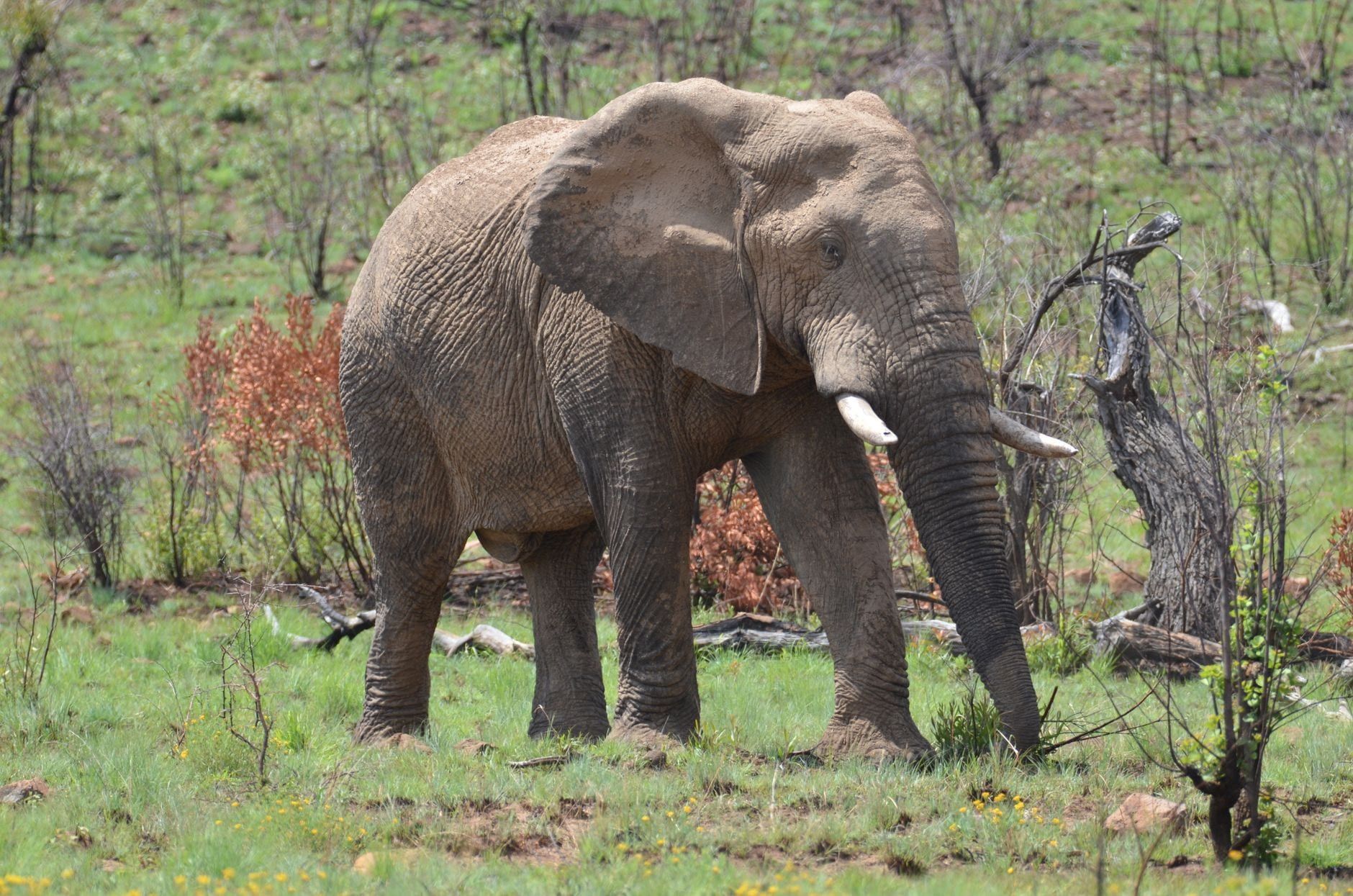
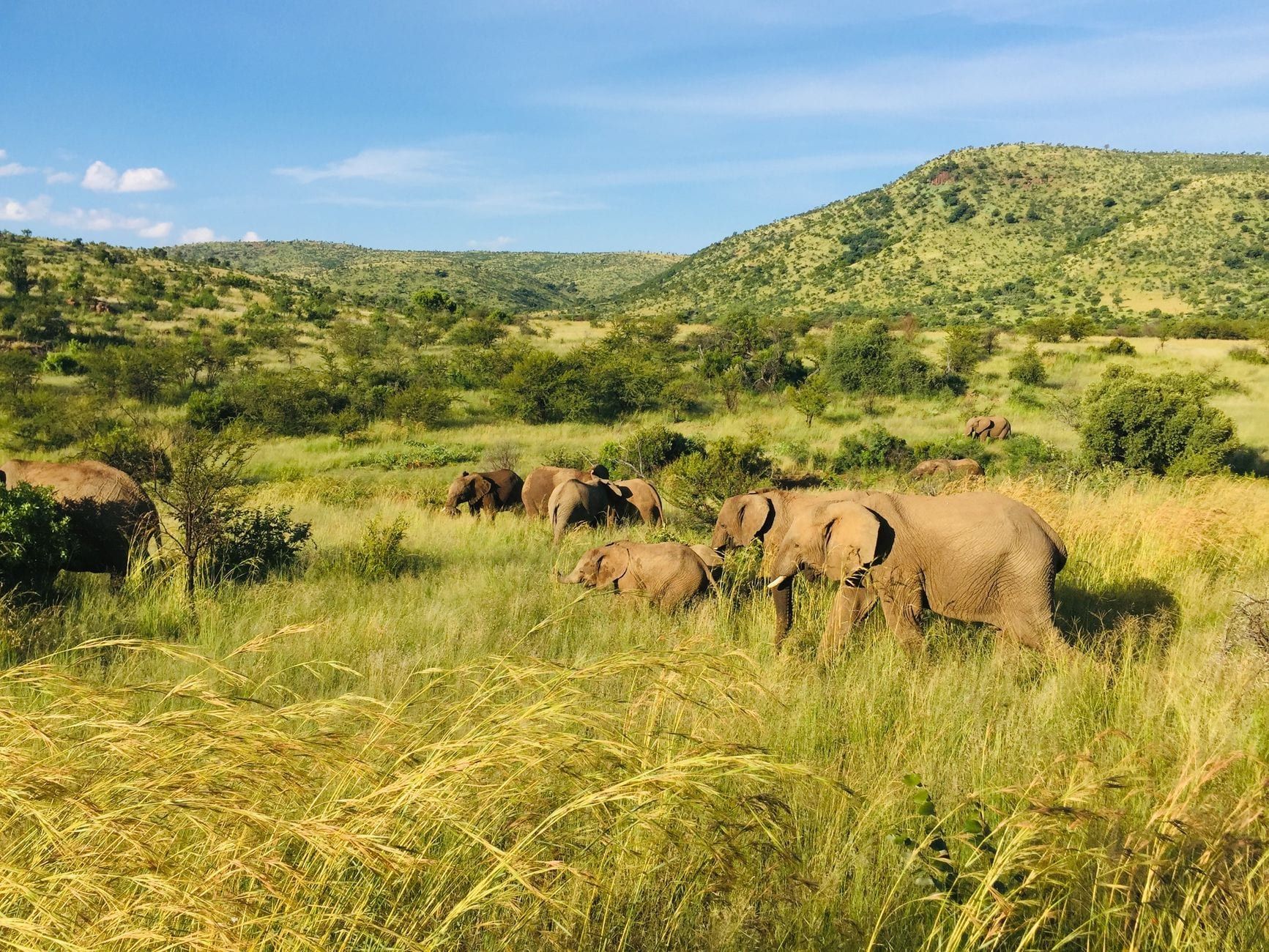
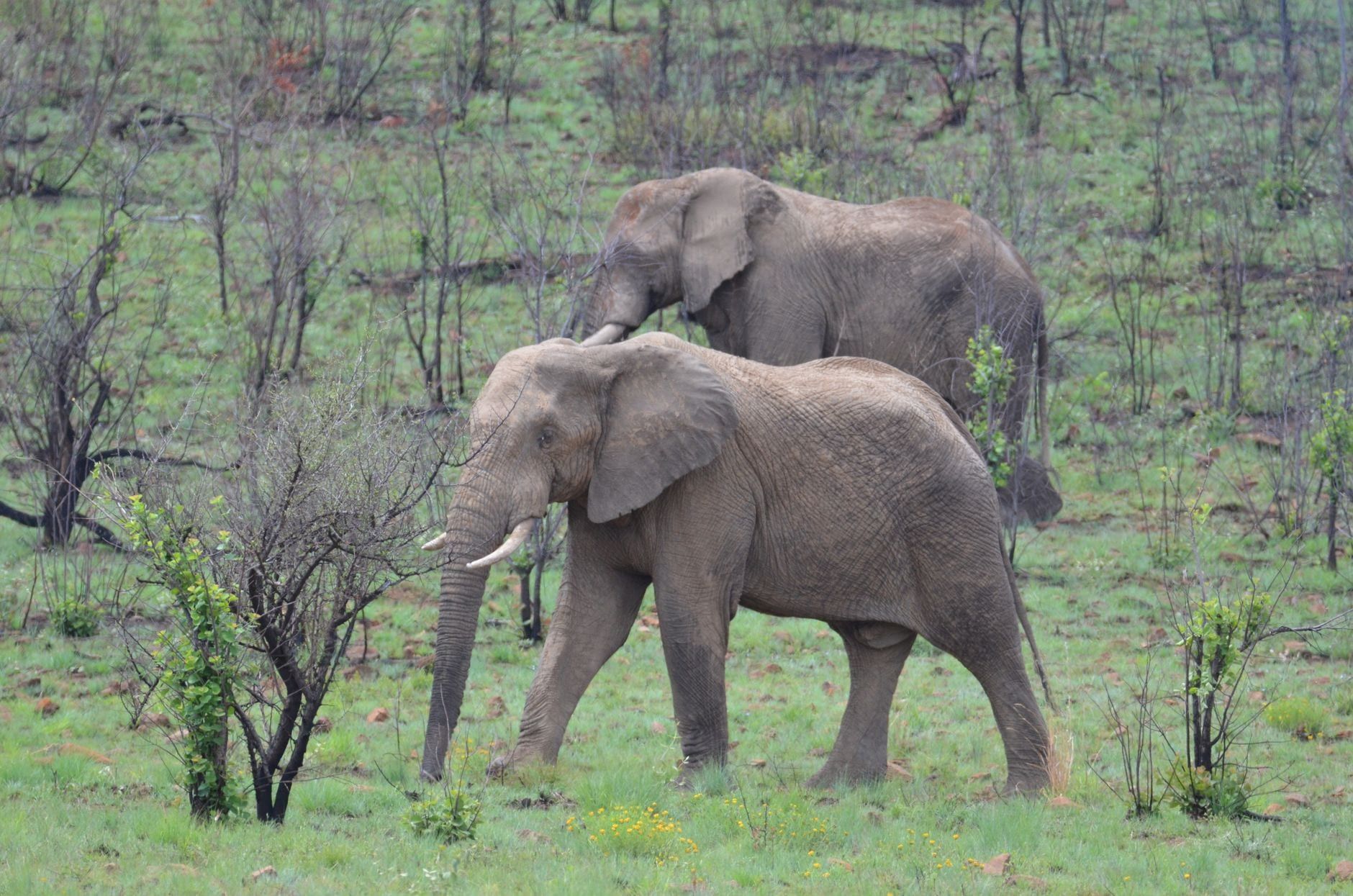
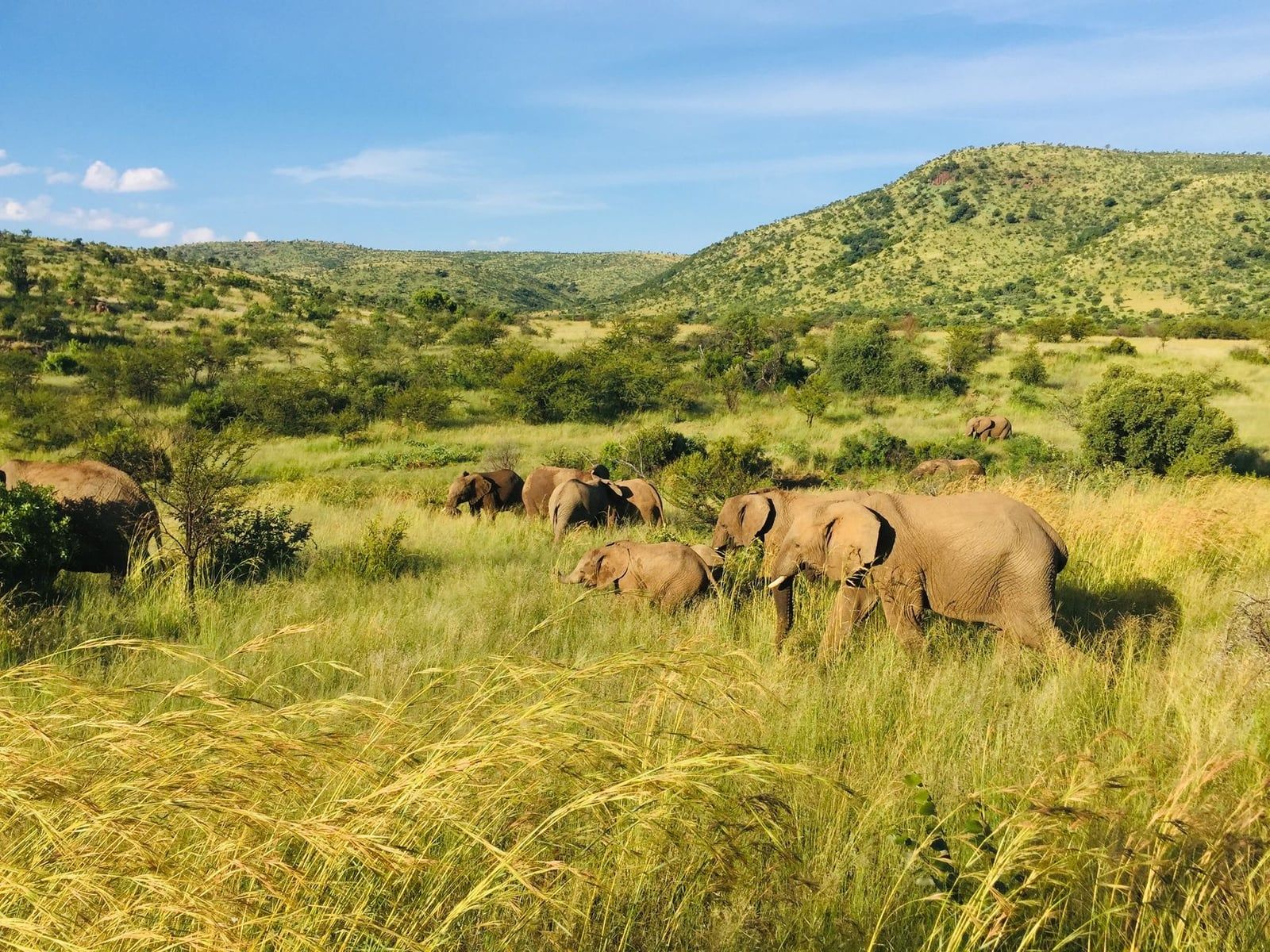
Rated Common, and it's true — family herds move between the dams and wallows throughout the day, and few visits pass without an elephant somewhere on a road. Breeding herds with small calves frequently use the roads themselves, so give them right of way and leave room to reverse. Bulls in musth can be unpredictable; park so you can retreat, never block their path.
Rhino: White and Black
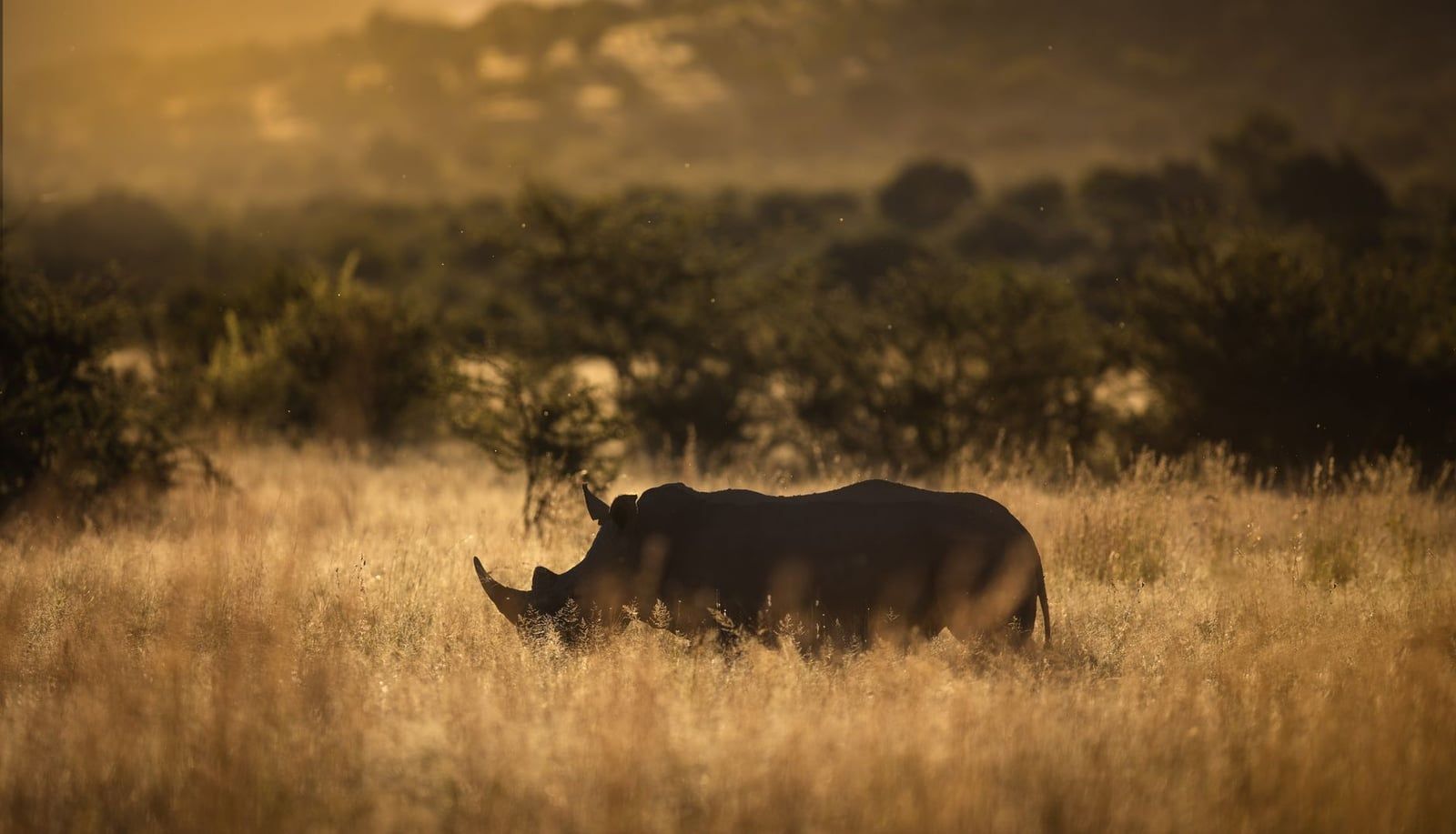
Both species occur, with very different odds. White rhino — grassland grazer, wide square lip, heavy hump-shouldered build — is Common, often found as single animals or cow-and-calf pairs on open plains, especially on the southern loops around Malatse Dam. Black rhino, the browser with a hooked lip that feeds on shrubs in thicker bush, is Occasional at best and Rare in some seasons. It is smaller, faster and famously short-tempered, so a black rhino sighting tends to be brief and memorable.
Buffalo
Buffalo move in large herds and are rated between Common and Occasional depending on the source — the honest answer is that herds are reliably in the park but not always near a road. When a herd of several hundred comes down to Mankwe Dam to drink, dust rising off their backs, it's one of the park's best spectacles. Ask at the gate or your lodge where the herds have been; they move slowly, so yesterday's tip usually still works.
Beyond the Big 5: Cheetah, Wild Dog & the Night Shift
Pilanesberg's headline marketing adds cheetah and wild dog to the Big 5 for a "Super 7." Both live here, but a short visit should treat them as gifts rather than expectations. The rarer nocturnal cast is a better bet — if you know where to look after dark.
Cheetah
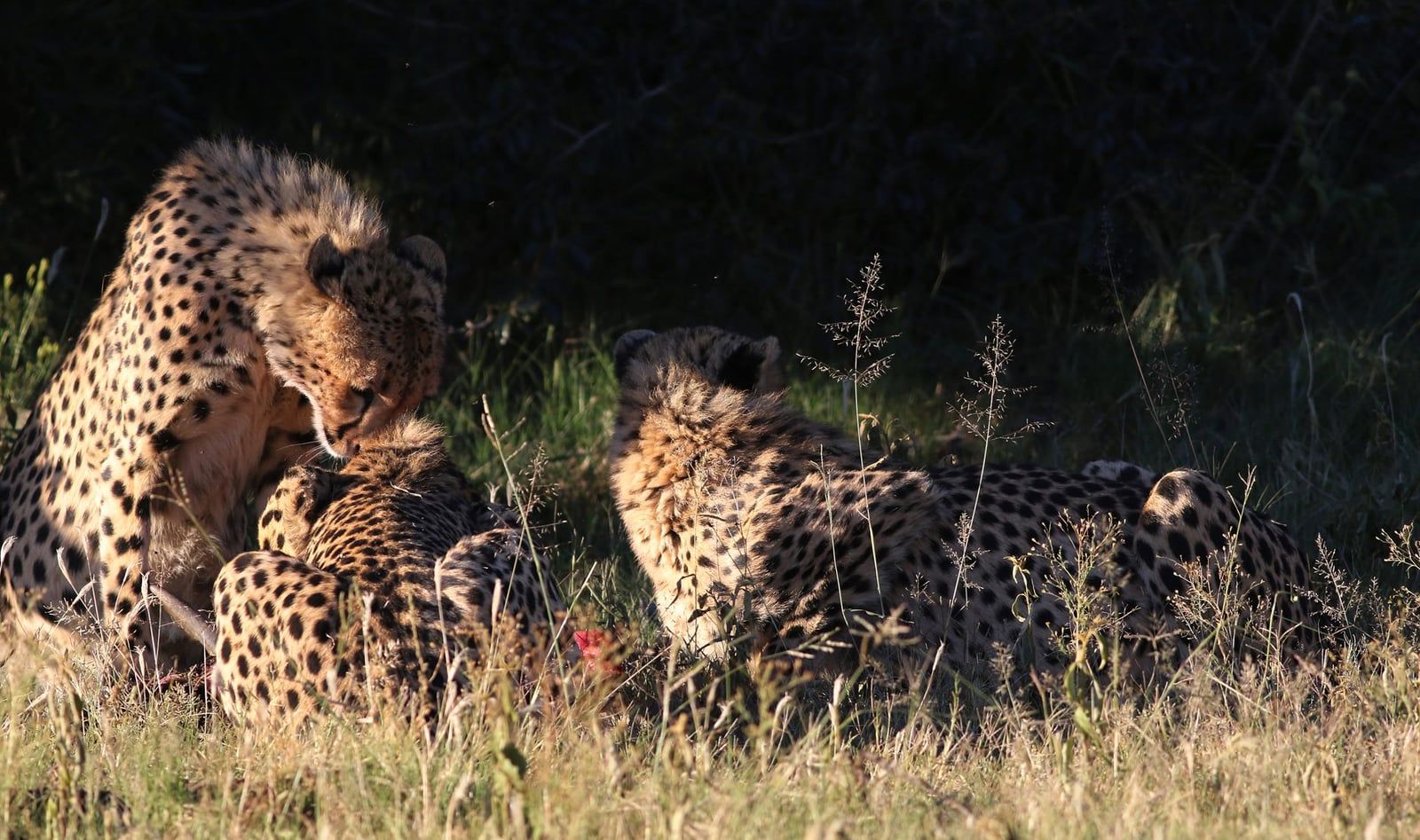
Cheetahs are present but rated Rare. They hunt by daylight on the open savanna patches, which at least makes them predictable in habitat: scan the flat grasslands and termite mounds in the early morning, and watch for the upright, sentinel posture of a cheetah surveying for prey. Impala here vastly outnumber them, so cheetah sightings happen — just don't build your trip around one.
African Wild Dog
Wild dog status in Pilanesberg is genuinely disputed, and you should know why. SafariBookings rates them "None," while the park's own wildlife page and operator sites list them as Rare, with lucky visitors reporting pack sightings. The reconciled truth: dogs move over huge ranges and den unpredictably, so packs pass through and are occasionally seen, but on any given day the odds are close to zero. If you see one, count it as the best luck of your trip — wild dogs are Africa's most effective hunters, with a hunt success rate around 80 percent, versus roughly 30 percent for lions.
Brown Hyena and the Night Shift
Brown hyena is Pilanesberg's signature rarity, and the park is one of the better places in South Africa to find this shaggy, striped scavenger. Daytime sightings happen, but night drives are the real strategy — this is when brown hyena, porcupine, civet and bushpig are active. Caracal, serval and aardvark also live here and are almost never seen in daylight. One guided night drive changes the entire species list of your trip, and SafariBookings' hyena rating of Occasional probably undercounts what a spotlight after 8 p.m. can produce.
Plains Game: Antelope, Giraffe, Zebra & the Grazer Herds
These are the animals you will actually see, in numbers, on every drive — giraffe, zebra, blue wildebeest and warthog all rate Common. Giraffe browse the acacia woodland in loose groups; zebra and wildebeest graze the open flats in mixed herds; warthogs run across the road with tails straight up. If a day trip produces nothing but these, it was still a good day.
Hippos rate Common too, confined to the dams. Mankwe Dam, the park's largest water body, is the place to watch them — pods surface, yawn and grunt through the middle of the day when everything else is asleep, so it doubles as your midday stop. Nile crocodiles share the same water, often hauled out on the banks in plain view.
The antelope list runs to about 14 species, and it's a stronger draw than most visitors expect. Impala, kudu and waterbuck are everywhere; and the rarer dry-country species — roan, sable and tsessebe, Africa's fastest antelope — are the ones listers come specifically to find. Tsessebe are easiest on the open plains near Thabayadiotso, the peak off the park's centre. For a sense of what a single day can realistically deliver, our Pilanesberg day-trip guide walks through a full itinerary.
Birds & Reptiles
Pilanesberg is a genuinely good birding park — more than 360 recorded species, drawn by that Kalahari–Lowveld overlap. Lilac-breasted rollers and crimson-breasted shrikes are the photogenic stars; pied kingfishers hover over every dam; fish eagles call from dead trees along Mankwe's shoreline. Summer (October to April) brings the migrants and is the stronger birding season, even though it's the weaker game-viewing one.
Seven bird hides sit beside the water, four of them among the park's best-known spots: Rathlogo, Mankwe, Ruighoek and Malatse, with Makuwani the other prime option. Hides work by letting you sit at eye level with the water's edge, engine off, while birds and drinking game come to you — the standard technique is 30 to 45 minutes of stillness. They're also among the few places in the park you may legally leave your vehicle.
Reptiles round out the list at 66 species. Nile crocodiles are the headline: watch the shallows at Mankwe Dam for eyes and snouts, and the sandbanks for full bodies sunning. Water monitors and rock monitors patrol the same shorelines, and terrapins stack on submerged logs. None of these need luck — they need you to stop at the water and actually look.
How to Actually See the Animals
Knowing the species list is half the job. The other half is method, and this is where Pilanesberg rewards planning.
Guided Drives vs Self-Drive
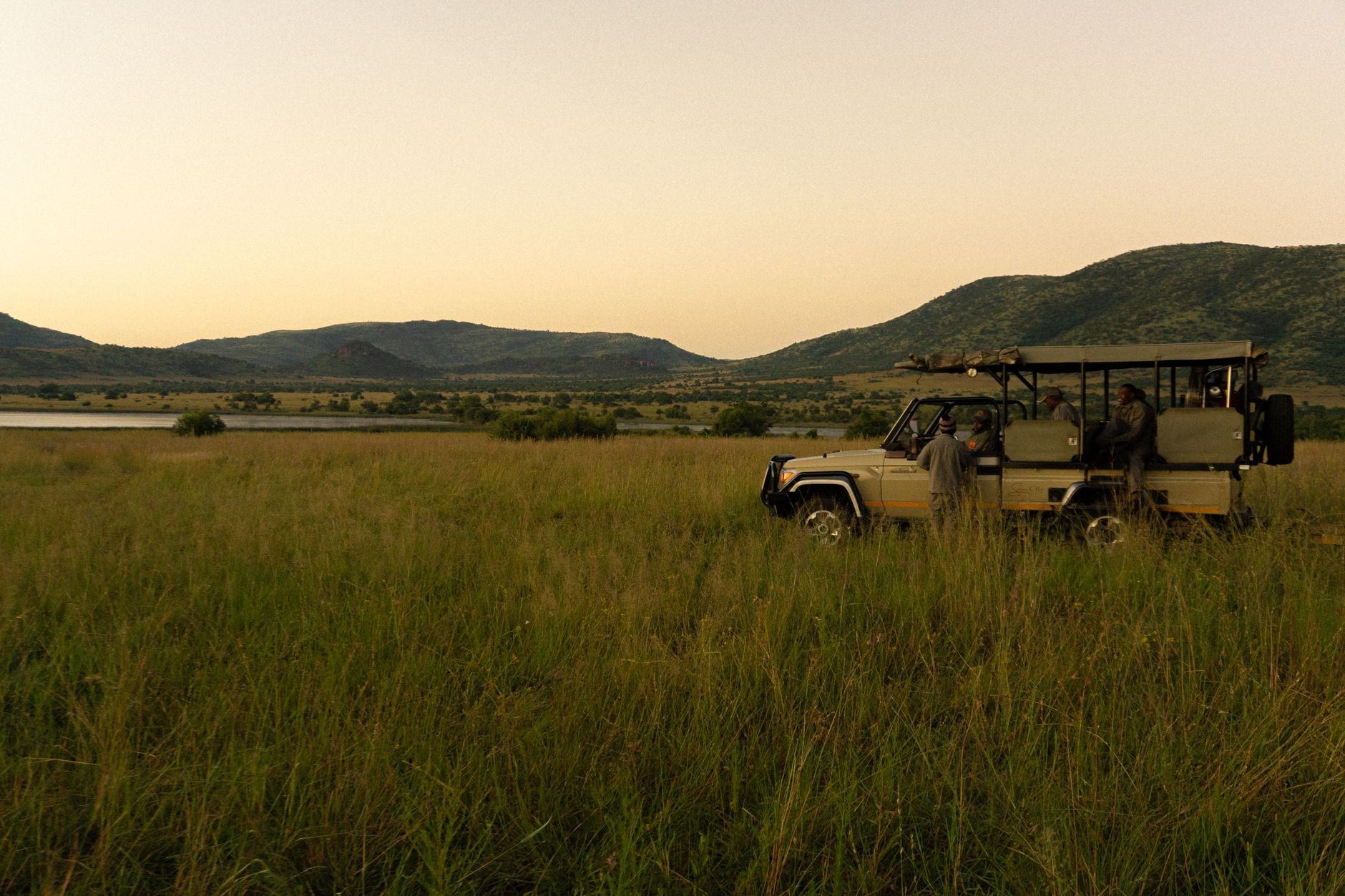
Guides see far more than self-drivers, and it isn't close. Rangers know which animals hold which territories, for how long, and they share sightings over a radio network in real time. A scheduled 3-hour open-vehicle drive costs from R900 per adult and R450 per child; private vehicle hire for a group runs longer and costs more. If you only have one day, put at least one guided drive in it — browse the Pilanesberg safari tours for what's running. Self-driving still works, and most roads suit a 2WD sedan: your job is to work the waterholes, sit still, and ignore the empty stretches in between. A cluster of parked vehicles means a sighting; join it considerately.
Night Drives
Daytime self-drives cannot access the nocturnal cast at all. Night drives put a spotlight and a ranger between you and brown hyena, porcupine, civet and bushpig — species that simply don't appear on a 10 a.m. game loop. Book them ahead through your lodge or the park; they're the single best upgrade for anyone whose species list matters.
The Hides-and-Dams Strategy
Water beats driving. In the afternoon heat, animals retreat to the permanent water, and Pilanesberg's five photographic hides — all overlooking waterholes — are built exactly for this window. Mankwe Dam is the all-in-one hotspot: hippo, crocodile, waterbirds and terrapins on the water, with elephant, rhino and sometimes lion or buffalo coming down to drink. Makuwani hide is the other prime choice. The method is patience: park yourself, switch off, wait 30 to 45 minutes, and let the animals come to you. Self-drivers should anchor the middle of their day here rather than circling empty roads.
Timing: Season, Daylight and Gates
Wildlife viewing works year-round but peaks from May to September, the dry winter: vegetation thins, animals must drink at permanent water, and the weather is mild. The park's own guide narrows the prime window to mid-July through mid-October. Within any day, the first two hours after sunrise and the last before sunset deliver most predator sightings — midday belongs to the dams and hides. Gate times shift with the seasons, and closing times are strictly enforced:
| Months | Gates open | Gates close |
|---|---|---|
| November–February | 05:30 | 19:00 |
| March & April | 06:00 | 18:30 |
| September & October | 06:00 | 18:30 |
| May–September | 06:30 | 18:00 |
September appears in both the 06:00 and 06:30 brackets on different official pages, so confirm locally for that month. Latecomers get locked in among dangerous game, so plan your last loop to reach the gate well before closing. Full entry-fee details are on our hours and fees page.
Sunrise from a Balloon
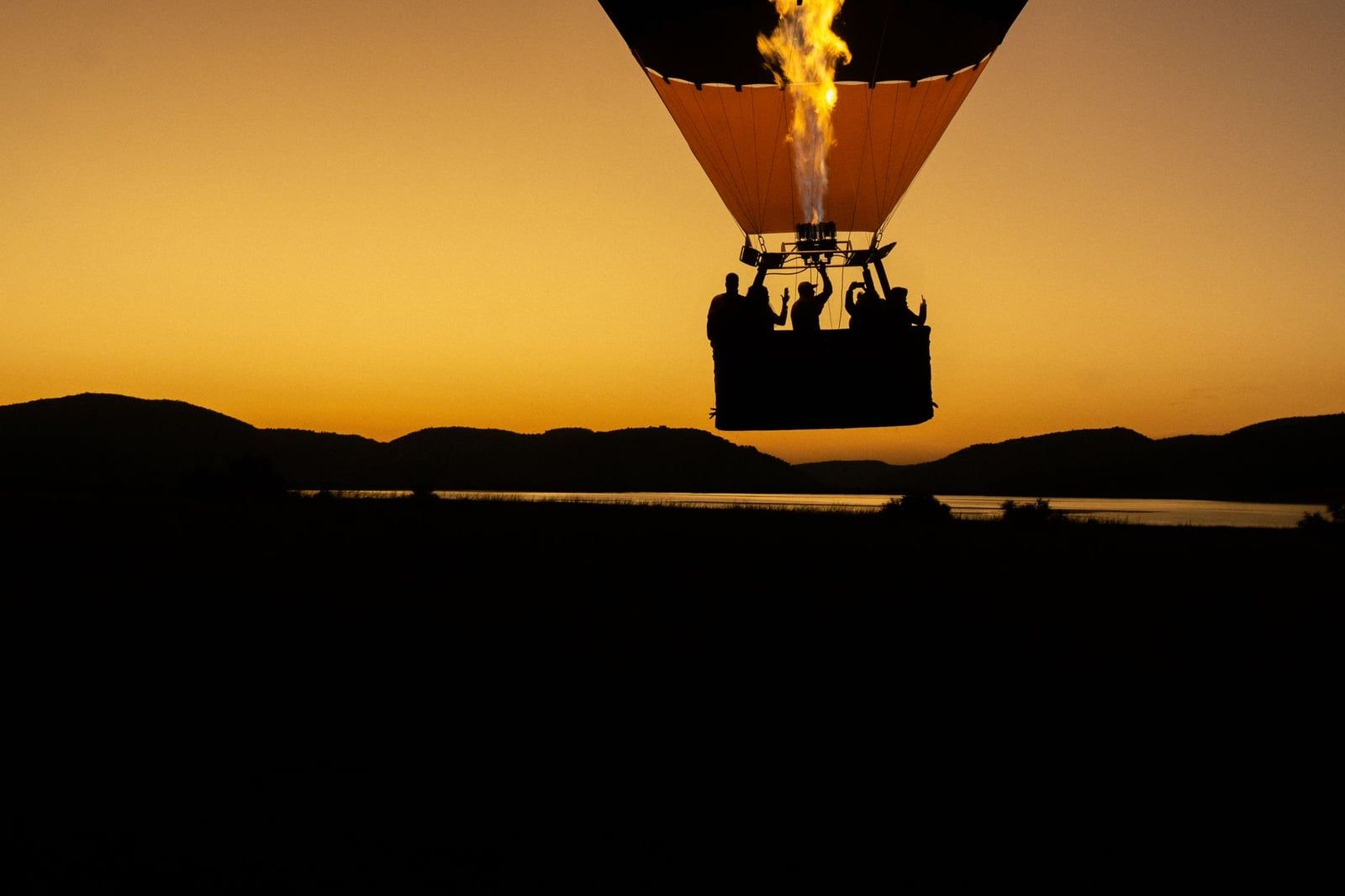
Hot-air balloon safaris launch at sunrise and drift over the crater as herds move across the plains below, landing to sparkling wine and breakfast — flights start at about R7,025 per person and should be booked well ahead for the May–September season. You won't photograph a leopard from the air, but no other angle shows you how the whole volcano works. Many visitors pair a morning balloon flight or game drive with an afternoon at adjacent Sun City, 23 minutes away by shuttle — those combo options are covered in our Pilanesberg and Sun City tours.
One last discipline: stay in your vehicle outside designated hides and picnic sites, keep to the 40 km/h limit, and give every animal right of way. The animals tolerate cars because the rules hold. Break them and you'll be fined, ejected, or worse.
Frequently asked questions
Can you see the Big 5 in Pilanesberg?
Yes — all five occur, plus cheetah, wild dog and brown hyena. But presence isn't a guarantee: with no off-road driving, predator sightings are hit-and-miss. Elephant, giraffe, zebra and white rhino are the most likely of the big game; leopard is the hardest.
Are there cheetahs and wild dogs in Pilanesberg?
Cheetahs live in the park but are rated Rare — scan the open grasslands at first light. Wild dog status is disputed between sources: SafariBookings lists them as absent, while the park's own site rates them Rare. Packs are seen occasionally, but don't plan a short visit around them.
What's the best time of day and year to see animals in Pilanesberg?
Dry winter, May to September: thin vegetation and animals concentrated at permanent water. Within the day, early morning and late afternoon beat midday, when animals retreat to shade. Gate times vary by season — 05:30–19:00 from November to February, 06:30–18:00 from May to September.
Are there crocodiles and hippos in Pilanesberg?
Both are common at the park's dams, and Mankwe Dam — the largest water body — is the best place to watch hippos at midday and crocodiles on the banks. The park holds 66 reptile species, including water and rock monitors.
Is Pilanesberg good for birdwatching?
Yes — more than 360 recorded species and seven bird hides, including Rathlogo, Mankwe, Ruighoek and Malatse. The Kalahari–Lowveld transition zone draws species from both biomes, and summer migrants make October to April the stronger birding season.
Is a guided safari better than self-driving in Pilanesberg?
Usually, yes. Guides know animal territories and share sightings over a radio network, so you'll see far more than self-driving. A 3-hour open-vehicle drive starts at R900 per adult. Self-drivers should compensate by working the waterholes and hides — especially Mankwe Dam — with patience.
What animals will I realistically see on a day visit?
Count on elephant, giraffe, zebra, wildebeest, impala, hippo and white rhino. Lion and buffalo are realistic with a full day or a guided drive. Black rhino, leopard, cheetah, wild dog and brown hyena are lucky sightings — the last three especially so.
Is Pilanesberg malaria-free?
Yes — it's a malaria-free reserve in North West Province, about 2.5 hours from Johannesburg, which is exactly why it suits families and short trips. The park's own FAQ still suggests basic precautions like repellent.