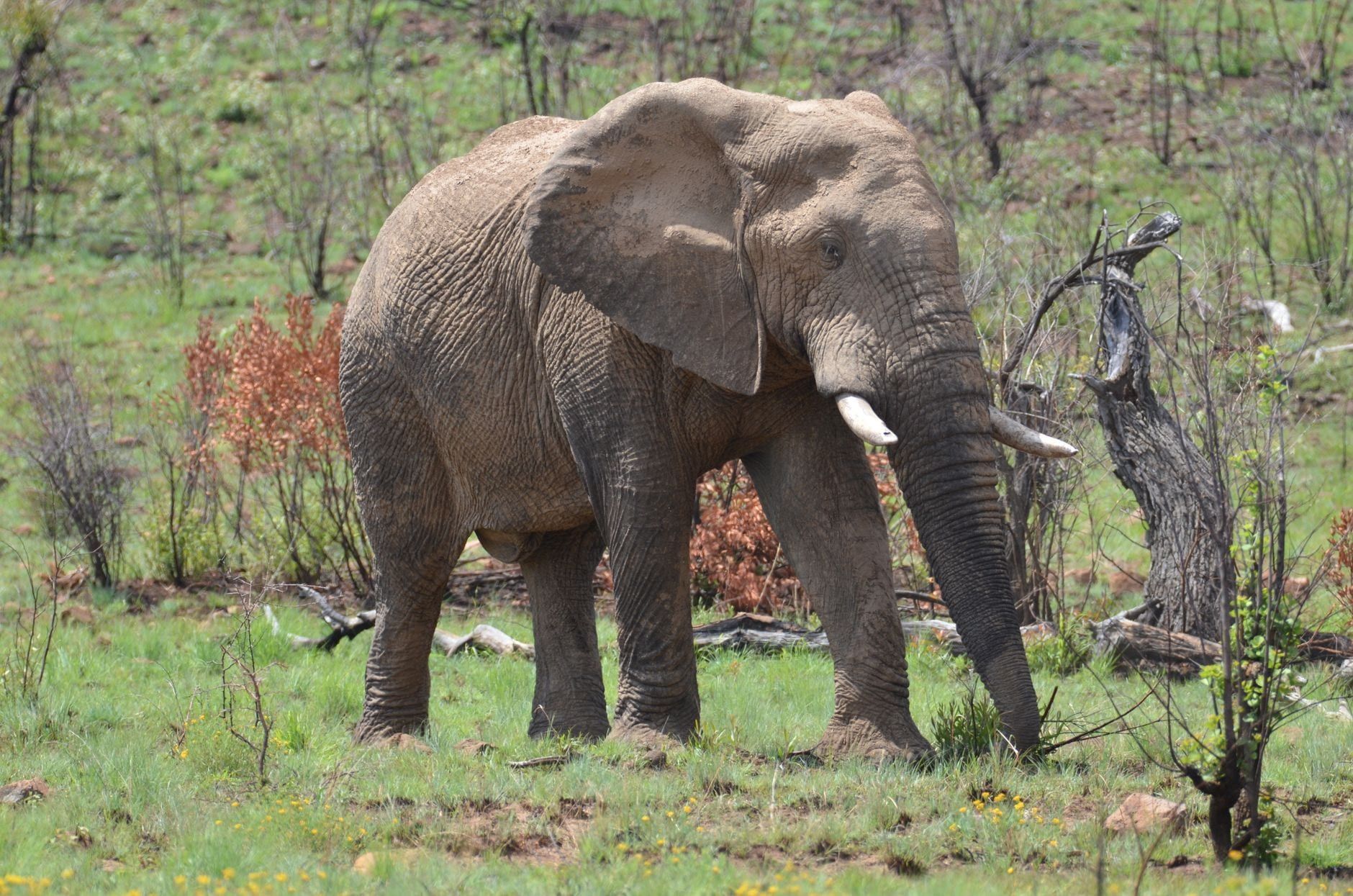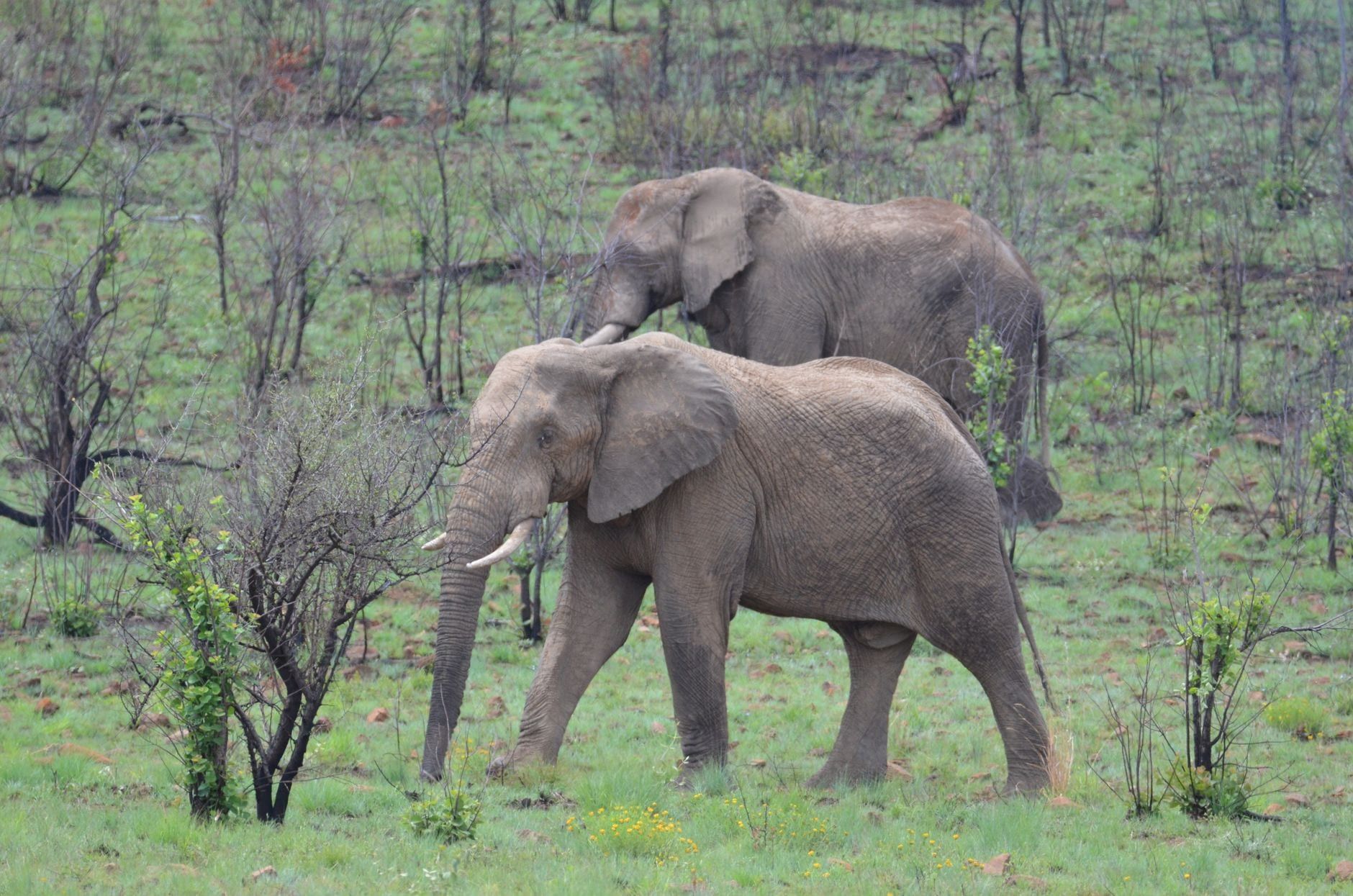
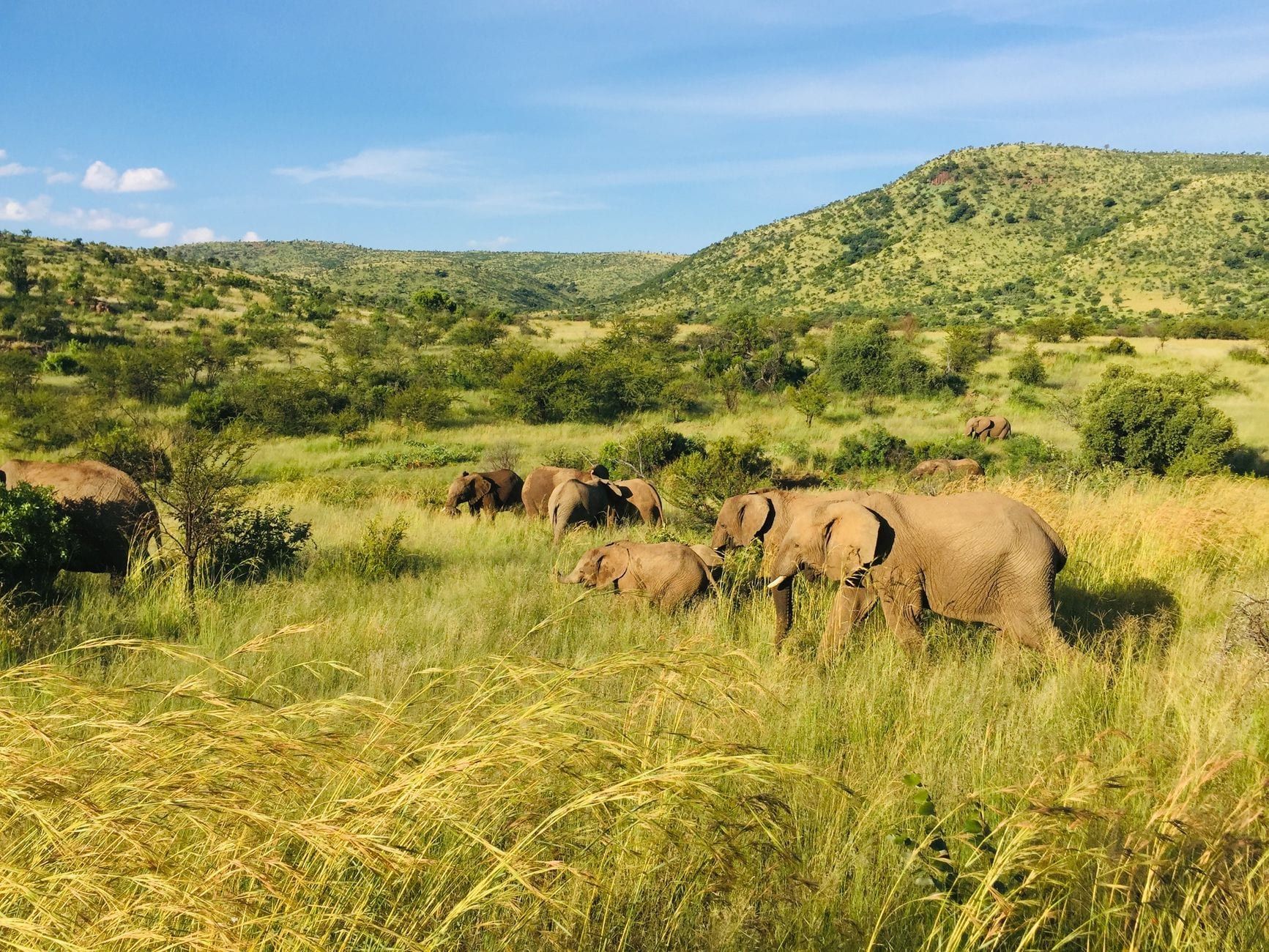
Pilanesberg packs the Big 5 into a 550 km² park that sits inside the collapsed cone of a 1.3-billion-year-old volcano, about 2.5 hours' drive from Johannesburg. It's the closest malaria-free Big 5 reserve to the city, which is exactly why it works as a weekend safari or a one-day detour. More than 7,000 animals live here — lion, leopard, elephant, both rhino species, buffalo, plus cheetah and wild dog — alongside over 360 bird species, and because the crater sits where dry Kalahari and wetter Lowveld habitats meet, you'll see species that rarely share a park.
Nearly 200 km of roads loop between three concentric rings of hills, past Mankwe Dam in the crater's centre and out to a resort complex — Sun City — on the park's edge. You don't need a 4x4, a week off, or malaria tablets. For a fuller rundown of what roams the reserve, see our guide to Pilanesberg's animals; below are the activities that fill most visitors' days.
At a Glance: The Best Things to Do in Pilanesberg National Park
- Guided game drives — 3-hour open-vehicle drives with rangers, from R900
- Self-drive safari — nearly 200 km of 2WD-friendly roads
- Bush walks and camp trails — track game on foot with an armed guide
- Bird hides and picnic sites — Mankwe Dam above all
- Hot air balloon flights — sunrise over the crater rings
- Sun City next door — water park, zip line, casino
Go on a Guided Game Drive
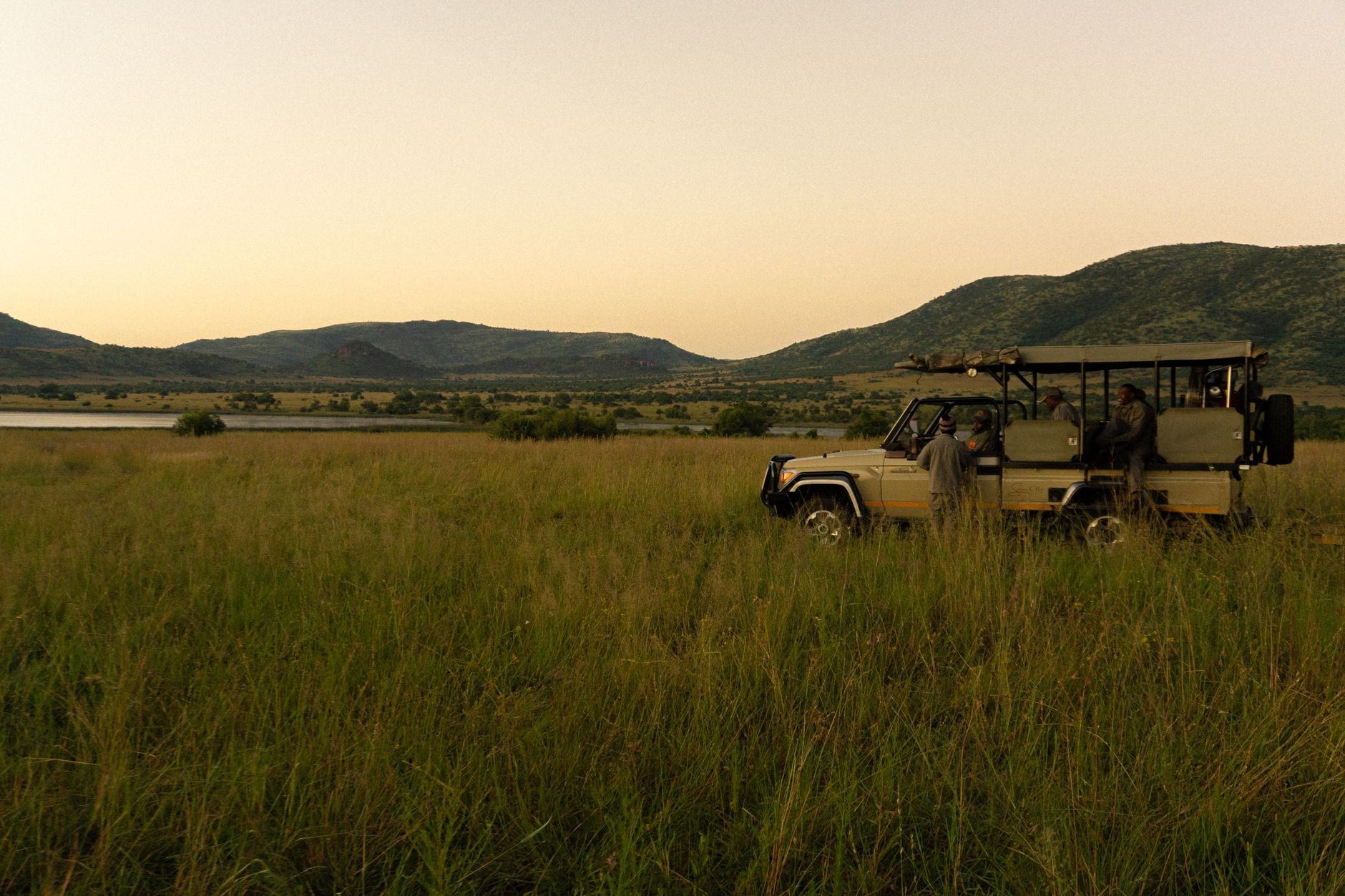
A guided drive puts you in an open 4x4 with a ranger who spends every working day inside the park. That's the pitch, and it holds up: rangers share sighting intel by radio, so a lion kill or a leopard in a tree reaches your vehicle within minutes. On your own, in your own car, you'd need luck and patience to find the same animals.
How the drives work
Scheduled 3-hour drives leave from the Manyane and Bakgatla resorts, from about R900 per adult and R450 per child. Every lodge and resort in the park also runs its own morning and afternoon departures — morning drives pause for coffee and rusks, afternoon drives stop for a sundowner as the light drops. Pick your slot by animal behaviour, not scenery: predators are most active in the cool hours, and midday drives are quiet.
The trade-off is company. When a ranger calls in a good sighting, several vehicles converge, and you may share a leopard with four other 4x4s. If you'd rather work a waterhole alone for an hour, self-driving gives you that. Our Pilanesberg safari tours page lists the current guided options and prices.
Night drives
Day visitors leave when the gates close. Lodge guests can stay out after dark: some lodges run night safaris in open vehicles with spotlights, searching for hyena, lion and leopard on the move. It's the only way to see Pilanesberg's nocturnal side, and a reason to overnight if the budget allows.
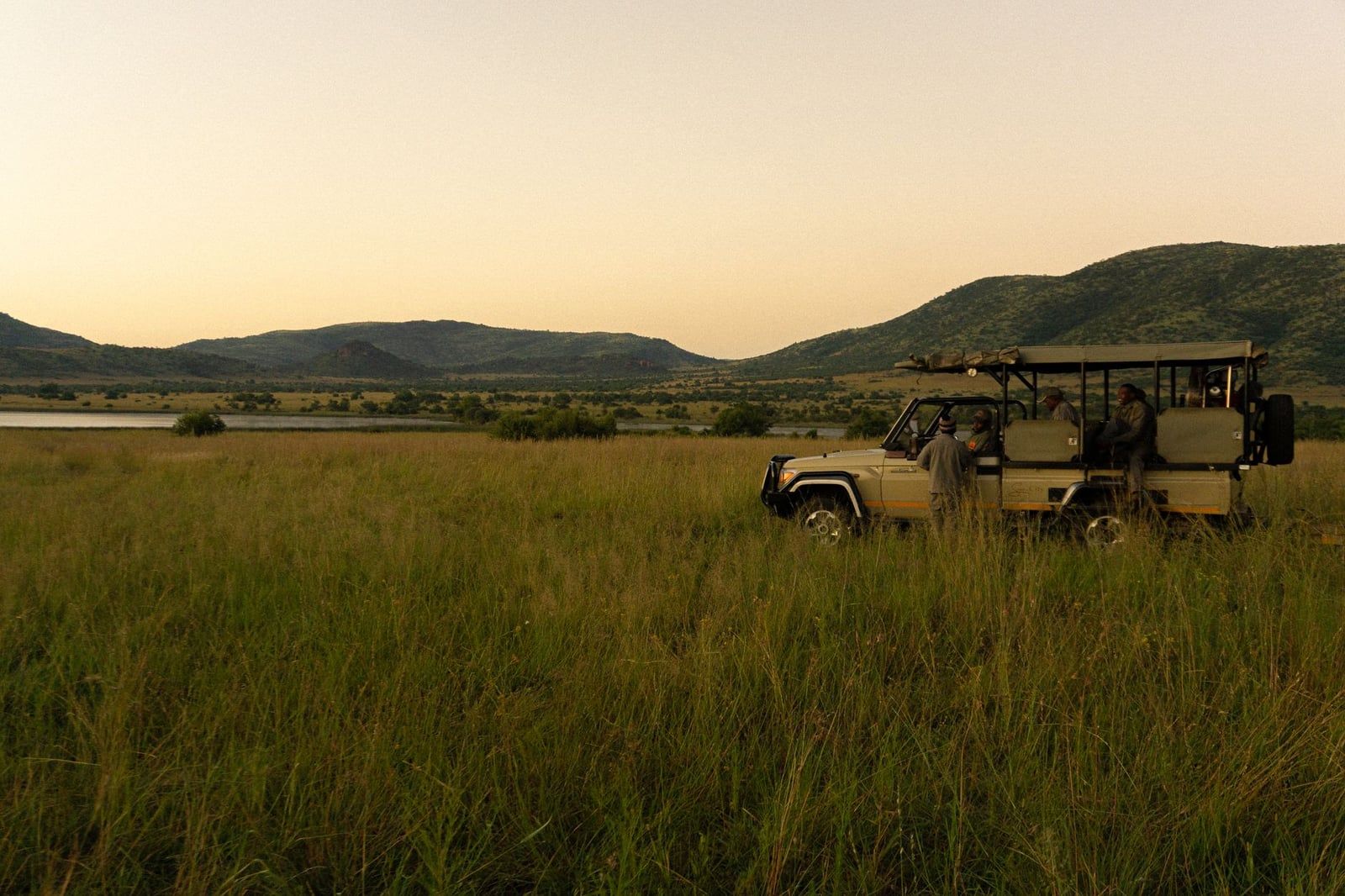
Take a Self-Drive Safari: Routes, Roads & Rules
Self-driving is the park's most popular activity, and for good reason: you set the route, the pace and the departure time, and you keep a sighting to yourself as long as you like. Entry costs nothing beyond the park fees, and a standard sedan handles almost everything. Nearly 200 km of tar and gravel roads cross the crater; the only stretch where high clearance helps is the rocky plateau at the top of Lenong Pass.
Buy a map at the entrance gate — the roads are confusing on a first visit — and check the sightings board, where rangers and recent visitors pin the morning's animal activity. Out on the loops, a cluster of stationary cars is the park's informal sighting broadcast: pull up behind it, park so others can pass, and see what everyone's looking at.
Timing matters more than route. Be at the gate when it opens (05:30 in summer, 06:30 in winter) and drive the first two hours before the heat settles in; plan the last hour before closing for another loop. Midday belongs to the pool at Manyane's day-visitor area, a shaded picnic site, or the restaurant at the Pilanesberg Centre in the middle of the park. Two rules to know: the speed limit is 40 km/h, and there is no fuel anywhere inside the park — fill up beforehand (the Engen by Sun Village is the closest station).
Pack water, snacks and binoculars. You'll cover long quiet stretches between sightings, and binoculars turn a distant grey shape into a rhino.
See the Park on Foot: Bush Walks & Camp Trails
Walking is where Pilanesberg changes character. In a vehicle you notice animals; on foot you notice everything else — insects, spoor, dung, and the odd fact that the crater mixes Kalahari thornveld with Lowveld trees on neighbouring slopes. Guided game hikes run daily from Manyane or Bakgatla, need a minimum of four people, last roughly four hours, and require walkers to be at least 16. Walking unguided in the big-game area is not allowed, full stop.
Self-guided camp trails
Two free options need no reservation. Manyane Resort keeps a large enclosed area where zebra, tsessebe, ostrich, wildebeest, impala and warthog roam freely — walk in, no booking, maps at the information centre, and antelope close enough for a phone camera. From Manyane, the Giraffe Trail runs almost 5 km and the Wildebeest Trail about 1.5 km, both outside the dangerous-game area.
Families with younger children should look at the Family Guided Bush Walk in the adjacent Letsatsing Game Reserve, which is designed for kids and pairs well with a morning drive.
Bird Hides, Picnic Spots & Scenic Viewpoints
Slow down for the hides. Seven of them sit at waterholes around the park, all fenced, with toilets — and they're the one place you can legally stretch your legs mid-drive while animals come to you. Sit still for 30–45 minutes with the engine off and you'll usually be rewarded.
Which hide, when
Light decides your hide. Rathlogo and the west-facing hides work in the morning, when the sun is behind you over the water; the east-facing hides — Mankwe, Ruighoek, Malatse — are better in the afternoon. For photographers, that orientation is the difference between a backlit blob and a portrait. The Kwa Maritane underground hide is the park's special one: you sit at water level, watching game from inches above the ground.
Picnic sites and viewpoints
Five fenced picnic areas offer braai facilities, water, shade and toilets. Fish Eagle, overlooking Mankwe Dam, is the pick; two others sit along Baile Drive. Restaurants at Manyane, Bakgatla and the Pilanesberg Centre cover lunch, and the viewpoint below Lenong gives the best read on the crater's concentric hill rings.
Mankwe Dam itself is the park's wildlife magnet — its largest body of water, drawing waterbuck, wildebeest, zebra and impala to drink, with fish eagles, kingfishers and cormorants working the shallows. For birders the park lists over 360 species, and summer (November to April) adds the migrants; hides are the productive way to work through them without a guide.
Hot Air Balloon Safari over the Crater
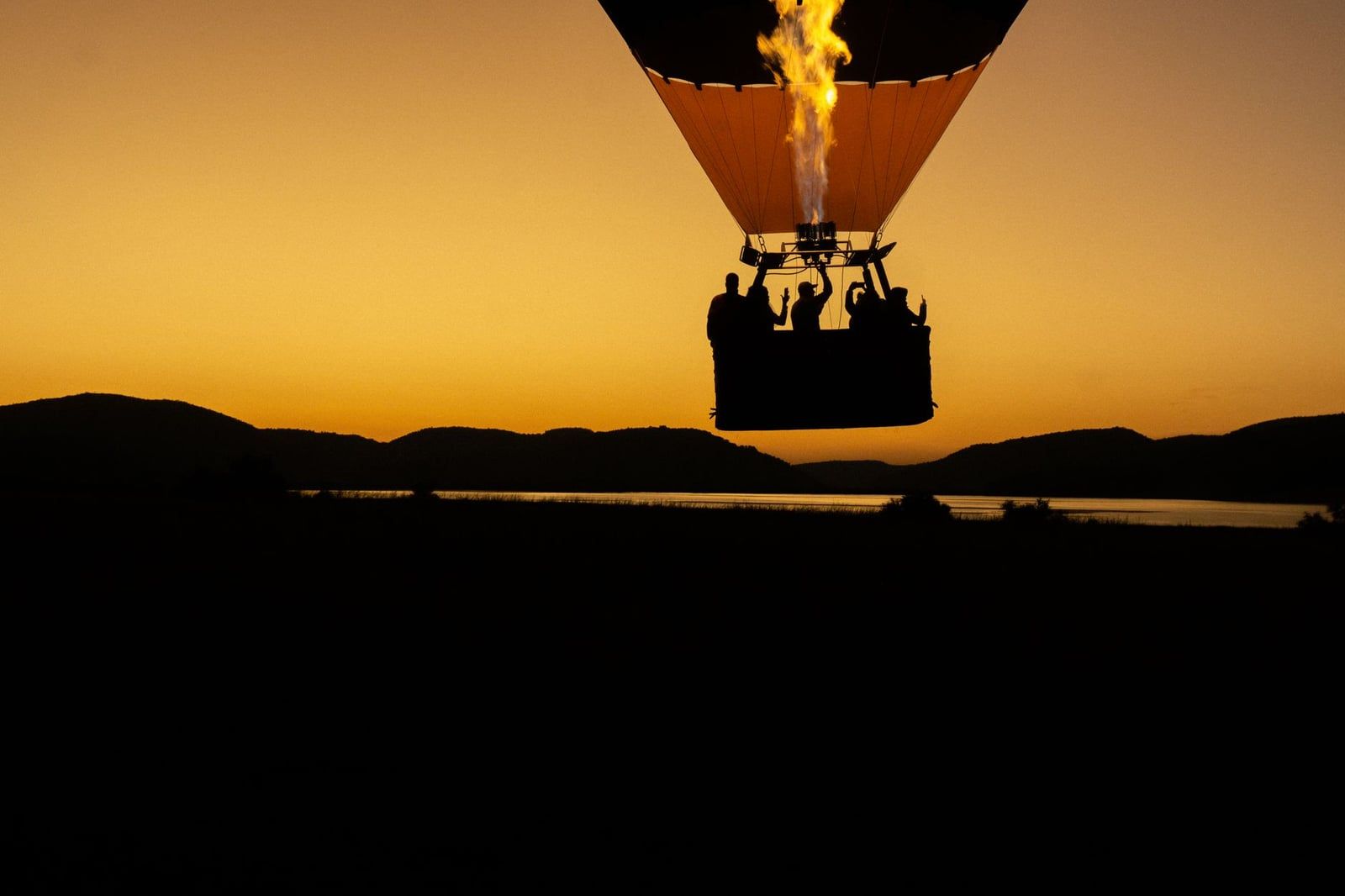
Pilanesberg runs the only hot air balloon operation over a big-game area in South Africa, and it is the one splurge here that's genuinely different from the ground game. The balloon lifts off from Mankwe Dam before sunrise and floats for about an hour as herds move across the plains below — you may spot the Big 5, or even the "super seven" with cheetah and wild dog, from the air. The pilot can't steer, so where you drift depends on the morning's wind.
Prices run about R6,090 per person for South Africans and R7,430 for foreign visitors, including sparkling wine and a full English breakfast served in the veld after landing. From the basket you can read the crater's concentric rings of hills — the clearest view of the billion-year-old volcano you'll get without a plane. Flights are weather-dependent and book out far ahead for the dry-season months, so reserve early; if the morning is windy, operators reschedule rather than fly.
Sun City & Adventure Activities Next Door
Sun City sits inside the same crater complex, minutes from the park gates — the shuttle takes about 23 minutes. The classic pairing is a morning game drive followed by an afternoon at the resort, and Sun City safari combos handle both in one day.
Sun City essentials
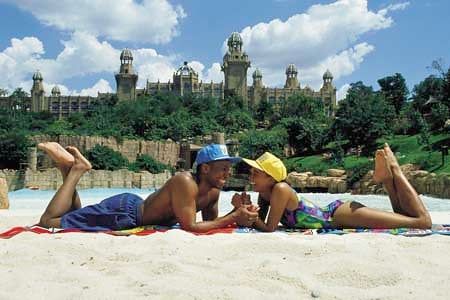
The Valley of Waves water park anchors the resort's family appeal — a wave pool under the walls of the Palace of the Lost City. Beyond it: a casino, a golf course, live shows, a cinema, a spa, a maze and a zip line the operator bills as the world's longest and highest, spanning 2 km at up to 280 m above the ground. On the lake, boat cruises, parasailing (about 35 m up) and jet skis fill an afternoon. Golfers and gamblers can spend days here; safari-first travellers usually give it one afternoon.
Adventure activities at Letsatsing
Mankwe Gametrackers runs an adventure roster in Letsatsing Game Reserve, adjacent to the park: guided quad bike safaris, archery, abseiling and mountain biking. The quad safari is the standout — you ride bush tracks with a guide, closer to the ground and slower than any game drive. It suits teenagers who've had their fill of sitting in vehicles.
With kids
Walk-in aviaries at the Manyane complex (80-plus indigenous species) and at Sun City let children photograph kingfishers without a telephoto lens. Camps run interactive drumming sessions and tribal dancing, and the Manyane day-visitor area's pool is the reliable end-of-day bribe after a hot morning of game viewing. Children are allowed on some guided drives at the ranger's discretion, under a guardian's supervision.
Planning Your Visit: Fees, Gate Times & When to Go
Pilanesberg charges per person and per vehicle, per day, under rates effective 1 December 2025. Bring a South African ID if you want resident pricing — and note that no Wild Card is accepted, because this is a North West Parks reserve, not SANParks.
| Category | Fee per day |
|---|---|
| SA citizen adult (ID required) | R168 |
| SA citizen child 5–12 / pensioner | R84 |
| SADC adult | R385 |
| Foreign national adult or child | R748 |
| Vehicle (sedan / LDV / SUV) | R168 |
Gates are open 365 days a year: 05:30–19:00 from November to February, 06:00–18:30 in March, April, September and October, and 06:30–18:00 from May to September. Rates change — confirm current tariffs and park hours and fees before you travel.
When to go
May to September is the dry season, when thinning bush and animals crowded at permanent water make for the best game viewing. November to April is greener and quieter on the animal front but brings migrant birds, newborn game and dramatic skies. January and February are the hottest, wettest months — expect short, heavy afternoon showers.
Getting there
It's about 217 km from Johannesburg, roughly 2.5–3 hours by car via the N4 west and the R556 towards Sun City. There's no public transport; you either drive, take a shuttle (from about R1,500), or book a guided tour from Johannesburg that bundles transfers with game drives. Lanseria Airport is the nearest commercial airport to the park. Our day trip guide walks through the full plan; if you're weighing this park against Kruger, the Pilanesberg vs Kruger comparison covers the trade-offs.
Day trip or overnight?
A day trip works — operators run full-day tours from Johannesburg and Pretoria that combine two game drives with lunch and transfers, because the park is close enough to make the drive worthwhile. But you'll only ever see it in daylight, at the busiest hours. Staying a night or two adds the night drive, the dawn walk, unhurried hide time and the balloon launch. Budget travellers can camp or take chalets at the Manyane and Bakgatla resorts (book through Golden Leopard Resorts); lodges cost more but include two guided drives a day, and the upmarket options in the adjacent Black Rhino Game Reserve come with their own gate. Remember there's no fuel inside the park whichever you choose.
The honest verdict: first-timers short on time should book the day tour and add a night at Manyane if they can spare it. Repeat visitors and photographers should self-drive, work the hides, and put the balloon money aside.
Frequently asked questions
Is Pilanesberg National Park malaria-free?
Yes. The park is widely promoted as malaria-free, so no prophylactic tablets are needed — one of the main reasons it's a family favourite. The park's own FAQ still suggests basic precautions like mosquito repellent in summer.
How much is the entrance fee at Pilanesberg?
Rates effective 1 December 2025, charged per day: SA adults R168, SA children 5–12 and pensioners R84 (ID required), SADC adults R385, foreign nationals R748 each, plus R168 per sedan or SUV. No Wild Card is accepted — Pilanesberg is not a SANParks park.
What are Pilanesberg's gate times?
November–February 05:30–19:00; March, April, September and October 06:00–18:30; May–September 06:30–18:00. Arrive at opening for the best sightings and leave before closing — the gates lock.
Do I need a 4x4 to self-drive in Pilanesberg?
No. Tar and maintained gravel roads suit a standard sedan; only the rocky plateau at the top of Lenong Pass calls for high clearance. The speed limit is 40 km/h and there is no fuel inside the park.
Can you see the Big 5 in Pilanesberg?
Yes — over 7,000 animals include all Big 5 species, plus cheetah and wild dog. Elephants and white rhino are the easiest finds, lions reasonably reliable, leopards the hardest, and buffalo mostly stay in the roadless interior.
Which is better, Pilanesberg or Kruger?
Pilanesberg is smaller (550 km²), closer to Johannesburg (about 2.5 hours), malaria-free and better for rhino sightings; Kruger is larger and wilder. Time-crunched travellers and families usually choose Pilanesberg.
Is a day trip to Pilanesberg from Johannesburg enough?
Yes. At about 2.5 hours from the city it's the closest Big 5 reserve to Johannesburg, and day tours combine two game drives with lunch and return transfers. One or two nights add bush walks, hides, ballooning and night drives.
How much does a hot air balloon safari in Pilanesberg cost?
About R6,090 per person for South Africans and R7,430 for foreign nationals. Flights last at least an hour from Mankwe Dam before sunrise and end with sparkling wine and a full English breakfast. Book well in advance.