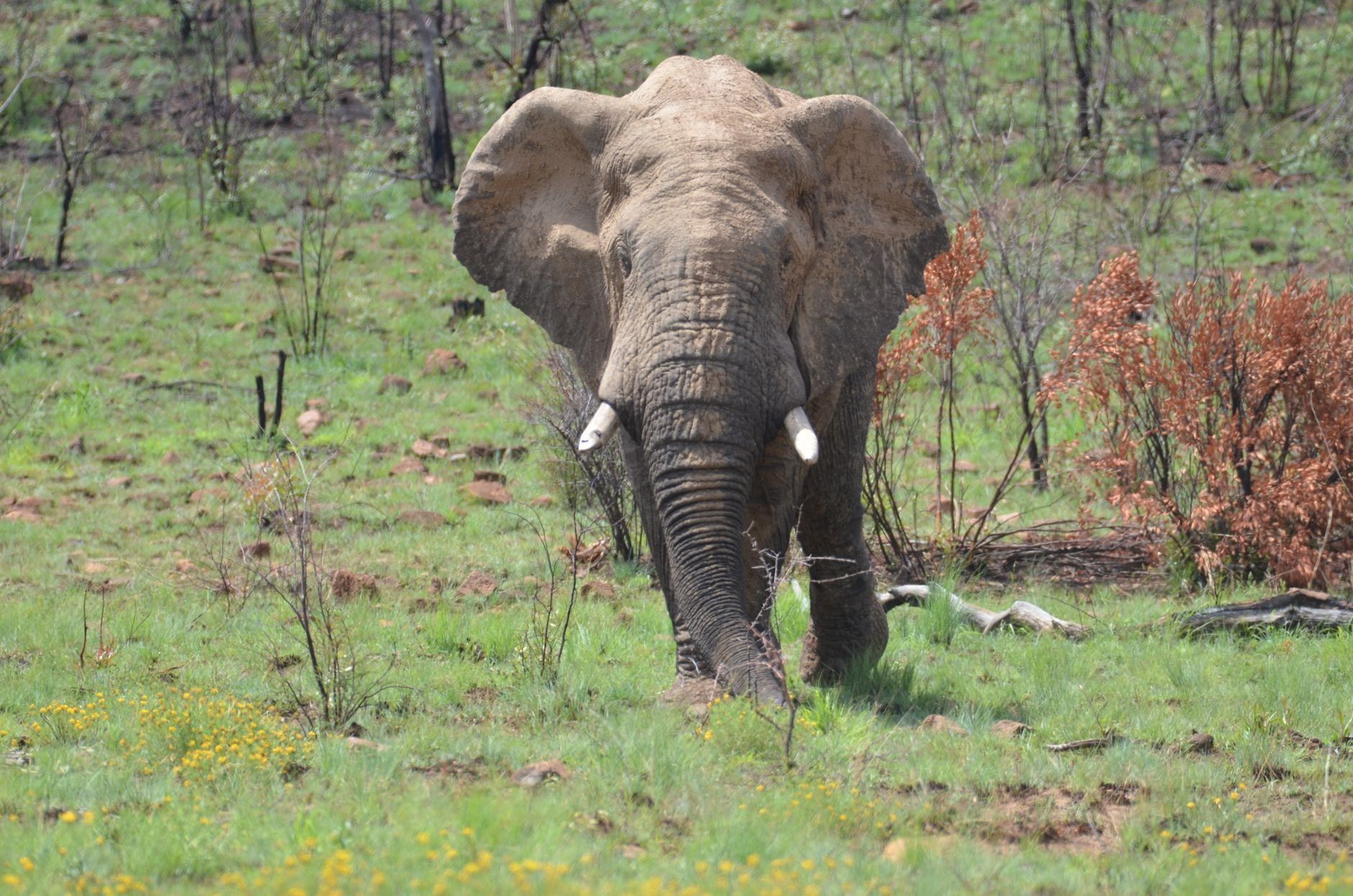
Both parks have the full Big Five — lion, leopard, elephant, rhino and buffalo. So the choice between Pilanesberg and Kruger isn't about which park is "better"; it's about how much time you have, how far you're willing to drive, whether malaria planning matters to you, and what you want the safari to feel like. Lay those four things out and the answer usually picks itself.
This guide puts the two parks side by side with the numbers most comparisons skip: real park sizes, species counts, gate fees, drive times and day-by-day itinerary maths. It ends with a clear verdict for each type of trip.
Quick Answer: Kruger or Pilanesberg?
Neither park wins outright because they solve different trip problems. Kruger is the classic multi-day wilderness safari: 19,485 km² of river systems, woodland and open plains, roughly 35 times the size of Pilanesberg's ~550 km² crater. Pilanesberg is the easy, malaria-free Big Five escape within half a day of Johannesburg, with Sun City next door.
| Your trip | Pick | Why |
|---|---|---|
| 1 day from Johannesburg | Pilanesberg | About 2.5–3 hours each way; Kruger would burn the day in driving |
| 1–2 nights | Pilanesberg | Short transfers, an afternoon and morning drive, no prophylactics |
| 3+ nights | Kruger | Scale, species variety and different regions reward the journey |
| Family with young kids | Pilanesberg | Malaria-free, short transfer, compact drives, pools at the resorts |
| Serious wildlife focus | Kruger | Wild dog and cheetah odds, 147 mammal species, wilderness scale |
Here's the honest framing most comparisons avoid: a rushed Kruger trip loses to a relaxed Pilanesberg trip. Drive four to six hours each way for a single night and you'll spend most of your visit on tar. Give the same two days to Pilanesberg and you get two proper game drives inside an ancient volcano.
The rest of this article quantifies that trade-off — wildlife, travel time, costs, malaria — so you can match the park to your itinerary rather than to its reputation.
By the Numbers: Size, Wildlife and Setting
Kruger is a country-sized park: 19,485 km² spanning two provinces, with 147 mammal species, 507 bird species, 114 reptile species and 336 tree species recorded. That size buys habitat variety — river corridors, dense mopane woodland, open plains — which is why a drive through the far north feels nothing like the Sabie River belt. Species lists like "around 30 mammals" get thrown at Pilanesberg, and they understate what's actually there.
Pilanesberg covers roughly 550–572 km² (55,000 hectares) and holds more than 7,000 individual animals, including 24 larger mammal species and the Big Five, plus 360+ recorded bird species. Reintroduced through Operation Genesis in 1979 — then the largest game-stocking and land-rehabilitation project ever attempted in an African reserve, with over 6,000 animals released behind a 110 km fence — it packs near-Kruger sighting potential into a fraction of the ground. It's the fourth-largest game reserve in South Africa.
The setting is what no competitor park can copy. Pilanesberg sits inside the crater of an extinct volcano about 1.3 billion years old — the world's most perfect surviving alkaline ring complex, with only two comparable formations on Earth (in Russia and Greenland), neither as clearly defined. Three concentric ridges of hills frame every view, and before it collapsed the volcano is believed to have stood some 7,000 m tall. Nearly 200 km of visitor roads loop between the ridges past Mankwe Dam, the central lake, and Thabayadiotso, the "Proud Mountain".
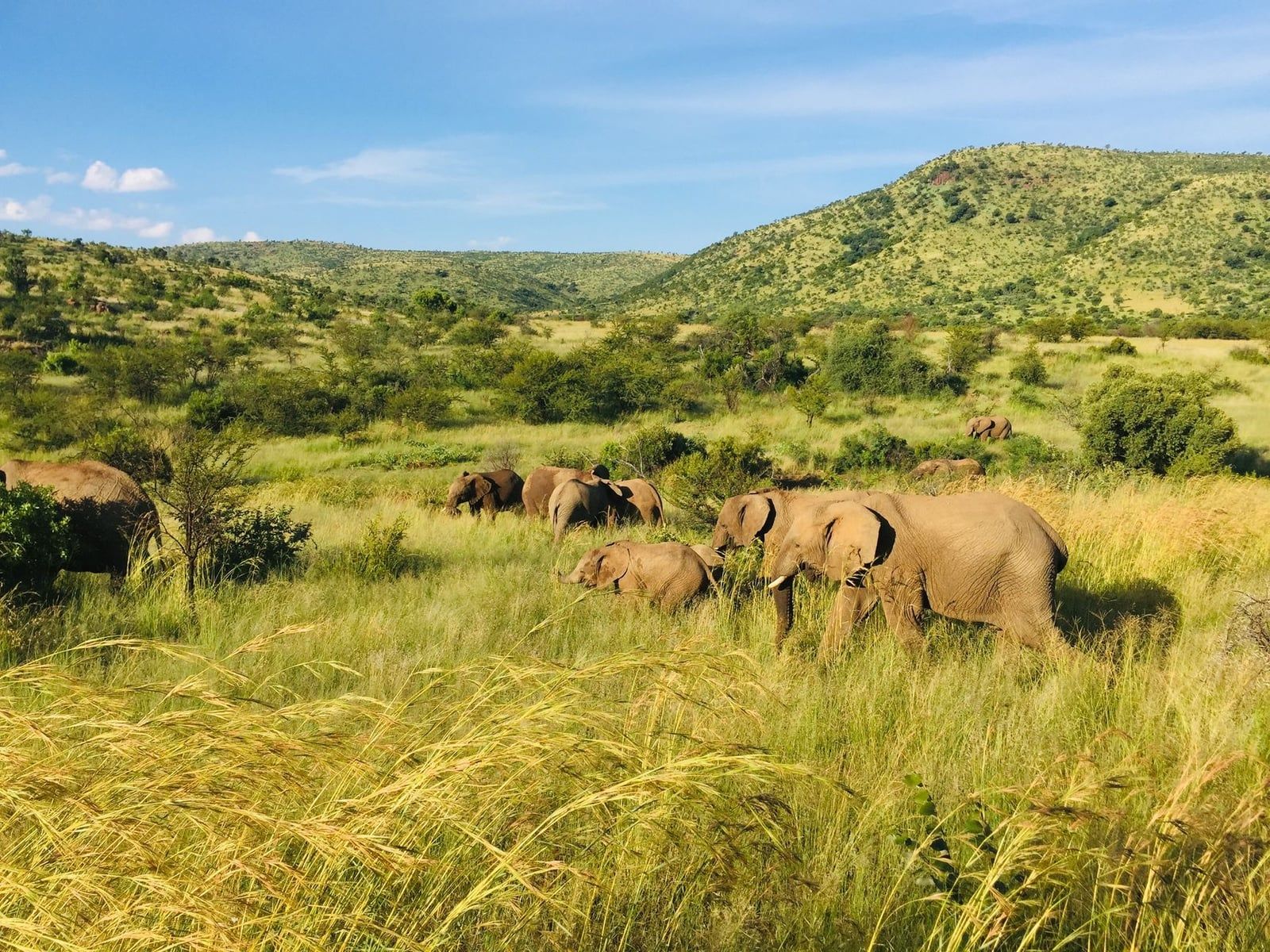
Practically, that ring layout makes Pilanesberg easy to navigate — you circle rather than get lost — and unusually photogenic, with hills closing every horizon. Kruger's scale is the opposite asset: room to lose yourself for days.
Getting There: Distance, Gates, Airports and Drive Times
Pilanesberg is about 217 km from Johannesburg, roughly 2 hours 45 minutes of driving — allow 2.5–3 hours with traffic — via the N4 west and the R556 towards Sun City. From Lanseria airport, the closer Johannesburg option, it's 2–2.5 hours. Entry is through five public gates plus a separate gate for the private Black Rhino Reserve, and gate times shift with the seasons: 05:30–19:00 from November to February, 06:30–18:00 from May to September. Most roads suit a normal 2WD sedan; some gravel tracks are rough, so high clearance helps.
Kruger is 350–450 km from Johannesburg depending on your gate, which means 4–6 hours by road across its nine entrance gates — and the gate you choose changes the drive materially. Most short-on-time visitors fly instead, into Skukuza Airport inside the park, Kruger Mpumalanga International, or Hoedspruit.
The day-trip maths is decisive. Pilanesberg works as a Johannesburg day trip — operators run full-day tours from about R1,800 per person including the park levy, and shuttles from R1,500. A Kruger day trip does not: four to six hours each way leaves almost no daylight for game viewing. If you're planning the drive yourself, our routes and transport guide to Pilanesberg covers gate approaches and road conditions.
Trip Length: The Real Deciding Factor
More than scenery, species or price, the number of nights you have decides this comparison. One day or one night: Pilanesberg, no contest. Two nights: either — Pilanesberg if you're driving, Kruger if you're flying in. Three nights: Kruger starts to pay for the journey. Four or more: Kruger, full stop, ideally combined with the Panorama Route and private reserves.
A two-day Pilanesberg trip runs smoothly: transfer up on Day 1 for an afternoon open-vehicle drive, then a morning drive on Day 2 — the prime predator hours — and you're back in Johannesburg by late afternoon. The compact road network means you're never recovering a "lost" day. Our Pilanesberg day trip planning guide breaks down the timing in detail.
A three-to-four-night Kruger trip looks different: multiple morning and afternoon drives, and enough time to move between regions — the Skukuza-to-Lower Sabie belt in the south is the classic first-visit area, with good wildlife densities and an extensive road network. With six hours of driving each way from Johannesburg, a one-night Kruger trip spends Day 1 and Day 3 on the road and gives you a single day in the park. That's the maths that fails.
Have five-plus days and a Johannesburg base? Do both. Two nights in Pilanesberg and Sun City, then the drive or flight east to Kruger — many travellers eventually visit both parks anyway.
Wildlife and Big Five: What Each Park Actually Delivers
Both parks have lion, leopard, elephant, rhino and buffalo, and neither guarantees sightings — no operator honestly can. What differs is what your hours in each park buy you.
Kruger wins on breadth. With 147 mammal species and 507 birds, plus larger predator populations, the odds of cheetah and the endangered African wild dog swing in your favour in certain regions. Habitat variety means the cast changes as you move — you're exploring a wilderness, not a circuit.
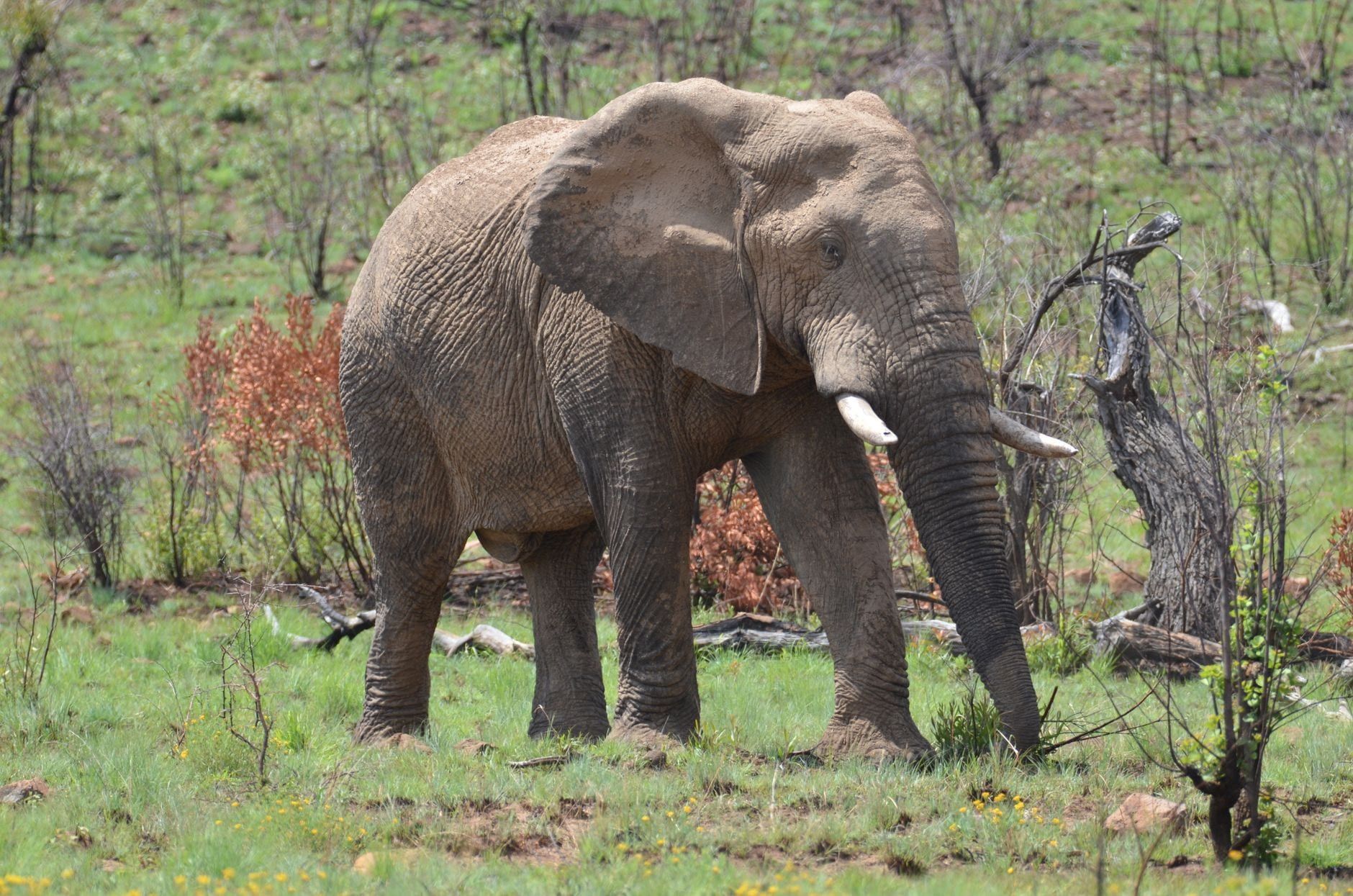
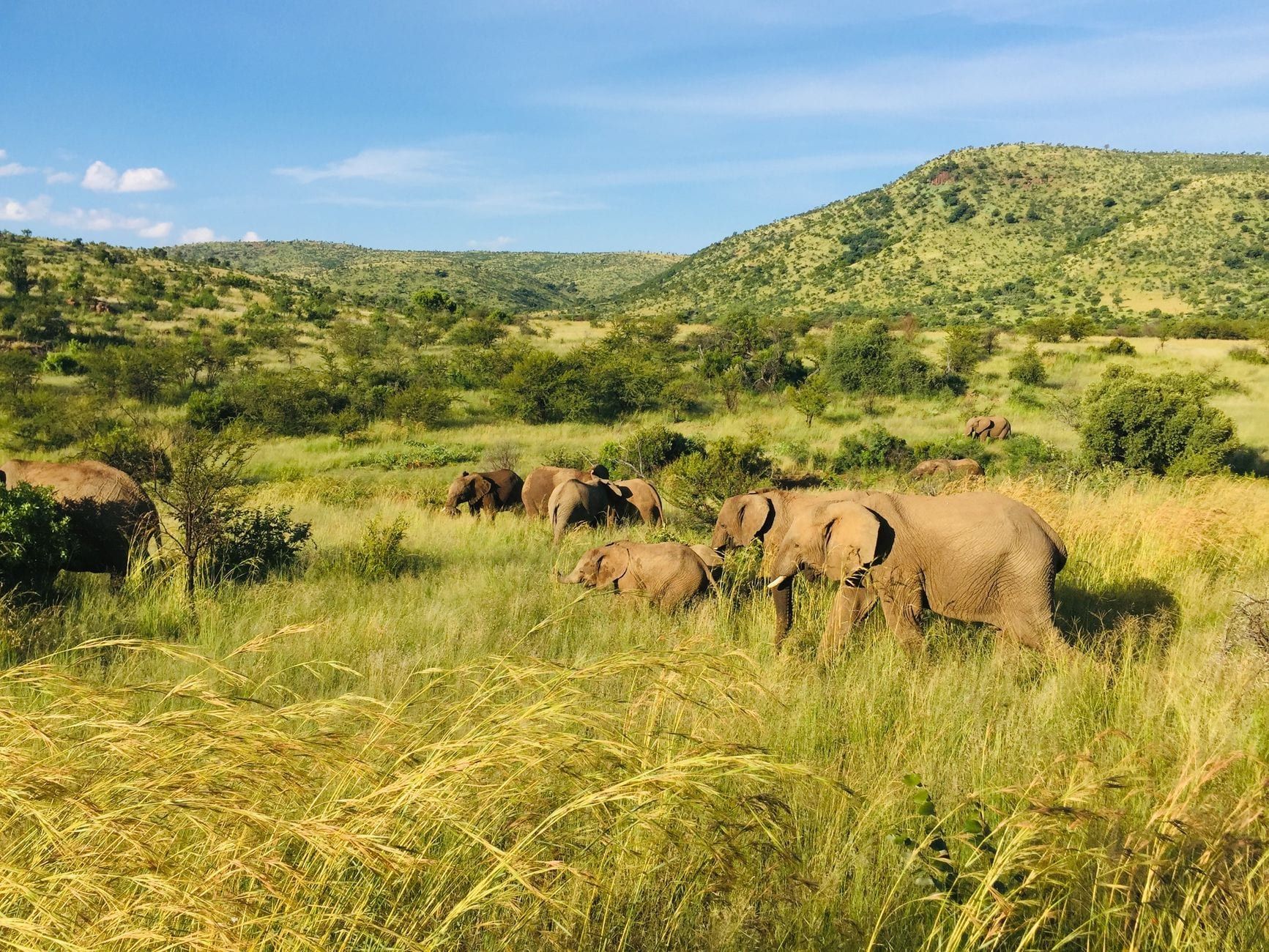
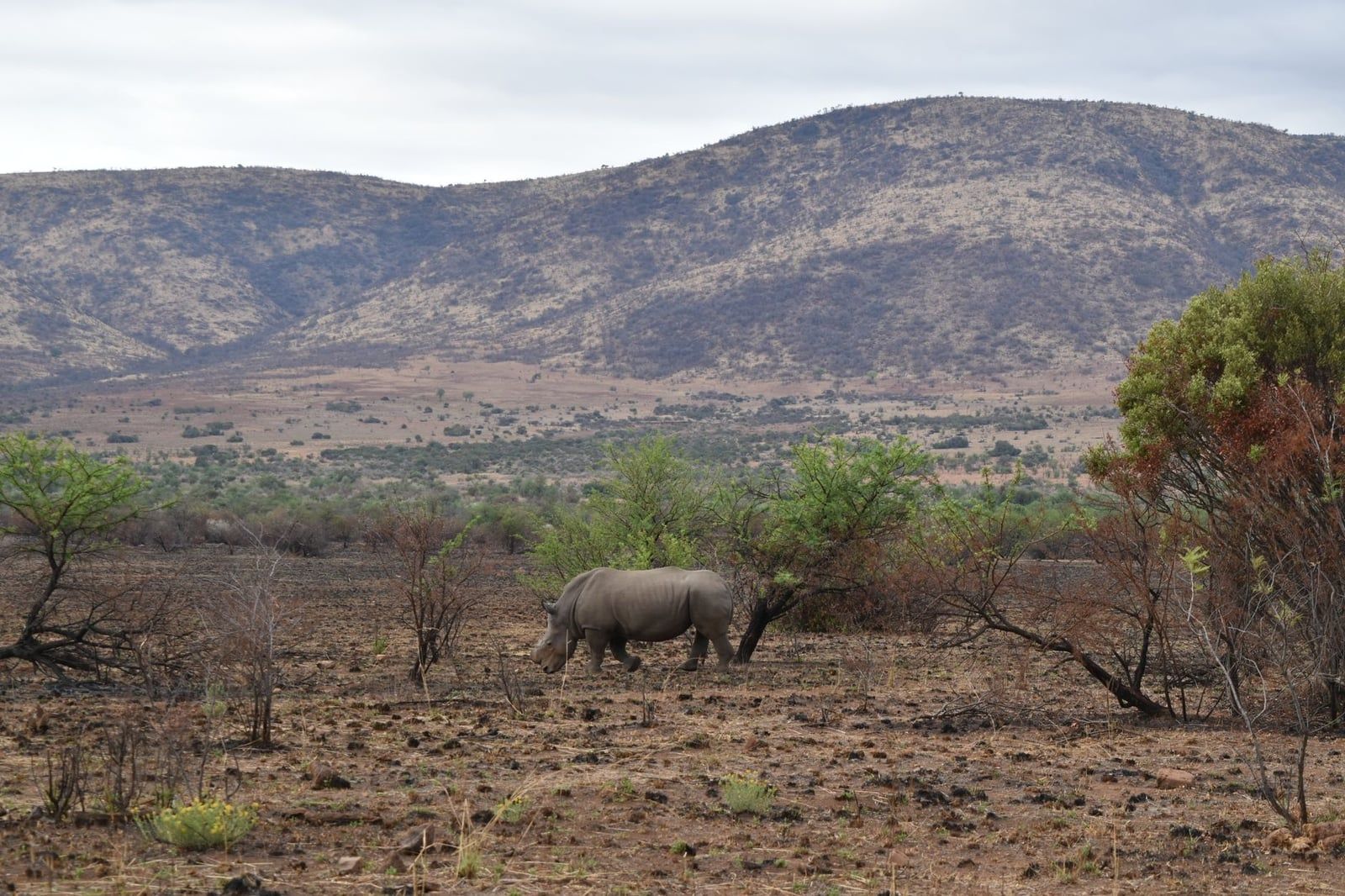
Pilanesberg wins on density per hour driven. More than 7,000 animals inside a compact crater means short distances between encounters, and the hides at Mankwe Dam and other waterholes let you sit level with the water while elephant, buffalo and rhino come to drink. White rhino and elephant are among the most frequently reported sightings on the southern loops. Because the park sits in a transition zone between dry Kalahari and wetter Lowveld vegetation, species that rarely share a reserve coexist here — good news for birders too, with 360+ species recorded. Our guide to Pilanesberg's animals covers what you'll realistically see.
Set expectations accordingly. A single well-timed day in Pilanesberg can produce elephant, buffalo and rhino; lion and leopard are the ones you earn. Four days in Kruger gives you time to work regions and radio-free patience into a sighting list that keeps growing.
Where You Stay and How You Game-Drive
In Kruger, the choice is between SANParks rest camps — budget-to-mid-range chalets and camping inside the park — and the private reserves of Greater Kruger like Sabi Sand and Timbavati, where unfenced lodges of mostly 5–10 rooms can drive off-road on 4x4 tracks, run night drives and lead walking safaris. That off-road freedom is what private Kruger money actually buys: following a leopard into the bush instead of watching it from a public road.
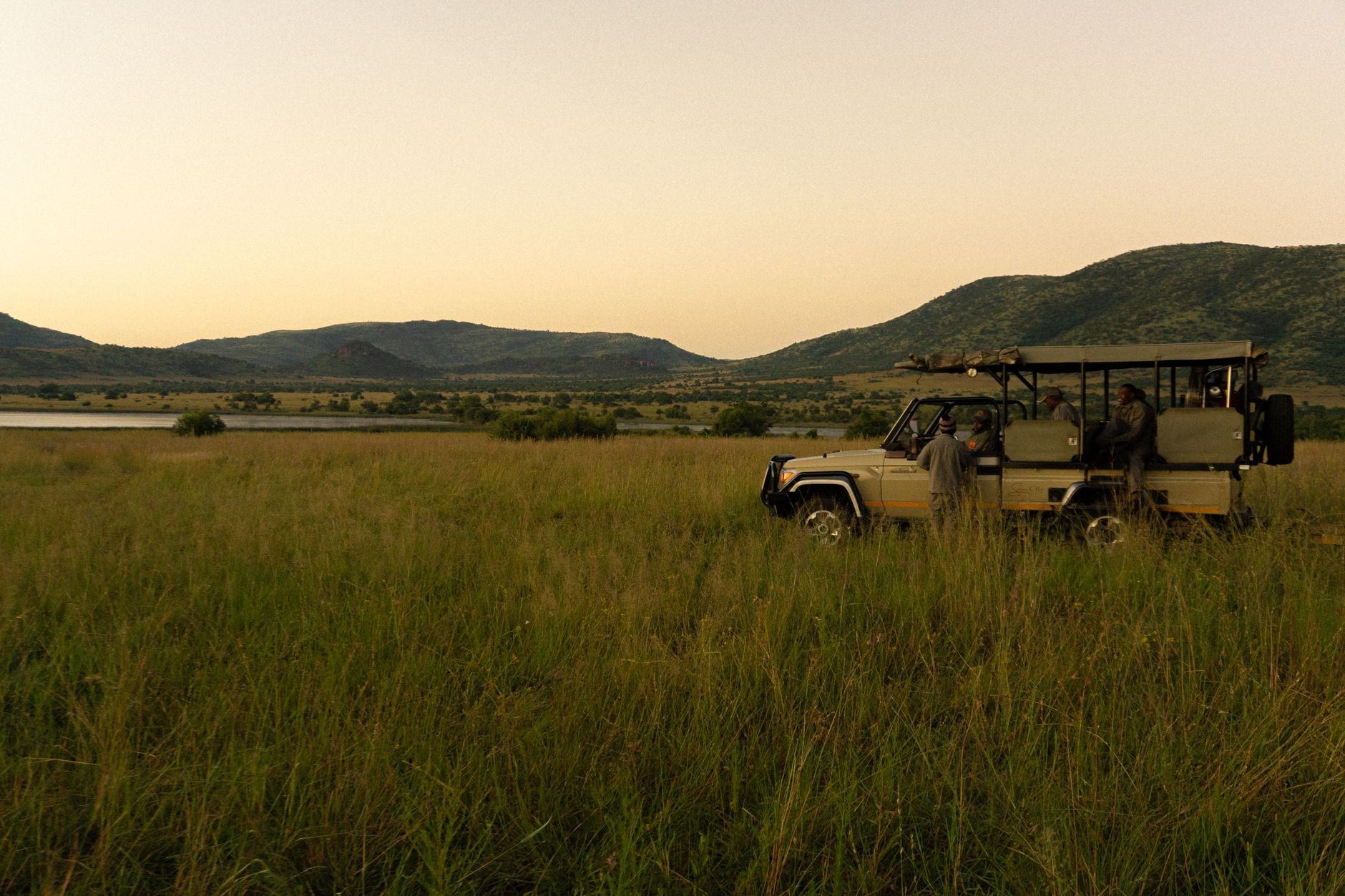
Pilanesberg has its own tier system, and it changes the drive experience more than most visitors realise. The big public-area lodges, Bakubung and Kwa Maritane, run 22-seater open trucks — shared, good value, but you're one of many. The 5-star lodges, Ivory Tree and Shepherds Tree, use 9-seater vehicles. And the concession lodges — Black Rhino and Pilanesberg Private Lodge — drive areas where no public vehicles are allowed at all, the closest thing Pilanesberg has to a private-reserve experience.
No off-road driving is permitted on Pilanesberg's public roads, so sightings stay on the track. Self-driving works well in both parks: Pilanesberg's roughly 200 km of loops are easy to cover in a day at the 40 km/h limit, while Kruger's vast network rewards planning around camp-to-camp distances and gate closing times.
Activities round out differently. Pilanesberg offers guided drives (three-hour scheduled drives from R900 per adult), sunrise hot-air balloon safaris from about R7,025, and serious birdwatching; Kruger adds night drives, walking safaris and bush dinners. And only Pilanesberg sits next door to Sun City — a combined safari and Sun City itinerary is a half-hour shuttle apart. For the full activity menu, see our things-to-do guide for Pilanesberg.
Costs: Entry Fees, Transfers and Where the Value Lies
Here's the finding that surprises most international visitors: per day at the gate, Pilanesberg charges more than Kruger. From 1 December 2025, foreign-national adults pay R748 per person per day at Pilanesberg plus R168 per vehicle — against Kruger's R602 per international adult for the 1 November 2025 to 31 October 2026 tariff year.
| Daily fee | Kruger | Pilanesberg |
|---|---|---|
| International adult | R602 | R748 (+ R168 per vehicle) |
| International child | R300 (under 12) | R748 |
| South African adult (with ID) | R134 | R168 |
| SADC adult | R275 | R385 |
| South African child | R67 | R84 (ages 5–12) |
Kruger's international rate rises to R692 from 1 November 2026, and no Wild Card of any type is accepted at Pilanesberg — everyone pays the standard tariffs. Tariffs change, so confirm on the official park sites before you travel; our Pilanesberg hours and fees page tracks the current rates.
Total trip cost is a different story. A short Pilanesberg trip still usually costs less from Johannesburg because you skip the domestic flight, the transfer is two and a half hours instead of six, and a day-tour format (from about R1,800 per person) works at all. Over three to five days, Kruger wins on value: SANParks rest camps stretch from budget self-catering upward, so the daily cost of a long stay drops well below what a lodge-based Pilanesberg trip runs. For a full budget breakdown, see our Pilanesberg safari cost guide.
Malaria, Families and the Health Question
Pilanesberg is a malaria-free park, open year round — no prophylactics, no clinic appointment, no weighing medication against a two-day trip. Kruger lies within a malaria-risk region where risk varies seasonally, and SANParks advises travellers to get current professional medical advice before departure. For many families this single fact decides the comparison.
Malaria-free matters most with young children, during pregnancy, and on short trips where prophylaxis feels disproportionate to the visit. It's also why families with small kids land on Pilanesberg: a 2.5-hour transfer instead of five or six, game drives compact enough to hold a six-year-old's attention, and the Manyane day-visitor area with a pool, a walk-in aviary holding 80+ indigenous bird species, and a self-guided walking trail — a rare chance to get out of the car in a Big Five park.
Kruger becomes the better family choice with older, wildlife-obsessed kids and three or more nights: the scale that bores a toddler is exactly what fascinates a twelve-year-old, and rest-camp pools and night drives fill the gaps between drives.
When to Go — and When It Gets Crowded
Season barely changes this comparison. In both parks the dry winter months of May to September deliver the easiest viewing — thin vegetation, animals concentrated at permanent water, mild clear days. Green season, October to April, brings thicker cover, scattered game, better birdwatching, newborn animals and short heavy afternoon storms. Pilanesberg's own guidance puts the prime window at mid-July to mid-October.
Crowds behave differently. Southern Kruger takes heavy traffic in school holidays, when rest camps book out months ahead and prime sightings stack up vehicles. Pilanesberg's crowds cluster differently: a lion on a kill can draw a queue of cars on a small road network, and weekends bring Joburg traffic. The fixes are the same in both — travel outside major school holidays and be through the gate at opening, 05:30 in Pilanesberg's summer months.
The Verdict: Which Park for Which Trip
Neither park is a blind pick, so here are the trade-offs stated plainly.
Pilanesberg, honestly:
- R748 per international adult per day at the gate — more than Kruger
- 22-seater trucks at the mid-tier lodges dilute the drive experience
- Popular sightings draw vehicle clusters on a small road network
- Off-road driving is not allowed on public roads
Kruger, honestly:
A four-to-six-hour transfer from Johannesburg, malaria planning before you go, and wasted days if you rush it. In exchange: wilderness at true scale, 147 mammal species, real odds at wild dog and cheetah, night drives and walks, and accommodation from budget camps to unfenced luxury lodges.
Map that to your trip. A one- or two-night Johannesburg stopover: Pilanesberg, and add Sun City for the resort half of the day. A family with children under ten: Pilanesberg. A first safari with four days to spend: Kruger, basing yourself in the south. Wildlife photographers and enthusiasts with time: Kruger, ideally with a private-reserve night for off-road access. A budget multi-day trip: Kruger's rest camps. Pairing the safari with Cape Town: Kruger, because you can fly straight into Skukuza, Kruger Mpumalanga or Hoedspruit rather than routing through Johannesburg. Safari plus Panorama Route: Kruger, no argument.
The operator rule of thumb holds up: if safari is the main reason for your trip, choose Kruger; if it's an add-on to a shorter Johannesburg-based itinerary, choose Pilanesberg. Either way, you can browse and compare Pilanesberg safari tours for the short-trip option. And the final rule is simpler than any of it — the time you have beats the fame of the park.
FAQs: Pilanesberg vs Kruger
Is Kruger better than Pilanesberg?
Neither, universally. Kruger is better for a dedicated multi-day safari — more species, wilder scale, a wider accommodation range. Pilanesberg is better for short, malaria-free Big Five trips from Johannesburg. Neither guarantees sightings.
Can you see the Big Five in Pilanesberg?
Yes. All five — lion, leopard, elephant, rhino and buffalo — live in the reserve alongside more than 7,000 animals in roughly 550–572 km², so short visits have a realistic chance. No park guarantees any sighting on a single drive.
Is Pilanesberg malaria-free?
Yes, Pilanesberg is malaria-free and open year round. Kruger lies in a malaria-risk region with seasonally varying risk, so get current medical advice before visiting — especially with young children.
Can you do a Kruger day trip from Johannesburg?
Not realistically. Kruger is four to six hours each way from Johannesburg, so a day trip leaves almost no game-viewing time. Pilanesberg, at roughly 2.5–3 hours each way, is the workable day trip.
How many days do you need in Kruger?
Three nights is a sensible minimum for a first visit; four to five is better if you want to move between regions and vary your drives.
How many days do you need in Pilanesberg?
One to two nights works well because the reserve is compact. Staying overnight unlocks both the afternoon and early-morning drives rather than a single midday circuit.
Which park is cheaper for international visitors?
Per day at the gate, Pilanesberg costs more for international visitors: R748 per adult versus Kruger's R602 on 2025/26 tariffs. Short trips still usually cost less overall from Johannesburg because you skip flights and long transfers, while multi-day value favours Kruger's accommodation range.
Is Kruger worth the extra travel time from Johannesburg?
Yes, if you can give it at least three nights and wildlife is a main reason for the trip. With only one or two days, the travel time makes Pilanesberg the more practical choice.
Sources
- sanparks.org/parks/kruger/rates-entry-fees
- sanparks.org/parks/kruger/useful-information/malaria
- pilanesbergnationalpark.org/travel/tariffs-gate-times
- pilanesberggamereserve.com/geology.html
- pilanesberggamereserve.com/history.html
- parksnorthwest.co.za/pilanesberg-national-park/
- en.wikipedia.org/wiki/Pilanesberg_National_Park